Best Apps to Learn English
 Yurii Rebryk · Updated September 2, 2026 · 19 min read
The best app to learn English depends on the learning model you need, not on download charts. As of September 2026: Busuu for a structured course with human corrections, Duolingo for a free daily habit, Fluently for spoken English at work, ELSA Speak for pronunciation, italki for a human tutor, and the British Council’s LearnEnglish Podcasts for free listening. Twelve apps below, compared on the same points.
In this article
- The best English learning apps at a glance
- How we selected and evaluated the apps
- The best apps to learn English, compared
- Which English-learning model fits your goal?
- How to choose the right English-learning app
- Do you need one app or an app stack?
- Limitations, access and privacy
- Which app should you choose?
One boundary before the picks. Apps built only around speaking get their own comparison in best apps for English speaking practice, and AI-first tools are compared in best AI apps to learn English. The question here is wider: which kind of product should you learn English with at all, and which app within that kind.
The best English learning apps at a glance
Twelve apps, grouped by learning model and listed in the same order as the profiles further down. Every price is an in-app purchase shown in the US App Store or on the official site in September 2026, rounded to a band; store prices can differ from web prices and change without notice. All twelve run on iOS and Android; italki, Preply, Busuu, Memrise, Duolingo, Babbel, Rosetta Stone and Pimsleur also run in a browser.
| App | Learning model | What you actually do | Feedback | Level fit | Free or paid (Sept 2026) | Main limitation |
|---|---|---|---|---|---|---|
| Duolingo | Gamified course | Short tap, match and type lessons across reading, listening, writing and brief speaking prompts | Right or wrong per exercise; AI Roleplay and Video Call only in the Max tier | A1–B1 | Free with ads and an energy limit; Super about $10–13 a month or $80–120 a year | Trains recognition more than production; Max features vary by course |
| Busuu | Structured course plus community | Instructor-written lessons A1–C1; speaking and writing tasks sent to fluent speakers | Corrections from the community on your recordings and texts; live group lessons | A1–C1 | Free tier with ads; Premium about $7–23 a month or $70–140 a year | Peer corrections vary in speed and depth |
| Babbel | Structured course in your first language | Ten-minute dialogue lessons with review and speech recognition | Right or wrong; speech recognition on set phrases | A1–B2 | First lesson free; about $18 a month, $46 for three months, $97–108 a year for all languages | English is offered only from a non-English app language, not from an English interface |
| Rosetta Stone | Immersion course | Picture-and-sound lessons with no translation; TruAccent pronunciation checks | Pronunciation scoring on set phrases; live tutoring sessions available | A1–B1 | First lesson free; English about $45 for three months, all languages about $110 a year | Nothing is explained in your language; the app opens only with a subscription |
| Pimsleur | Audio-first course | 30-minute spoken lessons, hands-free, with spaced repetition | Voice recognition on pronunciation | A1–B1 | One free lesson; about $21 a month or $132–165 a year | English exists for 15 first languages only; little reading or writing |
| Memrise | Vocabulary and video input | Native-speaker clips, phrase recall, AI conversation partner | Recall scoring; replies from the AI partner | A1–C2 | Free tier with ads and limits; about $25 a month or $62 a year | Vocabulary-led; no full grammar course |
| ELSA Speak | Pronunciation specialist | Sound-by-sound drills, Speech Analyzer, AI role-plays | Scores at the level of individual sounds | A2–C1 | Limited free tier; Pro about $12–20 a month or $75–142 a year | Drill format; not a course |
| Fluently (our product) | AI speaking coach | Voice conversations, role-plays, meetings and interviews | Pronunciation, fluency, vocabulary and grammar after each answer | B1–C1 | Free 4-minute speaking assessment; trial, then a subscription priced in the app | Assumes you can already form sentences; no grammar syllabus |
| italki | Tutor marketplace, pay per lesson | 1-on-1 video lessons of 30–90 minutes with a teacher you pick | Human, live | A1–C2 | Paid per lesson at the teacher’s rate; optional Plus at $5.99 a month | Quality and price track the teacher; you practice only when one is available |
| Preply | Tutor marketplace, subscription | 1-on-1 lessons booked as weekly hours, billed every 28 days | Human, live | A1–C2 | Paid; a trial lesson, then a plan of 1–5 hours a week at the tutor’s rate | Weekly commitment; rates vary widely by tutor |
| HelloTalk | Language exchange | Chat, voice notes, voice rooms and calls with native speakers learning your language | Peer corrections and translation tools | A2–C2 | Core exchange free; VIP about $13 a month or $80 a year | Partners are not teachers, and you teach back |
| British Council LearnEnglish Podcasts | Free resource-led input | Weekly podcast episodes with interactive scripts and exercises | Exercise scoring only | A2–B2 | Free with ads; $1.99 to remove ads | Listening only; it never hears you speak |
How we selected and evaluated the apps
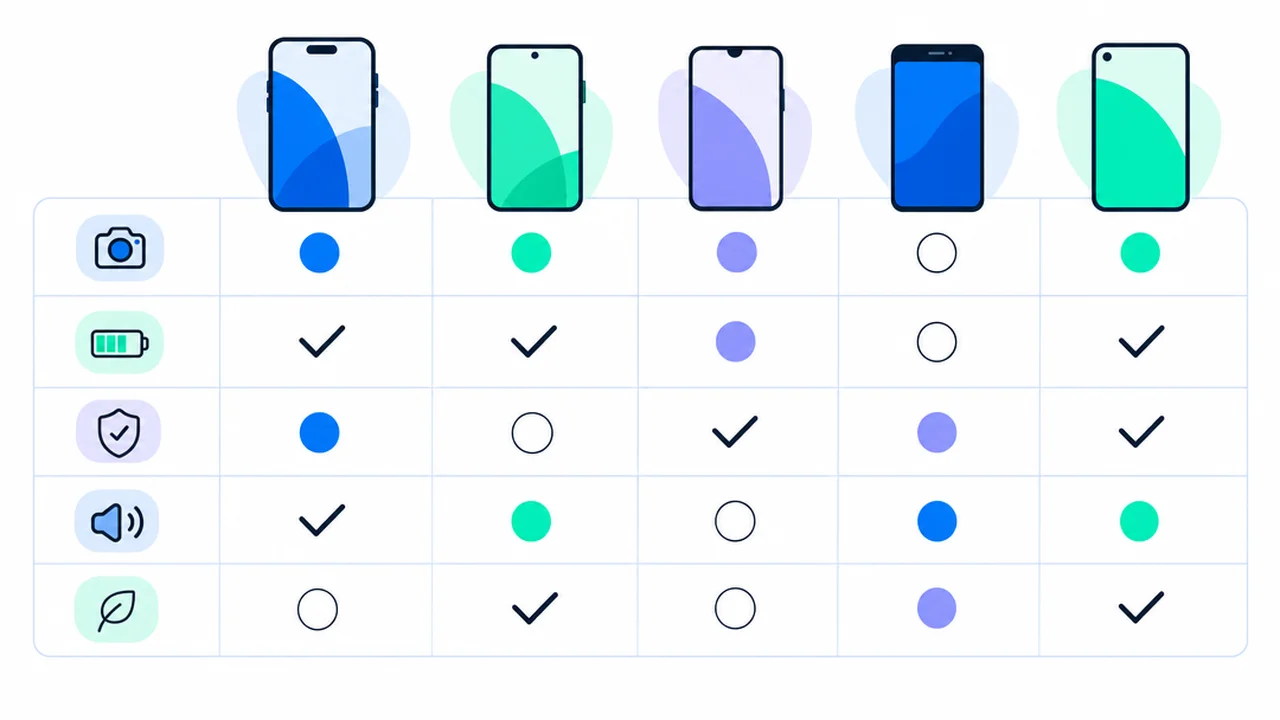
A comparison is only as honest as its method, so here is the whole of it. The work was desk research against official sources, done the same way for all twelve products.
Which products were eligible
The working pool had fourteen candidates. A product entered the published twelve only if it met five conditions:
- Available to a US user on iOS and Android in September 2026, with a listing we could open.
- Repeatable English learning, not a single feature bolted onto another product.
- Disclosable access conditions: what is free, what a trial contains, and what the subscription costs, on an official page or store listing.
- A distinct learning model or benchmark, so that each app teaches the reader something a neighbor on the list does not.
- Legally inspectable without a reviewer account that misrepresents who we are.
Two candidates were folded into sections rather than profiled: Tandem, which works like HelloTalk, and Lingoda, whose scheduled live classes appear under tutors. Neither was dropped for quality; the profiles stay at twelve so that each one gets the same depth.
The learner profiles and shared review tasks
Every product was read against two learner profiles: an adult A2 learner who needs structure and explanations, and an adult B1–B2 learner solving one defined gap, such as meetings or pronunciation. For each app the same questions were answered from its official material: what does a session consist of, what is corrected and how, how does the app decide what comes next, which level does it assume, what permissions and human coordination does it need, and what does the free part actually contain.
Evidence status, stated plainly: these apps were researched and compared, not tested with a panel of learners on timed tasks. Where the text says an app "scores" or "corrects", that is what the company describes and what its listing shows; where our own reading of the model is involved, the text says so.
How we checked pricing, free access and product claims
- Prices come from the in-app purchase list on each US App Store listing, cross-checked against the official site where it publishes prices, and are given as bands because the same product often lists several plan variants.
- Platforms were confirmed on the App Store and Google Play listings and the official site; a browser version counts only where the company itself offers one.
- Free means free indefinitely. A first free lesson, a capped trial or a card-required trial is labeled as such, never as a free app.
- Marketing language stays marketing until a listing or help page shows the behavior. Claims about outcomes, such as how many users improved, were left out.
- Nothing was copied from another comparison page; where a fact could not be verified on an official source, it is absent or marked as unverified.
How Fluently’s ownership affects this review
Fluently is our product, which cuts both ways. We know exactly what it does, and we also know exactly what it does not do, so its profile lists real limitations in the same form as everyone else’s. Fluently is not placed first, is not called best overall, and gets no score, because no app here gets a score: the learning models are too different for one number to mean anything. The one place it appears outside its profile is the single download prompt near the end, after the comparison is complete.
The best apps to learn English, compared
Profiles follow the table order: structured courses first, then input-led and speaking tools, then human options and the free route. Each has the same six fields.
Duolingo: best free daily habit for beginners
Duolingo is the app to shortlist when the problem is doing anything at all every day, and the budget is zero. The model is a gamified course: short lessons of tapping, matching, typing and brief speaking, with streaks, leaderboards and an energy meter that limits mistakes on the free tier. Super Duolingo removes ads and the energy limit and adds a review hub; Duolingo Max adds an AI Roleplay and Video Call, and Duolingo says which features you get depends on the course you take.
- Best for: absolute beginners and anyone who needs a habit before a method; A1–B1.
- Learning model: gamified course across reading, listening, writing and short speaking prompts.
- Feedback: right or wrong per exercise; open conversation exists only in the Max tier.
- Free or paid: free indefinitely, with ads and an energy limit; Super Duolingo about $10–13 a month or about $80–120 a year per US App Store in-app purchases as of September 2026; Max is priced in the app.
- Access: iOS, Android and browser; an account, no card for the free tier. Official site: duolingo.com.
- Limitation: the exercises test recognition, so a long streak can hide the fact that you still cannot hold a two-minute conversation.
Busuu: best structured course with human corrections
Busuu is the pick for an A2 learner who wants a syllabus with a human somewhere in the loop without paying per lesson. The Complete English course runs from A1 to C1 in more than 655 instructor-written lessons, by Busuu’s count. Speaking and writing exercises go to a community of fluent speakers who correct them, and you correct learners of your own language in return. Live group lessons are built into the course.
- Best for: structure plus a human check on your output; A1–C1.
- Learning model: structured course with community corrections.
- Feedback: peer corrections on recordings and texts; exercise scoring inside lessons.
- Free or paid: an ongoing free tier with ads and limited features; Premium about $7–23 a month or about $70–140 a year per US App Store in-app purchases as of September 2026.
- Access: iOS, Android and browser; account required. Official course page: busuu.com.
- Limitation: corrections come from volunteers, so how fast and how well they arrive varies from day to day; that is our reading of the model, not a measured figure.
Babbel: best guided course, if Babbel teaches English from your first language
Babbel suits a beginner who wants grammar explained in their own language and a dialogue-based path to B2. Lessons are ten-minute dialogues with listening, speaking, writing and flashcard review, plus speech recognition on your pronunciation. The catch for a reader on an English phone: English is not among the thirteen languages on Babbel’s English-language site as of September 2026. The English course lives on Babbel’s German, Spanish and other language editions, with instruction in that language, so you switch the app to your first language to reach it.
- Best for: A1–B2 learners whose first language is German, Spanish, French, Italian, Portuguese or another language Babbel teaches from.
- Learning model: structured, dialogue-based course in your first language.
- Feedback: right or wrong, with speech recognition on set phrases; no open conversation.
- Free or paid: the first lesson of each course is free; about $18 a month, about $46 for three months, about $97–108 a year for all languages, per US App Store in-app purchases as of September 2026.
- Access: iOS, Android and browser; account required. Official site: babbel.com.
- Limitation: unreachable from an English interface, and built for a known first language, so speakers of other languages have no Babbel English path at all.
Rosetta Stone: best immersion course, no translation
Rosetta Stone fits a beginner who learns from pictures and sound and wants pronunciation checked from the first lesson. The method pairs images with spoken and written English and never translates; TruAccent speech recognition scores what you say. English comes in American and British editions, and live tutoring sessions with instructors exist alongside the self-study course. The app itself opens only with an active subscription once the free first lesson is done.
- Best for: A1–B1 learners who dislike grammar explanations and want a fixed path.
- Learning model: immersion course, self-paced.
- Feedback: pronunciation scoring on set phrases; no open conversation in the core course.
- Free or paid: first lesson free; English about $45 for three months, all languages about $110 a year, per US App Store in-app purchases as of September 2026.
- Access: iOS, Android and browser; subscription required to use the app. Official page: rosettastone.com.
- Limitation: nothing is explained in your language, which slows down adults who want to know why a form was wrong.
Pimsleur: best audio-first course for time away from a screen
Pimsleur is the pick if your practice window is a car, a walk or a kitchen, and your first language is one of the fifteen it teaches English from. Each lesson is 30 minutes of audio: you hear a phrase, answer aloud in the gap, and the course brings the phrase back at spaced intervals. A hands-free mode and voice recognition on pronunciation come with it. Pimsleur publishes English for speakers of Arabic, Cantonese, Farsi, French, German, Haitian Creole, Hindi, Italian, Japanese, Korean, Mandarin, Portuguese, Russian, Spanish and Vietnamese.
- Best for: A1–B1 learners who can give 30 minutes a day away from a screen.
- Learning model: audio-first course with spaced repetition and prompted speaking.
- Feedback: voice recognition on pronunciation; no correction of free speech.
- Free or paid: one free lesson; All Access about $21 a month or about $132–165 a year per US App Store in-app purchases as of September 2026.
- Access: iOS, Android, browser and Alexa; account required. Official site: pimsleur.com.
- Limitation: almost no reading or writing, and no English course at all if your first language is not on the list.
Memrise: best vocabulary app with native-speaker video
Memrise is the app for a learner who understands the grammar but freezes for want of words. Vocabulary and phrases arrive as short clips of native speakers saying them, then come back as recall tests. An AI conversation partner, MemBot, runs text and spoken exchanges around small missions; Memrise describes it as unlimited conversation practice. A placement covers A1 to C2.
- Best for: daily vocabulary building at any level, most of all A2–B2.
- Learning model: vocabulary and input-led, with AI conversation on top.
- Feedback: recall scoring on words and phrases, plus replies from the AI partner.
- Free or paid: an ongoing free tier with limited lessons, videos and conversations, with ads; about $25 a month or about $62 a year per US App Store in-app purchases as of September 2026; a lifetime plan is also sold.
- Access: iOS, Android and browser; account required. Official page: memrise.com.
- Limitation: no full grammar syllabus, so it works as a second app more often than as the only one.
ELSA Speak: best for pronunciation, sound by sound
ELSA Speak is the app to shortlist when people ask you to repeat yourself. It scores each word at the level of individual sounds and hands you a drill for the sound you missed. A Speech Analyzer reviews longer speech samples and predicts test scores, and AI role-plays with workplace, interview, meeting and presentation coaches add scenario practice. ELSA says lessons adapt to your level, preferred accent and industry.
- Best for: A2–C1 learners whose main gap is being understood.
- Learning model: pronunciation specialist with drills and role-plays.
- Feedback: sound-by-sound scoring; test-score predictions in the Speech Analyzer.
- Free or paid: a limited free tier with some lessons and role-plays; Pro about $12–20 a month or about $75–142 a year per US App Store in-app purchases as of September 2026.
- Access: iOS and Android; microphone required. Official site: elsaspeak.com.
- Limitation: a drill is not a conversation, so ELSA fixes sounds better than it builds the habit of talking for two minutes without stopping. For drills you can run without any app, see English pronunciation practice.
Fluently: best for spoken English at work (our product)
Ownership note, repeated on purpose: Fluently is our app, and I founded the company. It is the pick for a B1–C1 professional whose problem is meetings, interviews and standups rather than grammar. The model is an AI speaking coach: you talk through conversations, role-plays, meetings and interviews, and after each answer you get feedback on pronunciation, fluency, vocabulary and grammar. It is built for non-native professionals who use English at work.
- Best for: B1–C1 learners who need to perform in spoken English at work.
- Learning model: AI-led speaking practice.
- Feedback: pronunciation, fluency, vocabulary and grammar after each answer.
- Free or paid: a free 4-minute speaking assessment; a trial, then a subscription priced in the app. What the free part contains is on the free practice page.
- Access: iOS and Android; microphone required. The browser tools on this site, the level test, the speaking test and the mock interview, need no install.
- Limitation: free-form conversation assumes you can already form sentences, so A1–A2 learners should start with a course; there is no grammar syllabus and no sound-by-sound drill mode, which is why ELSA Speak sits above it for pronunciation; pricing is shown in the app, not on a public price list.
italki: best for a human tutor, paid per lesson
italki is the pick when you want a real teacher without committing to a weekly plan. It is a marketplace: teachers set their own prices, and you book 30-, 45-, 60- or 90-minute video lessons one at a time, with trial lessons for trying a teacher out. Teachers tailor lessons from A1 to C2 and by goal, from conversation to business English to exam preparation. An optional italki Plus subscription adds extras and is not needed to book.
- Best for: any level; strongest for B1 and above, once you know what you want corrected.
- Learning model: 1-on-1 human tutoring, pay per lesson.
- Feedback: live and human, as deep as the teacher you choose.
- Free or paid: no free lessons; each lesson is paid at the teacher’s rate, and italki’s listing advertises rates from under $10 for some tutors; italki Plus is $5.99 a month or $59.99 a year, optional, as of September 2026.
- Access: iOS, Android and browser; account, booking and a payment method required. Listing: italki on the App Store.
- Limitation: quality tracks the teacher, not the platform, so the first two or three lessons are a search cost; you also practice only when a human is available.
Preply: best for a human tutor on a fixed weekly schedule
Preply is the pick for someone who keeps lessons only when they are already paid for and in the calendar. You start with a 25- or 50-minute trial lesson; if it does not fit, you switch tutors free or take a refund. After that you buy a plan of one to five hours a week, billed every 28 days, which reserves your weekly slots. Lessons cancel free up to 12 hours ahead, and plans pause or cancel at any time, per Preply.
- Best for: A1–C2 learners who want accountability built into the billing.
- Learning model: 1-on-1 human tutoring, subscription.
- Feedback: live and human.
- Free or paid: paid; a trial lesson, then a weekly-hours plan at the tutor’s rate. Rates vary widely, so there is no single price to quote.
- Access: iOS, Android and browser; account, booking and a payment method required. Official explainer: how Preply works.
- Limitation: the subscription is both the feature and the catch: a plan commits you to weekly hours even in a month when work eats the evenings.
HelloTalk: best free way to talk with native speakers
HelloTalk is the pick for a B1 or stronger learner who wants real people, free, and is willing to teach their own language in return. It matches you with native English speakers learning your language; you text, exchange voice notes, join voice rooms and livestreams, and lean on built-in translation and correction tools. Tandem works the same way with 1-to-1 chats and group audio rooms called Parties, and sells a paid Pro tier from about $15.
- Best for: B1–C2 learners who need conversation volume, not a syllabus.
- Learning model: language exchange.
- Feedback: peer corrections on messages; no structured scoring.
- Free or paid: the core exchange is free indefinitely; VIP about $13 a month or about $80 a year per US App Store in-app purchases as of September 2026.
- Access: iOS and Android; account required, and your profile is visible to strangers. Official site: hellotalk.com.
- Limitation: partners are learners, not teachers, so corrections are uneven, and half of every exchange is you teaching.
British Council LearnEnglish Podcasts: best free listening with scripts
The British Council’s podcast app is the free input layer for an A2–B2 learner who needs listening minutes with a transcript to check against. New episodes on general and business English arrive weekly; each has an interactive script, playback-speed control, short exercises and offline download. The British Council also publishes free LearnEnglish Grammar and LearnEnglish Sounds Right apps, the second a pronunciation chart with audio.
- Best for: A2–B2 listening practice at zero cost.
- Learning model: free resource-led input.
- Feedback: exercise scoring only.
- Free or paid: free with ads; $1.99 removes the ads on iOS as of September 2026.
- Access: iOS and Android; no payment method needed. Overview of all the apps: British Council LearnEnglish apps.
- Limitation: it never hears you speak, so it cannot be the only app for anyone whose goal is talking.
Which English-learning model fits your goal?
Six learning models sit behind the twelve apps. None is superior for everyone; each trains a different part of the skill and skips another.
Structured courses and guided progression
A structured course (Busuu, Babbel, Rosetta Stone, Pimsleur, and Duolingo in its gamified form) decides what you learn next. That is its whole value for an A1–A2 learner: the syllabus carries the decisions you cannot yet make yourself. The cost is transfer. Exercises are controlled, so a finished B1 module does not equal a B1 conversation. Pick a course when you need explanations and order; leave it, or add to it, the day your problem becomes speaking.
AI-led and adaptive practice
AI-led practice (Fluently, Memrise’s MemBot, ELSA’s role-plays, Duolingo Max) reverses the direction: you produce, and the model reacts to what you produced. The strength is unlimited repetitions with feedback on your own sentences at any hour. The limits are the ones every AI product shares: it cannot see you plateau across months, it follows your lead instead of setting a curriculum, and its corrections are only as good as its model of English. A dedicated comparison of these tools is in best AI apps to learn English.
Speaking and pronunciation specialists
Two apps here are built around your voice. ELSA Speak scores sounds; Fluently scores whole answers. They answer different diagnoses: "people ask me to repeat myself" and "I go quiet in meetings". Neither replaces a course for a beginner, and both need a microphone and a quiet room. For the wider field of voice-first apps, see best apps for English speaking practice.
Tutors and language exchange
italki and Preply sell human attention by the hour; HelloTalk and Tandem trade it. A tutor diagnoses, sequences and holds you to a schedule, which no app on this page does. An exchange gives conversation volume for free but no curriculum and uneven correction. Lingoda is the scheduled-class version of the tutor model: 60-minute live online classes in groups of three to five, aligned to CEFR levels, on a monthly subscription, with a 7-day trial of three group classes or one private class as of September 2026.
Free and resource-led learning routes
Free, ongoing and useful: Duolingo, Busuu’s free tier, Memrise’s free tier, HelloTalk’s core exchange and the British Council apps. Free but capped: the first lessons of Babbel, Rosetta Stone and Pimsleur, ELSA’s limited tier, Fluently’s assessment. Paid only: italki and Preply. A zero-dollar route that covers input, vocabulary and some production is the British Council podcasts for listening, Memrise or Duolingo for words, and HelloTalk for conversation. What it lacks is feedback on your speech, which is the one thing every paid speaking product charges for.
How to choose the right English-learning app
Six questions sort the twelve apps faster than any ranking. Answer them in order; the later ones only matter once the earlier ones are settled.
- Goal: what do you need English for in the next three months? Work meetings and interviews point to Fluently or a tutor. Daily life and travel point to Busuu, Babbel or Duolingo. An exam points to a tutor, with ELSA’s Speech Analyzer for the speaking part.
- Level: where are you now? A1–A2 needs a course with explanations, in your first language if Babbel or Pimsleur cover it, otherwise Busuu. B1–B2 gains most from production: Fluently, HelloTalk, a tutor. C1 wants a tutor for precision and an exchange for volume. A free English level test gives a working answer in a few minutes if you are not sure.
- Feedback: who tells you what was wrong? Right or wrong per exercise (Duolingo, Babbel, Rosetta Stone), sound level (ELSA), whole answer (Fluently), a human (italki, Preply, Busuu’s community). Match the depth to the gap: a grammar gap needs explanations, an intelligibility gap needs sound-level scoring.
- Time: how many minutes, and where? Five minutes on a phone: Duolingo or Memrise. Ten to fifteen minutes with a microphone: Fluently, ELSA, Busuu. Thirty minutes hands-free: Pimsleur. Sixty minutes booked in advance: a tutor.
- Budget: zero, a subscription, or per lesson? Zero: the free route above. A subscription of about $10–25 a month covers most apps here. Per lesson: italki; per week: Preply.
- Preference: a game, a syllabus or a person? People who abandon streak apps often keep tutor appointments, and the reverse. Choose the format you have kept before.
Two findings from memory research apply to any app’s design. A meta-analysis of 317 experiments (839 assessments) found that practice spread over time beats the same practice massed together, and that the best gap grows with how long you need to remember (Cepeda et al., 2006). And in Roediger and Karpicke’s 2006 experiments, students who were tested on a passage remembered more of it after two days and a week than students who re-read it, even though re-reading felt better at five minutes. For app choice: prefer a product that brings material back on a schedule and makes you produce it, over one that shows it to you again.
Do you need one app or an app stack?
One app is enough when it covers your bottleneck and you open it daily. A stack earns its place only when the two apps do different jobs: one that makes you produce English, one that feeds you input. Two apps doing the same job split your minutes and end with neither getting enough. Three pairings that hold up:
- Beginner with structure: Busuu, or Babbel where your first language allows, plus the British Council podcasts for listening minutes.
- Intermediate professional: Fluently for daily spoken practice, plus Memrise for words or an italki lesson every two weeks for diagnosis.
- Pronunciation problem: ELSA Speak for the sounds, plus any conversation source, HelloTalk, a tutor or Fluently, so the fixed sounds get used in real sentences.
Whatever the stack, the routine outweighs the software. A 15-minute loop that fits around work is laid out in daily English speaking practice, and how to improve English speaking shows how to find the bottleneck before you buy anything for it.
Limitations, access and privacy
Every app on this page asks for something beyond money. Check these five before you install:
- Microphone: ELSA, Fluently, Pimsleur, Rosetta Stone, Busuu’s speaking tasks and any tutor call need it. Use the free lesson or assessment to check that the recognition copes with your accent before you pay.
- Card on file: App Store and Google Play subscriptions renew on their own. Cancel from the store’s subscription page, not inside the app, and note that a trial such as Busuu’s 14-day Premium Plus trial is listed with a price, which means billing starts when the trial ends.
- Booking and cancellation: italki policies are set per teacher; Preply lessons cancel free up to 12 hours ahead; Lingoda refunds within 14 days minus classes taken.
- Voice and chat data: recordings and conversation logs are processed by the vendor. Read the App Privacy section on the store listing and the linked privacy policy before rehearsing anything confidential, and remember that HelloTalk and Tandem show your profile to strangers.
- English availability: Babbel and Pimsleur only teach English from certain first languages; check yours before subscribing to either.
Hear where your spoken English stands
Before paying for any app on this list, spend four minutes on Fluently’s free speaking assessment. It scores pronunciation, fluency, vocabulary and grammar on your own answers, which tells you whether you need a course, drills or conversation practice first.


Which app should you choose?
Four learner situations cover most readers of this page. Find yours, then read the two profiles it names.
- A2, needs structure, small budget: Busuu’s free tier, upgraded to Premium if the habit holds after a month; Babbel instead if your first language is one it teaches English from.
- B1–B2 professional with meetings and interviews: Fluently every working day, plus an italki or Preply lesson every two weeks for a human diagnosis of what the app keeps flagging.
- Understood by apps, not by people: ELSA Speak for six weeks of sound work, then a conversation source so the corrected sounds survive real speech.
- Zero budget, any level: Duolingo or Memrise for words, the British Council podcasts for listening, HelloTalk for conversation, and Fluently’s free assessment to see what the paid speaking products would be correcting.
Once the app is chosen, the next decision is what to do with it every day. English speaking practice covers the routine, the situations worth rehearsing and the free tools on this site that work in a browser.