50 Lunch Conversation Topics for Coworkers, Clients and Remote Teams
 Yurii Rebryk · Updated September 12, 2026 · 17 min read
Good lunch conversation topics are light, shared and easy to leave: the food, the place, weekend plans, a show, a project you enjoy. Below are 50 starters for lunch with coworkers, grouped by situation (a new team, an ordinary weekday, a business lunch with a client or your boss, a video lunch), each with the follow-up that keeps it going and the moment it fits. Topics to avoid and polite exit lines come after the list.
In this article
- What to talk about with coworkers at lunch: a 30-minute plan
- Conversation starters for your first lunch with a new team
- Everyday lunch conversation starters with coworkers
- Food conversation starters for the lunch table
- Lunch questions about weekends, holidays and plans
- Light work talk for a lunch break
- Business lunch conversation topics with a client or your boss
- Remote and video lunch conversation starters
- What to talk about at lunch when you have nothing in common
- Topics to avoid at a work lunch
- How to end a lunch conversation and get back to work
- Lunch time conversation in English: three dialogues to practice
Jump to the 30-minute plan, the starters for a new team, an everyday lunch, food talk, weekends and plans, light work talk, a business lunch and a video lunch, then a table where you have nothing in common, topics to avoid, exit lines and three dialogues.
What to talk about with coworkers at lunch: a 30-minute plan
Talk about things everyone at the table can answer without thinking: the food, the place, the week, weekend plans, a show or a hobby. Break length depends on your employer and local law; as of 2026, the U.S. Department of Labor describes meal periods as “typically lasting at least 30 minutes”, enough for an opener, one or two topics and a clean exit:
| Part of the lunch | What happens | Lines to use |
|---|---|---|
| First 1–2 minutes | You join the table and say hello | “Is this seat free?” / “Mind if I join you?” / “Hi, I don’t think we’ve met. I’m Ravi.” |
| Next 5–10 minutes | Food and place: the part everyone shares | Starters 17–24, such as “That looks good. What did you get?” |
| Middle of the lunch | One or two topics the table picks up | Starters 9–16 and 25–36: the week, a show, weekend plans, a project you enjoy |
| Last 3–5 minutes | You leave before the break ends | “I should head back, I’ve got a call at two.” (more exit lines) |
Most lunches need three or four starters, not fifty. When someone answers with a detail (“I just got back from Goa”), follow the detail instead of moving on to your next question.
How to read the tables: the starter is your first line, the follow-up is your second question once they answer, and “When it fits” says who the starter suits and when. Swap the details (the city, the team, the dish) for your own. For lunch with friends or classmates, starters 9 to 23 and 25 to 30 work as written; longer lists by level are in the English conversation topics library.
Conversation starters for your first lunch with a new team
On a first lunch with a new team, ask questions that let people help you: how the team works, where to eat, what newcomers usually get wrong. People like giving advice, and every answer teaches you something you need anyway. Before the first question, say hello and your name; the guide to common English greetings has the replies people expect.
| Starter | Follow-up | When it fits |
|---|---|---|
| 1. How long have you been on the team? | What was your first month like? | Your first week, with anyone at the table |
| 2. What do people usually do for lunch around here? | Is there a place I should try this week? | Your first days; people like sharing local tips |
| 3. Which team are you on? | What does a normal week look like for you? | A big table with people from other teams |
| 4. Did you join from another company? | What’s the biggest difference here? | Colleagues who joined in the last year or two |
| 5. Is lunch together a regular thing on this team? | Which days are most people in the office? | Hybrid teams |
| 6. What’s one thing you wish someone had told you in your first week? | Who’s the best person to ask about that? | Ten minutes in, when the table feels relaxed |
| 7. Are you from around here? | What brought you to this city? | International teams; ask about the city, never “Where are you really from?” |
| 8. What do you like most about working here? | Was it like that when you started? | Safe even with your manager at the table |
Everyday lunch conversation starters with coworkers
Everyday lunch conversation starters are for people you see every day but rarely talk to outside meetings. The questions stay with life outside the job: the week, the commute, shows, sport and things people are learning.
| Starter | Follow-up | When it fits |
|---|---|---|
| 9. How’s your week going so far? | What’s the best thing that happened this week? | The first line when you sit down |
| 10. Are you watching anything good at the moment? | Do I need to start from season one? | A mixed table; nearly everyone has an answer |
| 11. Have you read or listened to anything good lately? | Was it a book or a podcast? What’s it about? | Colleagues with long commutes or gym routines |
| 12. How do you usually get to work? | How long does it take on a bad day? | Everyone has a commute story |
| 13. What do you do to switch off after work? | How did you get into that? | Someone you see every day but know little about |
| 14. Did anyone watch the match last night? | Who do you support? | Cricket, football or basketball fans; check who follows sport first |
| 15. Can you believe this weather? | Are you more of a summer or a winter person? | A quiet table; the safest opener in any country |
| 16. Are you learning anything new at the moment? | How are you learning it: classes, videos or an app? | Curious colleagues; an easy way to mention your English practice |
Food conversation starters for the lunch table
Food conversation starters are the safest lunch topics, because the food is right there and everyone has an opinion about it. Ask about the dish, the place and food from home. A colleague may be fasting (during Ramadan, for example), vegetarian, or eating halal or kosher, so ask what something is and say “That looks good” rather than “Is that all you’re eating?”.
| Starter | Follow-up | When it fits |
|---|---|---|
| 17. That looks good. What did you get? | Is it better than your usual? | Praise the dish, never the portion |
| 18. What’s your go-to lunch when you’re busy? | Do you ever make it at home? | People who bring food and people who buy it |
| 19. What’s the best lunch place within ten minutes of here? | What should I order there? | New people, or when the usual place gets boring |
| 20. Have you tried the new place on the corner? | Is it worth the wait? | Groups that eat out together |
| 21. What do people eat for lunch where you grew up? | Is it a big meal or a quick one? | International teams; lunch habits differ a lot between countries |
| 22. Is there a food you hated as a kid but love now? | What changed? | A light, funny question for any table |
| 23. What’s your most unpopular food opinion? | Does anyone at this table agree with you? | A funny question for when the table needs a laugh |
| 24. If we did a team lunch somewhere new, where would you pick? | Should we book it for next week? | Turns talk into a plan |
Starter 21 often opens a longer conversation with colleagues from other countries; the questions to ask someone from another country carry it past food.
Lunch questions about weekends, holidays and plans
Lunch questions about plans follow the calendar: ask about the weekend ahead on Thursday and Friday, about the weekend just gone on Monday and Tuesday, and about time off before long holidays. Say “the holidays” unless you know which festival a colleague celebrates.
| Starter | Follow-up | When it fits |
|---|---|---|
| 25. Any plans for the weekend? | Is that a regular thing or something new? | Thursday and Friday lunches |
| 26. How was your weekend? | What was the best part? | Monday and Tuesday lunches; a short answer is fine |
| 27. Are you taking any time off this year? | Where are you thinking of going? | People you have met a few times |
| 28. Is anything good on in the city this month? | Are you going? | A group lunch; festivals, concerts, matches, markets |
| 29. What’s your idea of a perfect lazy Sunday? | When did you last have one? | Friday lunches and low-energy days |
| 30. Are you doing anything for the holidays? | Do you stay here or go home? | Before any festival or long holiday |
Light work talk for a lunch break
Light work talk at lunch is about people and interests, not problems or deadlines: what someone enjoys working on, how they got into the field, a tool that saves time. Complaints about the company, a manager or a client travel fast from a lunch table and are better left out.
| Starter | Follow-up | When it fits |
|---|---|---|
| 31. What are you working on this week that you actually enjoy? | How did you end up on that? | Peers; positive work talk instead of complaints |
| 32. What’s a tool or shortcut that saves you time? | Could you show me after lunch? | Teams that share tools |
| 33. What did you do before this job? | Do you miss anything about it? | Someone you have met a few times |
| 34. How did you get into this field? | Would you choose it again? | A mixed table; everyone has a story |
| 35. What’s the best advice you got early in your career? | Did you take it? | A senior colleague who likes to mentor |
| 36. What’s the best project you’ve worked on here? | What made it work so well? | Colleagues with a few years at the company |
Business lunch conversation topics with a client or your boss
At a business lunch with a client or your boss, small talk comes first and business comes after the food is ordered, when the host brings it up. As of 2026, the Emily Post Institute’s guide to business meals says of the business lunch: “once orders are taken, let the host or organizer start the discussion.” The same guide and its business dining tips cover the rest:
- Say your time limit at the start. A typical business lunch lasts “from just over an hour to two hours”, longer than a coworker lunch. If you have a hard stop, mention it before the menus: “I should tell you I have a meeting at one-thirty.”
- Order from the middle of the menu. Skip “expensive outliers” unless the host suggests them, and have one alcoholic drink at most, or none.
- Phones stay off the table. The dining tips say never to use or check your phone at the table.
- The person who invited pays. “The person who did the asking does the paying” (Emily Post). As the guest, say “Thank you for lunch” and leave the bill alone.
- Thank the host twice: at the end of the meal and with a note the next day (an email is fine after a casual lunch).
The eight business lunch starters below follow the meal: 37 and 38 before the menus close, 39 to 41 while you wait for the food, 42 and 43 once the host opens business, 44 at the end.
| Starter | Follow-up | When it fits |
|---|---|---|
| 37. Thank you for making time. How has your week been? | Is this a busy season for you? | The first line, before the menus; client or manager |
| 38. Have you been here before? | What would you recommend? | When the host chose the restaurant |
| 39. How did you get started at your company? | What has kept you there? | A client you are meeting for the first or second time |
| 40. What’s keeping your team busy this quarter? | What would make that easier? | After ordering, once the host opens business |
| 41. What’s changed most in your industry in the last few years? | How is your team handling it? | A client or a senior leader; asks for expertise, not secrets |
| 42. What would a good result look like for you this year? | Where could we help most? | The business part with a client; the host asks it |
| 43. What would you like me to focus on in the next three months? | What would help most from your side? | A one-to-one lunch with your manager |
| 44. Are you traveling anywhere interesting soon? | For work or for fun? | The end of the meal, to finish on a personal note |
For the meeting language that comes after lunch (agreeing next steps, disagreeing politely, summarizing), see the business English conversation guide.
Remote and video lunch conversation starters
A remote or video lunch has no shared table, so the starters ask people to describe where they are, what they are eating and what time it is for them. Keep the call small enough for everyone to speak, and keep cameras optional.
| Starter | Follow-up | When it fits |
|---|---|---|
| 45. What are you having today? | Is that your usual lunch? | Any video lunch; the food is not shared, so ask |
| 46. What time is it where you are? Is this lunch or dinner for you? | What does lunch usually look like there? | Teams across time zones |
| 47. What’s the view from your window today? | Is that where you usually work? | Remote teams with cameras on |
| 48. What’s the best and the worst part of working from home? | How do you take a real break? | Remote or hybrid colleagues |
| 49. Is there anything on your desk with a story behind it? | Where did you get it? | Small video calls of three to six people |
| 50. If we were all in the same city, where would you take us for lunch? | What should we order there? | The end of a video lunch; finishes on a plan to meet |
What to talk about at lunch when you have nothing in common
When you have nothing in common with the table (you are the only one under 30, or new to the industry), stop looking for shared tastes and ask about the place and people’s history. Long careers come with stories and advice worth asking for. Ask about experience, never about age: age is on the list of topics to avoid.
| Starter | Follow-up | Why it works |
|---|---|---|
| How has this place changed since you started? | What was it like back then? | Long-serving colleagues know the history |
| What was your first job? | How did you get from there to here? | Everyone has a first-job story, at any age |
| What do people outside this industry always get wrong about it? | What did you get wrong when you started? | You are new to the field; it asks for expertise |
| What’s a skill you learned outside work that you still use? | Who taught you? | Cooking, repairs, music and sport cross generations |
Topics to avoid at a work lunch
Avoid topics that put one person on the spot in front of the whole table: their body, beliefs, family plans, origin and pay. As of 2026, the US Equal Employment Opportunity Commission (EEOC) lists the characteristics behind workplace harassment as race, color, religion, sex (including sexual orientation, transgender status or pregnancy), national origin, older age (from 40), disability and genetic information. One awkward question is rarely illegal (the EEOC says “petty slights, annoyances, and isolated incidents” are not, unless extremely serious), but jokes about these subjects go wrong fastest.
| Topic | Why it goes wrong at lunch | Say this instead |
|---|---|---|
| Comments on food, weight or diet (“Are you still on that diet?”) | Food choices can be about religion, health or money, and everyone hears the question | “That looks good. What is it?” (starter 17) |
| Religion and politics | Strong views turn a shared table into a debate that some people cannot leave | “Is anything good on in the city this month?” (starter 28) |
| Age, pregnancy, health and family plans (“When are you having kids?”) | All four are on the EEOC list, and the answer may be private or painful | Ask about plans the person has already mentioned |
| “Where are you really from?” and comments on accents | National origin is on the EEOC list; the question suggests the person does not belong | “Are you from around here? What brought you to the city?” (starter 7) |
| Salary and bonuses | Legal to discuss, but a direct question at a group table puts people on the spot | Talk about pay one to one, with a colleague you trust |
| Gossip about people who are not there | Stories from a lunch table travel back to the person | “How’s the project with Ana’s team going?” |
| Complaints about your own company, in front of a client | The client hears that the team behind the work is unhappy | A project you enjoy (starter 31) |
| Confidential work in a café | Other tables can hear client names and numbers | “Let’s pick that up back at the office.” |
Salary is the one item in the table that is a legal right, not a taboo. As of 2026, the National Labor Relations Board says employees covered by US labor law may discuss wages with coworkers, including “when you are on break”, and also have “the right not to engage in conversations or communications about your wages”. Both halves matter at lunch: the topic is allowed, and so is a short “I’d rather not get into that.”
How to end a lunch conversation and get back to work
End a lunch conversation with a reason, a time and a thank-you, and start a few minutes before you need to go. Leaving with a reason (“I’ve got a call at two”) sounds polite; leaving without one sounds as if the conversation was the problem.
| Situation | What to say |
|---|---|
| Lunch with a coworker | “I should head back, I’ve got a call at two. This was nice.” |
| You want to do it again | “Same time Thursday?” / “Let’s try the noodle place next week.” |
| The table is still talking | “Don’t let me break this up. I need to run, see you upstairs.” |
| Someone starts talking about work during lunch | “Let’s continue this after lunch. I want to give it proper attention.” |
| You are the host at a business lunch | “Thank you for making time. I’ll send the notes and two possible dates by Friday.” |
| Your boss or a client was the host | “Thank you for lunch, this was really useful. I’ll follow up on the report by Monday.” |
| A video lunch | “I’m going to drop off and grab a coffee before my next call. Thanks, everyone!” |
“Let’s continue our discussion after lunch” is the full, correct form; “Let’s continue this after lunch” and “Can we pick this up after lunch?” are the shorter spoken versions. The phrase needs a verb (continue, pick up, come back to): “let’s our discussion after lunch” leaves it out. To pause a meeting for lunch, say “Let’s break for lunch and come back to this at half past one.”
Lunch time conversation in English: three dialogues to practice
Each lunch dialogue below has a voice trainer: play the partner’s line, say yours before the trainer moves on, then swap roles. More dialogues at a similar level are in intermediate English conversation.
1. Your first lunch with a new team
Your first lunch with a new team
B1- Ravi
Hi, is this seat free?
- Grace
Sure, sit down. You’re the new analyst, right?
- Ravi
That’s me. I’m Ravi, I started on Monday.
- Grace
Welcome! I’m Grace, I’m on the design team. How’s your first week going?
- Ravi
Busy, but good. Everyone’s been really helpful. How long have you been on the team?
- Grace
Almost three years now. It went fast.
- Ravi
What do people usually do for lunch around here?
- Grace
Most of us bring something from home. On Fridays we go to the noodle place across the street.
- Ravi
Is it any good?
- Grace
It’s great. Get the spicy one, but only if you really like spicy food.
- Ravi
Noted. What’s one thing you wish someone had told you in your first week?
- Grace
Book meeting rooms early. By Tuesday they’re all gone.
- Ravi
Good to know, thanks. See you on Friday, then.
Practise this dialogue
Listen to the whole exchange, then take one role: your partner’s lines are read aloud, you say yours into the microphone and see which words came through.
2. On a lunch break with a coworker
On a lunch break with a coworker
A2–B1- Maya
Hey, Tom. How’s your week going so far?
- Tom
Not bad. Busy, but fine. That looks good. What did you get?
- Maya
Chicken rice from the place downstairs. It’s my go-to when I’m busy.
- Tom
I keep meaning to try it. Any plans for the weekend?
- Maya
My sister’s visiting, so we’re going to the food market on Saturday. You?
- Tom
Nothing big. I want to finish the show everyone’s talking about.
- Maya
The one about the chef? I watched it last month. It gets better.
- Tom
No spoilers! By the way, did you see the email about the report?
- Maya
I did. Let’s continue this after lunch. I want to give it proper attention.
- Tom
Fair enough. What time works for you?
- Maya
Two o’clock? I should head back now, I’ve got a call at half past one.
- Tom
Sure. See you at two.
Practise this dialogue
Listen to the whole exchange, then take one role: your partner’s lines are read aloud, you say yours into the microphone and see which words came through.
3. A business lunch with a client
A business lunch with a client
B2- Daniel
Thank you for making time, Amara. How has your week been?
- Amara
Busy, but in a good way. We’re hiring for two new roles.
- Daniel
That’s good news. Have you been here before?
- Amara
Once, a long time ago. What would you recommend?
- Daniel
The grilled fish is very good, and the lentil soup is nice if you want something lighter.
- Amara
The fish, then. How long have you been with the company?
- Daniel
Six years. I actually started in customer support.
- Amara
That explains why you know our account so well.
- Daniel
Now that we’ve ordered, can I ask how the first month with the new system has gone?
- Amara
Mostly well. The reports are faster, but the training took longer than we planned.
- Daniel
What would make the next month easier for your team?
- Amara
A short session for the two new people would help a lot.
- Daniel
We can do that. I’ll send you two possible dates by Friday.
- Amara
Perfect. And thank you for lunch, Daniel.
- Daniel
Thank you for coming. Are you traveling anywhere soon?
- Amara
Just a long weekend at the coast. I can’t wait.
Practise this dialogue
Listen to the whole exchange, then take one role: your partner’s lines are read aloud, you say yours into the microphone and see which words came through.
Success check: cover the text and run each scene from memory. You are ready when the follow-up question and the exit line come without a pause.
Practice lunch small talk out loud
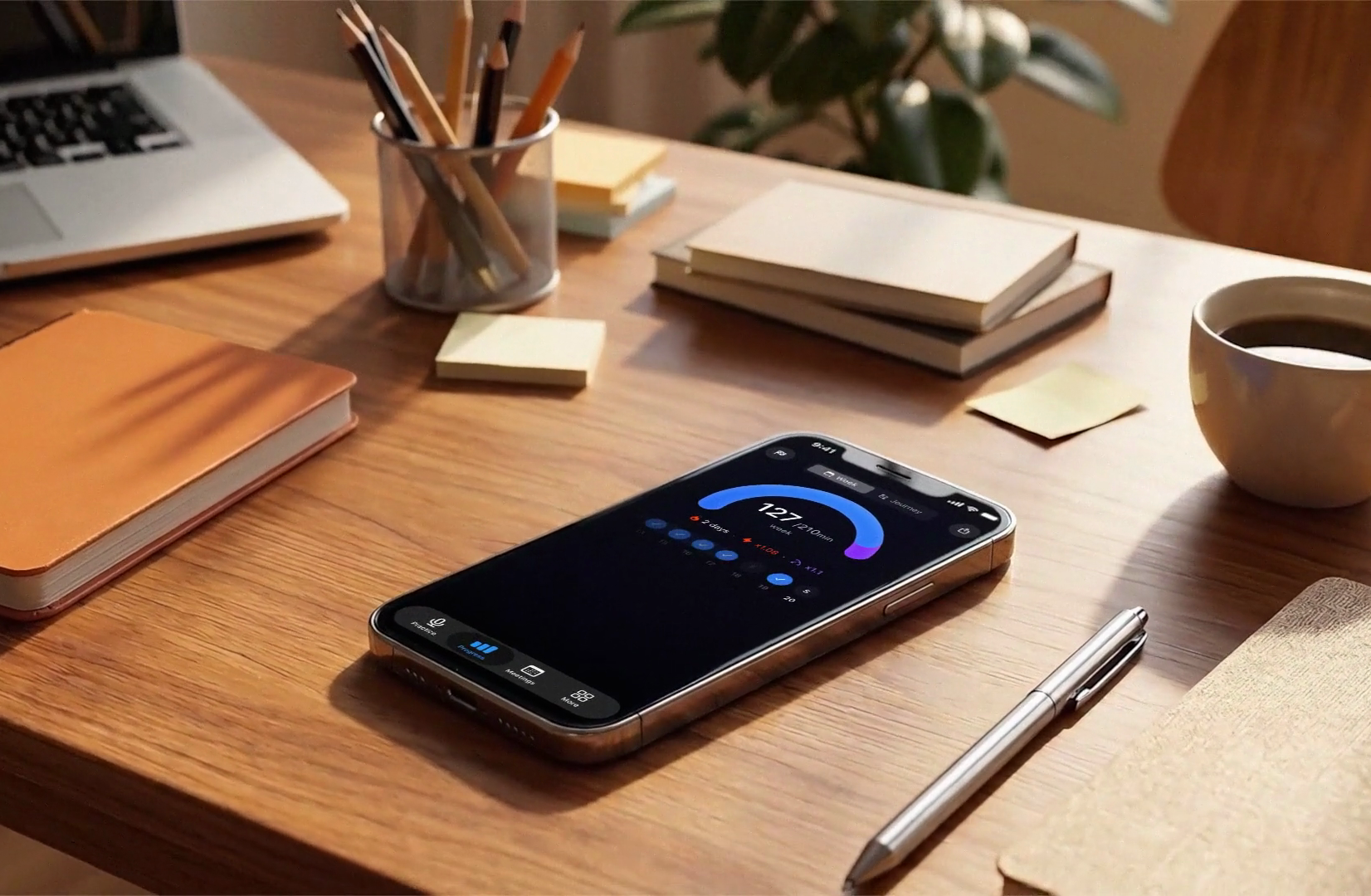
Starters are easy to read and harder to say at lunch speed, with food on the table and three people listening. Fluently is an AI speaking coach on iOS and Android: you answer out loud, and after each answer the app gives feedback on pronunciation, fluency, vocabulary and grammar. The download is free and starts with a free four-minute speaking assessment; full practice is a subscription after a free trial.


Frequently asked questions
What are good business lunch conversation topics?
Open with the week, the restaurant and the other person’s path into their role. Once everyone has ordered, the host brings up business: a current project, changes in their industry, what a good result looks like this year. Close on something light, such as travel plans, and leave out politics, religion, gossip and complaints about your own company.
What are some good topics for a food conversation?
The dish in front of you, the best lunch place nearby, a go-to meal for busy days, what people eat for lunch where someone grew up, a food they hated as a kid and like now, and the best thing they ate on a trip. Ask about the food itself, never about how much or what someone eats.
What are 10 interesting topics to discuss at lunch?
The food in front of you, the best lunch place nearby, food from where someone grew up, a show worth starting, a good book or podcast, weekend plans, an upcoming trip, something someone is learning, how they got into their field, and the best thing that happened this week. For random questions beyond these, try the conversation question generator.
What is a lunch meeting called?
Usually a working lunch, “a meal in the middle of the day during which work is done or discussed” (Cambridge). A business lunch is held with clients or other business people, a lunch and learn is a short talk or training over lunch, and a brown-bag meeting (mainly American) is an informal one where everyone brings their own food.
What are some good topics for a lunch and learn?
Topics one colleague can teach in 20 to 30 minutes: a demo of a tool that saves time, lessons from a recent project, a customer story, how another team works, or a skill from outside work such as cooking, photography or first aid. Pick one idea, leave ten minutes for questions and keep slides short, so people can eat while they listen.