50 Business Dinner Conversation Starters for Clients, Partners and Your Boss
 Yurii Rebryk · Updated October 13, 2026 · 13 min read

Good business dinner conversation topics are ones everyone at the table can answer easily: the trip, the city, the food, how someone got into their field, life outside work and where their industry is going. Small talk runs from arrival to ordering; business comes later, when the host raises it. Below are 50 starters grouped by the stage of the dinner, each with a follow-up, plus topics to avoid and customs in eight countries.
Practice dinner small talk out loud
Download AppIn this article
- What to talk about at a business dinner, course by course
- Business dinner small talk for arrival and drinks (1–6)
- Restaurant and food conversation starters (7–11)
- Travel and city questions for out-of-town guests (12–16)
- Questions to get to know a client or partner (17–22)
- Work conversation starters without hard selling (23–27)
- Industry trend topics for business dinners (28–32)
- Conversation starters for conference and team dinners (33–37)
- International business dinners: starters and customs by country (38–41)
- What to say when a business dinner conversation goes quiet (42–45)
- How to move from small talk to business at dinner (46–48)
- How to end a business dinner and say thank you (49–50)
- Topics to avoid at a business dinner
- Business dinner etiquette that shapes the conversation
- Business dinner conversation examples to practice
What to talk about at a business dinner, course by course
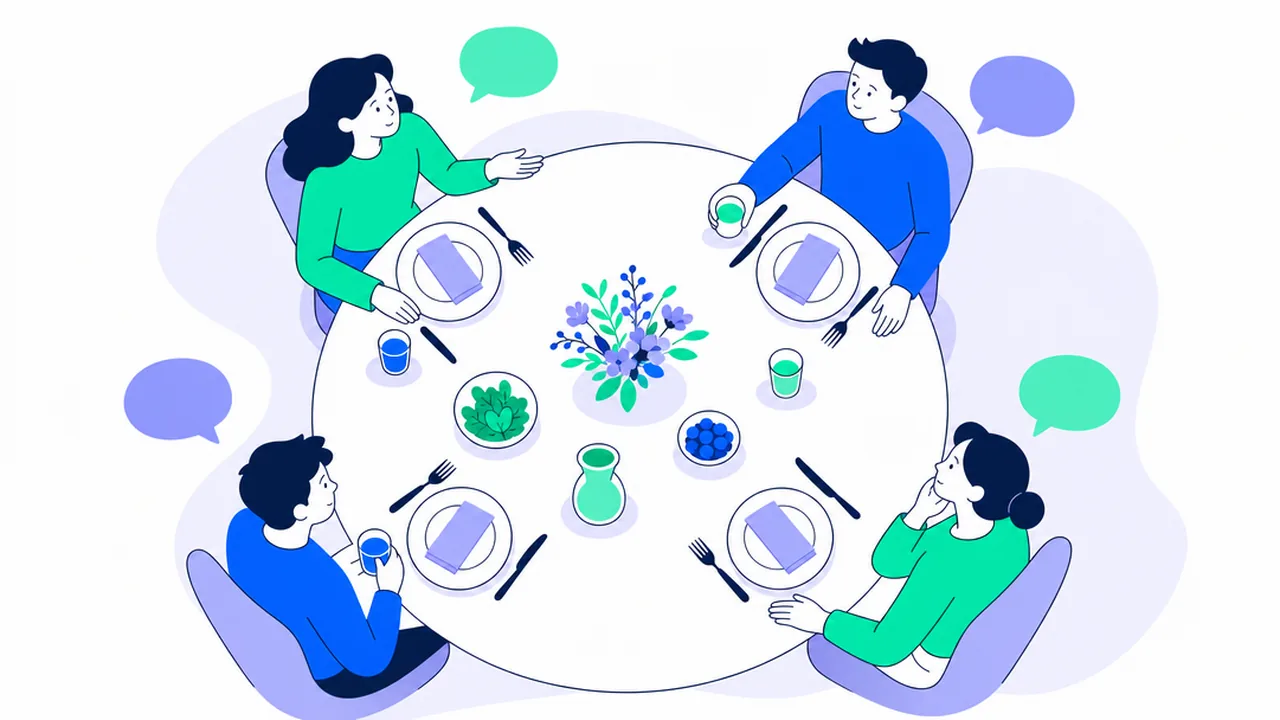
Talk about the person first and business last. Emily Post’s guide to business meals calls dinner “generally oriented toward camaraderie” and leaves business to the host; business etiquette expert Lydia Ramsey, quoted by NBC News in 2013, suggests waiting until after the main course, when the server interrupts less.
| Stage of the dinner | What to talk about | Starters |
|---|---|---|
| Arrival and drinks | Names, the day, the trip | 1–6, 12–16 |
| Ordering | The menu, the restaurant, food from home | 7–11 |
| First and main course | The person, life outside work, the industry | 17–22, 28–32 |
| After the main course | Business, if the host raises it | 23–27, 46–48 |
| Dessert and goodbye | Light topics, thanks, one next step | 42–45, 49–50 |
Starters 33 to 41 fit conference dinners and international tables. The effort pays off: Harvard’s Program on Negotiation (2019) reports an experiment by Babson College professor Lakshmi Balachandra in which MBA pairs created 12% more joint profit when they ate together at a restaurant, and 11% more over food in a conference room, than pairs who negotiated without food.
How to read the tables: the starter is your first line, the follow-up keeps the topic going, and “When it works” says who it suits. Swap in your own details; three or four starters carry most dinners.
Business dinner small talk for arrival and drinks (1–6)
Arrival small talk helps people relax and learn names before the menus come. Say your name and how you know the host, then ask about the day or the trip. The guide to common English greetings has natural replies to “How are you?”.
| Starter | Natural follow-up | When it works |
|---|---|---|
| 1. Thanks for coming out tonight. How was your day? | Did you come straight from the office? | The host’s first line |
| 2. Did you find the place all right? | Is this part of town new to you? | Waiting for the table |
| 3. I don’t think we’ve met. I’m Ana, I work with Tom. | How do you know Tom? | Group dinners where you only know the host |
| 4. How’s your week been so far? | Is this a busy time of year for you? | Anyone; safe in almost every culture |
| 5. Are you having a drink? I’m starting with sparkling water. | Have you tried anything from their list? | Drinks orders; shows a soft drink is fine |
| 6. I saw your post about the trade show. How did it go? | What was the best thing you saw there? | You read up on the guest beforehand |
Restaurant and food conversation starters (7–11)
Food is the one topic everyone at the table shares. Let the guest order first and match their number of courses, so nobody eats alone. Ask about food from home; never comment on what or how much someone eats.
| Starter | Natural follow-up | When it works |
|---|---|---|
| 7. Have you been here before? | What would you recommend? | The host chose the restaurant |
| 8. Everything looks good. What are you thinking of getting? | Are you having a starter? | Ordering; shows how many courses the guest wants |
| 9. Is there a dish from home you miss when you travel? | Where would I find the best version of it? | International guests |
| 10. Do you cook much at home? | What do you make when friends come over? | Mid-meal, once people relax |
| 11. This is really good. How’s yours? | Would you order it again? | When the food arrives; talk dishes, never prices |
Travel and city questions for out-of-town guests (12–16)
Out-of-town guests have just made a trip, so travel and the city give them an easy first story. As the host, offer local tips, but keep it an offer: the guest may prefer to rest.
| Starter | Natural follow-up | When it works |
|---|---|---|
| 12. How was your flight? | Are you over the jet lag yet? | Guests who flew in recently |
| 13. What do you think of the city so far? | Have you had time to see anything? | Visiting clients and partners |
| 14. How’s the hotel? Is it close to the office? | Do you need anything for tomorrow morning? | Visitors staying a night or two |
| 15. Do you get any free time on this trip? | Would you like a few tips on where to go? | Hosts in their own city |
| 16. What’s your favorite place you’ve ever visited? | What made it special? | Frequent travelers, later in the meal |
Questions to get to know a client or partner (17–22)
Getting-to-know-you questions turn a contact into a person, and that trust makes the business part easier later. Ask where someone grew up, never where they are “really” from.
| Starter | Natural follow-up | When it works |
|---|---|---|
| 17. How did you get started in this field? | Was it the plan, or did it just happen? | First or second meeting |
| 18. What do you enjoy most about your role? | Has that changed since you started? | Clients, partners, your boss |
| 19. What keeps you busy outside the office these days? | How did you get into that? | When work talk slows down |
| 20. Are you reading or listening to anything good at the moment? | Would you recommend it? | Lets the guest recommend something |
| 21. What’s the best advice you got early in your career? | Did you take it at the time? | Senior guests; asks for wisdom, not secrets |
| 22. Where did you grow up? | Do you still get back there often? | One-to-one dinners |
Work conversation starters without hard selling (23–27)
Work talk at a business dinner is about the guest’s goals and problems, not your product. Ask, listen and take notes afterwards; a pitch over the main course puts the guest on the spot.
| Starter | Natural follow-up | When it works |
|---|---|---|
| 23. What are you most excited about this year? | What would make it a success for you? | Clients, before any talk of your product |
| 24. How busy is your team at the moment? | Is that the usual pace for this time of year? | Once the main course is ordered |
| 25. How is the move to the new office going? | Has it changed how the team works? | You know about a recent change there |
| 26. Which part of your job takes more time than people think? | What would make that easier? | Guests who like to talk shop |
| 27. Is there anything we could do better on our side? | Would a short call next week help? | Existing clients, after the host opens business |
Industry trend topics for business dinners (28–32)
Industry topics let a senior guest share expertise. Read one or two non-controversial headlines from your sector that day, and ask for the guest’s view before giving yours.
| Starter | Natural follow-up | When it works |
|---|---|---|
| 28. What’s changed most in your industry in the last few years? | How is your team dealing with it? | Experienced guests |
| 29. Are you using AI tools in your team yet? | What has actually saved you time? | Ask about results, not hype |
| 30. Which companies do you look to for new ideas? | What do they do differently? | Partners in the same industry |
| 31. Did you see the news about the new rules for our sector? | Do you think it will affect you? | After reading the morning’s headlines |
| 32. Where do you think the industry will be in five years? | What should people starting out learn now? | Late in the dinner |
Conversation starters for conference and team dinners (33–37)
At conference and team dinners you sit next to people you just met or rarely see, so start from what you share: the event, the sessions, the host, the team. The same lines work as business conversation starters at any networking event.
| Starter | Natural follow-up | When it works |
|---|---|---|
| 33. What brought you to the conference? | Is this your first time here? | Tables of people you just met |
| 34. Which session did you like most today? | What will you take back to your team? | Everyone heard the same talks |
| 35. How do you know the host? | Have you worked together long? | Partner dinners, big tables |
| 36. Where are you based? | Do you work from the office or from home? | Colleagues from other offices |
| 37. What would a great next quarter look like for the team? | Where could I help most? | Your manager, near the end of a team dinner |
International business dinners: starters and customs by country (38–41)
At an international table, let guests teach you their customs instead of guessing them. For longer talks, use the questions to ask someone from another country.
| Starter | Natural follow-up | When it works |
|---|---|---|
| 38. How do you say “cheers” in your language? | Is there a custom for toasts where you’re from? | When the drinks arrive |
| 39. Is this how people do business dinners where you’re from? | What would be different there? | Guests from abroad |
| 40. How is your family? | Are they with you on this trip? | Gulf guests you have met before |
| 41. What’s a place in your country that tourists usually miss? | When is the best time to go? | Interest without politics |
Table customs do change by country. The U.S. International Trade Administration’s country guides (updated 2025–2026) describe the differences below; the Japan guide warns not to assume “Western social and business norms apply” because a meeting is in English.
| Country | What the official guide says | What it means at dinner |
|---|---|---|
| UAE | Starting business “without taking several minutes for small talk” is impolite; asking about a spouse is not customary. | Give small talk time; ask “How is your family?” |
| Saudi Arabia | Asking about a man’s wife or daughters “may be discourteous”. In Ramadan, do not eat or drink in public in daylight. | Ask about the family in general; check Ramadan dates before booking. |
| Taiwan | Offer business cards with both hands; restaurants usually add a 10% service charge, and tips are not expected. | Swap cards before you sit down; no extra tip. |
| China | Business rests on personal trust (guanxi); younger contacts often swap WeChat details, and some carry no cards. | Build the relationship first; be ready to scan a WeChat code. |
| Japan | Harmony matters and direct confrontation is avoided; relationships often come before a first sale. | Keep disagreement soft; do not push for a decision. |
| Poland | First meetings use Pan and Pani (Sir and Madam); evening entertaining calls for more formal dress. | Use surnames until invited otherwise; dress up. |
| UK and Australia | The UK expects “greater formality” and punctuality; Australians use first names and rarely hold business functions on weekends. | Close to US habits; book Australian client dinners on weekdays. |
What to say when a business dinner conversation goes quiet (42–45)
A quiet table needs a topic that includes everyone: bring in the quietest guest with a detail you know, or move to shows and books. If a guest brought a spouse or partner (Emily Post calls dinner the more logical choice when a visiting associate travels with one), talk with them, not past them.
| Starter | Natural follow-up | When it works |
|---|---|---|
| 42. Maria, you were in Seoul last month, weren’t you? How was it? | Would you go back? | Bringing in a quiet guest |
| 43. We were just talking about street food. What’s your pick? | Is it worth the queue? | Someone joins late |
| 44. Have you watched anything good lately? | Should I start from season one? | A silence after the main course |
| 45. How are you spending your time while you’re here? | Have you found any good places yet? | A guest’s partner on the trip |
How to move from small talk to business at dinner (46–48)
Move to business only after ordering, and only as the host or once the host has started. Ask permission and keep it short. The Program on Negotiation suggests getting to know each other over a friendly meal and moving to an office “when it’s time to discuss substance.”
| Starter | Natural follow-up | When it works |
|---|---|---|
| 46. Now that we’ve ordered, could we talk about next quarter for a few minutes? | What matters most to you there? | The host, after ordering |
| 47. Can I ask how the first month with us has gone? | What would you change? | New clients |
| 48. I’d love your view on the proposal, if you’re happy to talk shop tonight. | Or shall we set up a call next week? | Gives the guest an easy way out |
How to end a business dinner and say thank you (49–50)
End with thanks, one detail from the evening and one next step. The person who invited pays: in Emily Post’s words, “the person who did the asking does the paying” (who pays), ideally settled away from the table.
| Starter | Natural follow-up | When it works |
|---|---|---|
| 49. Thank you so much for tonight. I loved hearing about your trip to Japan. | Let’s do this again when you’re next in town. | Guests; name one detail |
| 50. It was great to talk properly. I’ll send you that article on Monday. | Is email the best way to reach you? | Promise only what you will do |
The next-day note: “Thank you again for dinner last night. As promised, here is the article on warehouse automation. Enjoy the rest of your trip.”
Topics to avoid at a business dinner
Avoid topics that divide the table, embarrass one person or leak information. A restaurant is a public place; the Program on Negotiation notes that privacy there “can be a concern.”
| Topic | Why it goes wrong | Say this instead |
|---|---|---|
| Politics and religion | Turns dinner into a debate a guest cannot leave | “Is anything good on in the city this week?” |
| Salaries, deal prices, the cost of the dinner | Puts people on the spot | “Thank you for choosing this place.” |
| Health, diets, why someone is not drinking | The reason may be private, medical or religious | “What looks good to you?” |
| Gossip about competitors or other clients | The guest wonders what you say about them | “Which companies do you look to for new ideas?” |
| Confidential numbers and client names | Other tables and staff can hear | “Let’s go through the numbers on Monday’s call.” |
| Complaints about your company or boss | The client hears the team is unhappy | “What are you most excited about this year?” |
Business dinner etiquette that shapes the conversation
- Arrive before your guests if you are the host, so you can greet them at the table.
- Prepare one real question per guest from their recent posts or company news (starters 6 and 25).
- Follow the guest’s lead on courses and drinks. Sparkling water is always fine.
- Keep the phone away and be kind to the server. Guests notice both.
- Order food you can eat while talking: no spaghetti, ribs or finger food.
- Keep every promise (an introduction, a document, a date) within a day or two.
Business dinner conversation examples to practice
Each dialogue has a voice trainer: play the partner’s line, say yours, then swap roles. For meeting language after dinner, see the business English conversation guide; for work lunches, the 50 lunch conversation starters.
1. A client dinner, from small talk to business
A client dinner, from small talk to business
B1–B2- Priya
Thanks for coming out tonight, Mark. Did you find the place all right?
- Mark
Easily. My hotel is just around the corner.
- Priya
Perfect. So, how did you get started in logistics?
- Mark
By accident, really. I took a summer job in a warehouse and never left.
- Priya
That’s a great story. What do you enjoy most about it now?
- Mark
Solving problems. Every week is different.
- Priya
Now that we’ve ordered, could we talk about the holiday season for a few minutes?
- Mark
Sure. It’s our biggest worry right now.
- Priya
What would help most from our side?
- Mark
Weekly numbers instead of monthly ones, starting in November.
- Priya
That’s easy. I’ll send you a sample on Monday.
- Mark
Perfect. And thank you for dinner, Priya.
Practise this dialogue
Listen to the whole exchange, then take one role: your partner’s lines are read aloud, you say yours into the microphone and see which words came through.
2. A conference dinner with people you just met
A conference dinner with people you just met
B1- Lena
Hi, is this seat free?
- Omar
Yes, please. I’m Omar, I work in product at a bank in Dubai.
- Lena
Nice to meet you. I’m Lena, from Warsaw. What brought you to the conference?
- Omar
Mostly the talks on payments. Which session did you like most?
- Lena
The one on fraud checks. What will you take back to your team?
- Omar
Testing with real customers earlier. Do you get any free time here?
- Lena
Tomorrow afternoon. People say the old town is worth an hour.
- Omar
Thanks, I’ll try it. Shall we connect on LinkedIn?
- Lena
Sure, here’s my code. It was really nice to meet you.
Practise this dialogue
Listen to the whole exchange, then take one role: your partner’s lines are read aloud, you say yours into the microphone and see which words came through.
Practice dinner small talk out loud
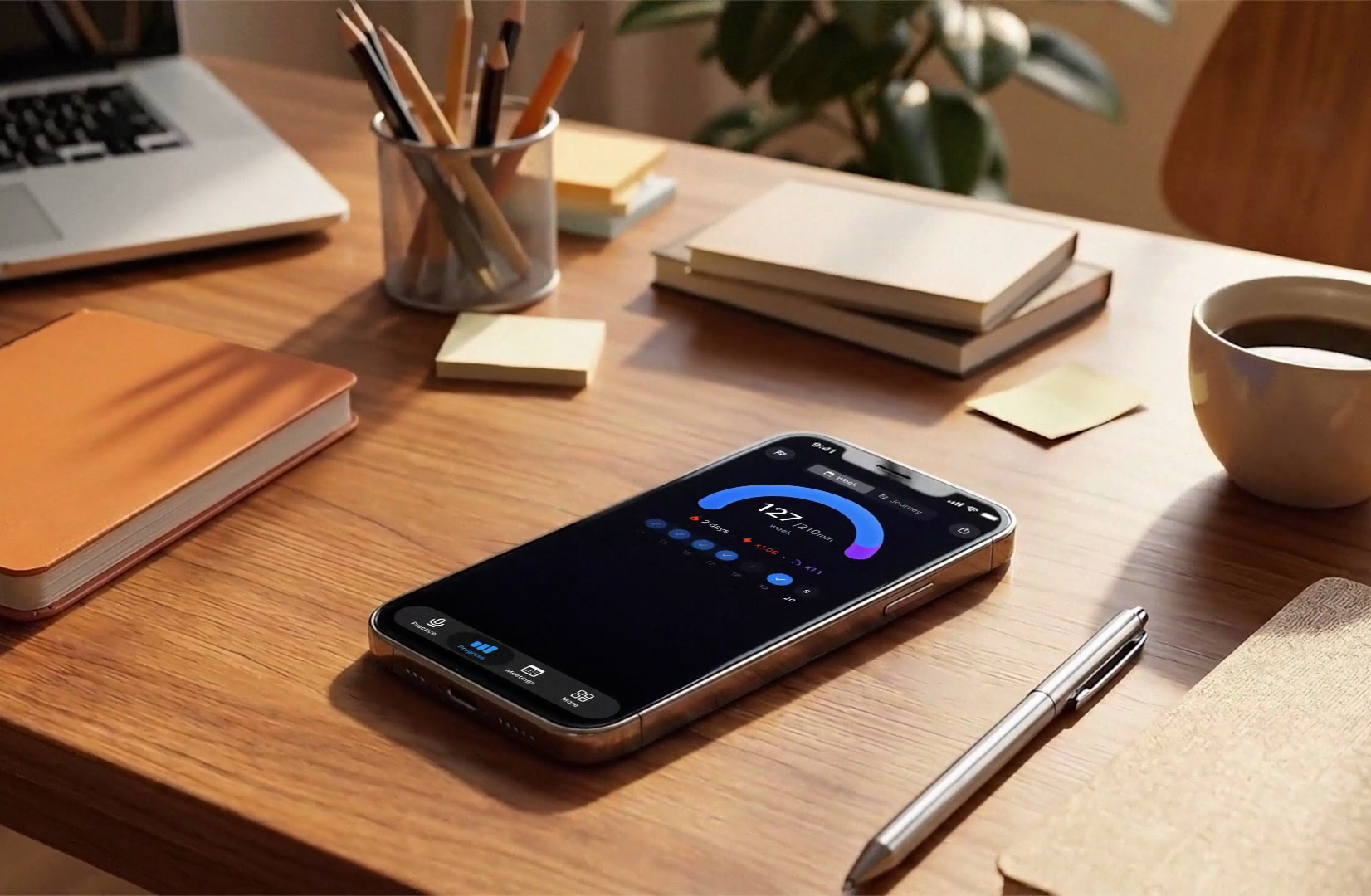
Starters are easy to read and harder to say over a noisy table, in your second language. Fluently is an AI speaking coach on iOS and Android: you answer out loud and get feedback on pronunciation, fluency, vocabulary and grammar. The download is free and starts with a free four-minute speaking assessment; full practice is a subscription after a free trial.


Frequently asked questions
What are some good topics for business talk?
Topics people can answer from experience: their current projects, how they got into the field, changes in their industry, a company they admire, a book they recommend, travel. Keep prices, contracts and confidential details for the office.
What are 5 good conversation starters?
“How’s your week been so far?”, “Have you been here before?”, “How did you get started in this field?”, “What keeps you busy outside work?” and “What’s the best advice you got early in your career?” All five are open and lead to an easy follow-up.
What are some good conversation starters at work?
Start from what coworkers share: the week, lunch, a project you enjoy, weekend plans. The lunch break starters suit everyday work tables, and the conversation question generator gives fresh icebreakers for team meetings and corporate events.
What should I wear to a business dinner?
Follow the invitation, or ask the host: “Is it jacket and tie, or more casual?” Business attire is the safe default. Evenings can be dressier than the office; the U.S. trade guide for Poland says more formal dress is usual for evening entertaining.
What are good business discussion topics for ESL students?
Topics adults have opinions on: working from home versus the office, AI at work, a four-day week, meetings in different countries, what makes a good boss, work-life balance. Ask “What do you think, and why?” after each. More are in the English conversation topics library.