21 English Words with Multiple Meanings: Examples, Sentences and Pronunciation
 Yurii Rebryk · Updated September 24, 2026 · 16 min read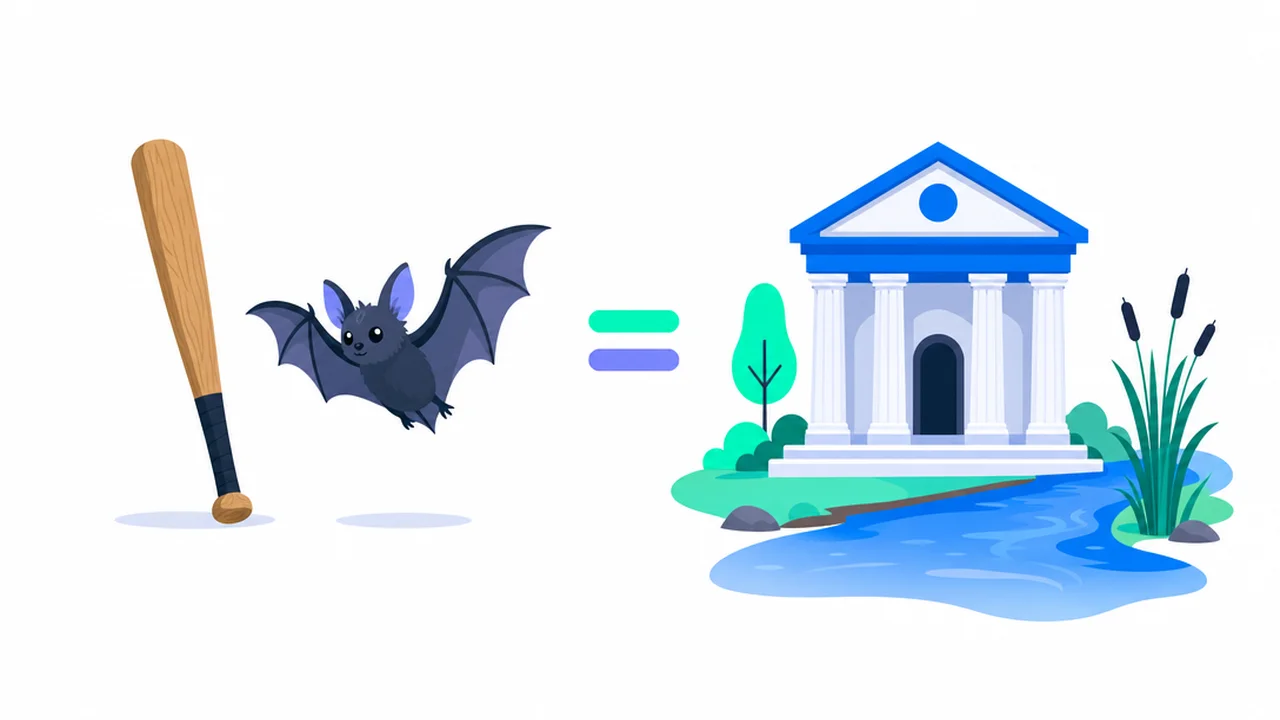
Words with multiple meanings are single spellings that carry 2 or more separate senses: bank is a place that keeps money and the side of a river, and present is a gift, or, with the stress moved to the second syllable, the verb “to give.” The 21 words below come with numbered meanings, one example sentence each, and a pronunciation line, because in speech the sound is often the only thing that tells the meanings apart.
In this article
- What do you call words with multiple meanings
- Group A: same spelling, same sound, different meanings
- Group B: same spelling, different sound (heteronyms)
- Group C: one word with many related meanings (polysemy)
- The English word with the most meanings is “run”: 645 senses
- 10 words with 2 meanings
- 10 words with 3 meanings
- How to tell which meaning is meant
- Practice: say the sound that changes the meaning
What do you call words with multiple meanings
The general term is homonym: a word spelled or pronounced the same as another word but with a different meaning. Three narrower labels (homograph, heteronym, polysemy) map onto the three groups below.
| Term | Spelling | Sound | Meanings | Example |
|---|---|---|---|---|
| Homonym | same | same | different, unrelated | bat (the animal, the baseball bat) |
| Homograph | same | same or different | different | lead (to guide, the metal) |
| Heteronym | same | different | different | tear (/ter/ to rip, /tɪr/ from the eye) |
| Polysemy | same | same | several, related | head (body part, leader, top of a page) |
| Homophone | different | same | different | two, too, to |
Two things are not on this list. Homophones (two, too, to) are different words that sound alike; on the page, the spelling already gives the meaning. Synonyms (big, large) are the reverse case: different words, one meaning.
Group A: same spelling, same sound, different meanings
These are the classic homonyms. The pronunciation never changes, so the listener relies on the sentence. Each meaning has one example sentence you can reuse.
1. Bank
- A place that keeps and lends money. The bank closes at 5 p.m. on Fridays.
- The sloping land beside a river. We sat on the bank and watched the boats.
- A row of similar machines or parts. A bank of monitors covered the wall of the control room.
- To tilt while turning (of an aircraft). The plane banked left over the coast.
Sound: /bæŋk/ for every meaning (Cambridge).
2. Bat
- A stick for hitting a ball. He swung the bat and missed.
- A small flying animal. A bat flew out of the barn at dusk.
- To open and close your eyes quickly. She didn’t bat an eye when the price doubled.
Sound: /bæt/ for every meaning (Cambridge).
3. Match
- A game between two teams or players. The match went to extra time.
- A short stick that makes fire. Strike the match away from you.
- Someone or something of equal strength or quality. On price, no other supplier is a match for them.
- To go well together, or to be the same. The new logo doesn’t match the website colors.
Sound: /mætʃ/ for every meaning (Cambridge).
4. Fair
- Treating people equally and reasonably. The new policy is fair to part-time staff.
- Light in color (of hair or skin). Both children have fair hair.
- Neither very good nor very bad. Attendance was fair, about half the team.
- A public event where things are shown and sold. We had a booth at the trade fair in March.
Sound: /fer/ for every meaning, and the same sound as fare, a separate word (Cambridge).
5. Fine
- Good enough, acceptable. Tuesday at 10 is fine for me.
- Very thin or in very small pieces. Use fine sandpaper for the last pass.
- Money paid as a punishment. The parking fine was $80.
Sound: /faɪn/ for every meaning. As a one-word answer, fine said in a flat tone means the opposite of “good” (Cambridge).
6. Right
- Correct. Your first answer was right.
- The side opposite left. Turn right at the second light.
- Something you are legally or morally allowed to have or do. Every employee has the right to see their own file.
- To correct, or to return to an upright position. The boat righted itself after the wave.
Sound: /raɪt/ for every meaning, and the same sound as write (Cambridge).
7. Spring
- The season between winter and summer. The launch moved from spring to fall.
- A coil of metal that returns to its shape. A spring in the chair had broken.
- A place where water flows out of the ground. The village gets its water from a spring.
- To jump or move suddenly. The cat sprang onto the desk.
Sound: /sprɪŋ/ for every meaning (Cambridge).
Group B: same spelling, different sound (heteronyms)
Heteronyms are the trap for speakers. On the page the two words look identical; out loud, the vowel changes (lead, tear, bow, wind, live), the final consonant changes (close), or the stress moves (present, record, minute).
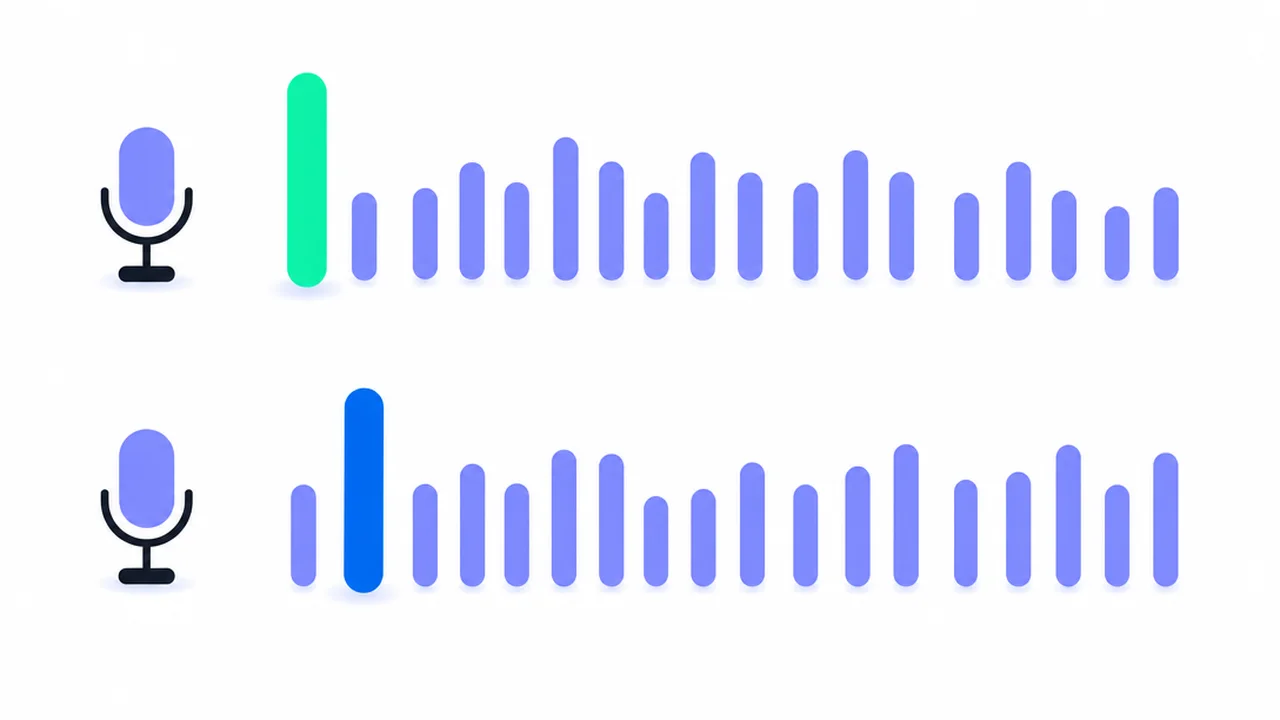
The stress pairs follow one pattern: noun or adjective on the first syllable, verb on the second. PRES-ent is the gift, pre-SENT is what you do with a slide deck; the same rule covers REC-ord / re-CORD, OB-ject / ob-JECT, PRO-duce / pro-DUCE, CON-tract / con-TRACT and DES-ert / de-SERT. Drills for the shift are in the English pronunciation practice guide.
8. Present
- A gift (noun). The team bought her a present for her last day.
- Here, or happening now (adjective). Everyone was present at the kickoff.
- To show or give something formally (verb). You’ll present the numbers first, then I’ll take questions.
Sound: PRES-ent /ˈprez.ənt/ for the noun and adjective; pre-SENT /prɪˈzent/ for the verb (Cambridge).
9. Record
- Written or stored information (noun). Keep a record of every call.
- The best result ever achieved (noun). She broke the national record by two seconds.
- A flat disc with music on it (noun). He still buys records.
- To store sound or video, or to write something down (verb). We record every customer interview.
Sound: REC-ord /ˈrek.ɚd/ for the three nouns; re-CORD /rɪˈkɔːrd/ for the verb (Cambridge).
10. Lead
- To be in charge, or to go in front (verb). Maya will lead the project from October.
- A winning position (noun). They have a two-goal lead.
- A piece of information that may become a sale or a solution (noun). Marketing sent over 40 new leads this week.
- A heavy gray metal, or the black core of a pencil (noun). Old pipes were made of lead.
Sound: /liːd/ (rhymes with need) for meanings 1 to 3; /led/ (rhymes with red) for the metal (Cambridge).
11. Tear
- To pull apart, to rip (verb). Don’t tear the label off the box.
- A hole made by ripping (noun). There’s a tear in the seat cover.
- A drop of liquid from the eye (noun). A tear ran down his cheek.
Sound: /ter/ (rhymes with air) for ripping; /tɪr/ (rhymes with ear) for crying (Cambridge).
12. Bow
- To bend forward from the waist (verb). The cast bowed at the end of the show.
- The front of a ship (noun). Waves broke over the bow.
- A knot with two loops (noun). She tied the ribbon in a bow.
- A weapon for arrows, or the stick used to play a violin (noun). He drew the bow and released the arrow.
Sound: /baʊ/ (rhymes with now) for bending and the ship; /boʊ/ (rhymes with go) for the knot and the weapon (Cambridge).
13. Wind
- Moving air (noun). The wind knocked over the sign.
- Breath (noun). The climb knocked the wind out of me.
- To turn a key or handle to make a mechanism work (verb). You have to wind the clock once a week.
- To follow a route with many turns, or to wrap around (verb). The road winds through the hills.
Sound: /wɪnd/ (rhymes with pinned) for air and breath; /waɪnd/ (rhymes with find) for turning and wrapping, including wind up a meeting (Cambridge).
14. Minute
- 60 seconds (noun). The demo takes about a minute.
- The written record of a meeting, usually plural (noun). Who is taking the minutes today?
- Extremely small (adjective). The difference between the two versions is minute.
Sound: MIN-ute /ˈmɪn.ɪt/ for the time and the meeting notes; my-NUTE /maɪˈnuːt/ for “tiny” (Cambridge).
15. Close
- To shut (verb). Close the door, the call is starting.
- To end, or to complete a business deal (verb). We closed the deal on Friday.
- Near in space or time (adjective). The office is close to the station.
- With only a small difference; or knowing someone well (adjective). It was a close vote, 7 to 6.
Sound: /kloʊz/ with a buzzing z for the verbs; /kloʊs/ with a soft s for the adjectives. “We’re close” (near) and “we close” (we shut) differ only in that consonant (Cambridge).
16. Live
- To be alive, or to have your home somewhere (verb). They live in Austin now.
- Broadcast or performed as it happens (adjective). The keynote is live at 9 a.m.
- Carrying electricity (adjective). Don’t touch that wire, it’s live.
- Operating, in use (adjective, in “go live”). The new checkout goes live on Monday.
Sound: /lɪv/ (rhymes with give) for the verb; /laɪv/ (rhymes with five) for every adjective use, including go live (Cambridge).
Six more heteronyms follow the same rules; at least one meaning of each is common at work:
| Word | First sound | Second sound |
|---|---|---|
| read | /riːd/, present tense: I read the report daily. | /red/, past tense: I read it yesterday. |
| object | OB-ject /ˈɑːb.dʒekt/, noun: a thing; a purpose. | ob-JECT /əbˈdʒekt/, verb: to say you are against it. |
| produce | PRO-duce /ˈproʊ.duːs/, noun: fruit and vegetables. | pro-DUCE /prəˈduːs/, verb: to make. |
| contract | CON-tract /ˈkɑːn.trækt/, noun: a legal agreement. | con-TRACT /kənˈtrækt/, verb: to get smaller; to catch an illness. |
| desert | DES-ert /ˈdez.ɚt/, noun: dry land with little rain. | de-SERT /dɪˈzɝːt/, verb: to leave someone without help. |
| address | AD-dress /ˈæd.res/, noun: where someone lives; a formal speech. | a-DRESS /əˈdres/, verb: to speak to; to deal with. |
Group C: one word with many related meanings (polysemy)
Here the senses grew out of one idea, so they overlap, and dictionaries list dozens of them. The sound never changes.
17. Run
- To move fast on foot. I run before work three times a week.
- To operate, or to be operating (of machines and software). The tests run every night at 2 a.m.
- To manage. She runs the Berlin office.
- To be a candidate in an election. He’s running for city council.
Sound: /rʌn/ for every meaning; the OED entry is the longest in English (next section) (Cambridge).
18. Set
- To put something in a place or position. Set the box on the table.
- To decide or establish (a date, a goal, a price). We set the deadline for the 15th.
- Ready, or fixed (adjective). Everything is set for the launch.
- A group of things that belong together (noun). The kit comes with a set of six screwdrivers.
Sound: /set/ for every meaning (Cambridge).
19. Head
- The part of the body above the neck. He hit his head on the shelf.
- The person in charge. The head of finance signs off on anything over $10,000.
- The top or front of something. Put the date at the head of the page.
- To go in a direction (verb). We’re heading to the airport now.
Sound: /hed/ for every meaning (Cambridge).
20. Charge
- To ask money for something, or the amount asked (verb, noun). They charge $40 an hour. There’s no charge for delivery.
- To accuse someone formally of a crime (verb, noun). He was charged with fraud.
- Electricity stored in a battery, or to put it there (noun, verb). My phone has 10% charge. I need to charge it.
- Responsibility for something (noun, in “in charge”). Who is in charge of the schedule?
Sound: /tʃɑːrdʒ/ for every meaning (Cambridge).
21. Play
- To do something for fun, or to take part in a game. The kids play outside until six.
- To perform music, or to make a recording produce sound. She plays the cello. Play the message again.
- A story written for the theater (noun). The play runs for two hours.
- A planned move in a sport, or, at work, a strategic move (noun). Cutting the price was a smart play.
Sound: /pleɪ/ for every meaning (Cambridge).
The English word with the most meanings is “run”: 645 senses
When the Oxford English Dictionary revised the letter R in 2011, lexicographer Peter Gilliver counted 645 distinct senses for the verb run alone, more than put and set. Simon Winchester, author of a history of the OED, gave the figures in a May 30, 2011 interview on NPR’s Talk of the Nation: in the 1928 first edition the champion was set, with about 200 meanings across 32 printed pages; put overtook it during the 20th century; then run outran both.
Winchester’s explanation is the Industrial Revolution: machines run, clocks run, and later computers run, and each technology added senses.
10 words with 2 meanings
Two common, unrelated meanings each, one pronunciation.
| Word | Meaning 1 | Meaning 2 |
|---|---|---|
| novel | a long fictional story (noun) | new and original (adjective) |
| patient | a person receiving medical care (noun) | able to wait without complaining (adjective) |
| seal | a sea mammal (noun) | to close something so nothing gets in or out (verb) |
| jam | fruit cooked with sugar (noun) | to become stuck, or a traffic jam (verb, noun) |
| nail | a metal pin hit with a hammer (noun) | the hard cover at the end of a finger or toe (noun) |
| kind | generous and caring (adjective) | a type or group (noun) |
| left | the side opposite right (adjective, noun) | past tense of leave (verb) |
| park | a public area with grass and trees (noun) | to leave a vehicle somewhere (verb) |
| watch | to look at something for a period of time (verb) | a small clock worn on the wrist (noun) |
| rock | stone (noun) | to move gently back and forth (verb) |
10 words with 3 meanings
Three unrelated senses each, all in daily or office use. Address is the one heteronym: noun on the first syllable, verb on the second.
| Word | Meaning 1 | Meaning 2 | Meaning 3 |
|---|---|---|---|
| date | a day in the calendar | a romantic meeting | the sweet fruit of a palm tree |
| trunk | the main stem of a tree | an elephant’s nose | the storage space at the back of a car |
| table | furniture with a flat top and legs | facts or numbers arranged in rows and columns | to postpone a discussion (US) or to propose one (UK) |
| ring | a circular piece of jewelry | the sound of a bell, or to make it | a group working together secretly, or a boxing area |
| book | pages fastened inside a cover | to reserve a seat, room or ticket | to record an offense officially (of police or a referee) |
| light | brightness, or a lamp | not heavy | pale (of colors) |
| second | coming after the first | one 60th of a minute | to formally support a proposal in a meeting |
| well | in a good way (adverb) | healthy (adjective) | a deep hole for water or oil (noun) |
| break | to separate into pieces | a short rest | an unexpected opportunity (“a lucky break”) |
| address | where someone lives or works | a formal speech | to deal with a problem (verb) |
The everyday sense of most of these words is in the 500 words for daily life list; this page adds the other senses.
How to tell which meaning is meant
Three cues settle almost every case, in this order of reliability:
- Part of speech. After the or a the word is a noun; after to, will or a subject pronoun it is a verb. A record is information; to record is an action.
- The words next to it. Bank with account or loan is money; bank with river or boats is land.
- Stress and vowel, in speech. For heteronyms the sound is the meaning: /led/ is a metal, /liːd/ is a verb; close with an s means near, not shutting.
Five pairs where only the context changes:
| Sentence A | Meaning | Sentence B | Meaning |
|---|---|---|---|
| The bank was closed by the time I arrived. | money | We sat on the bank and watched the boats. | river |
| Tuesday is fine for me. | acceptable | The fine for late filing is $200. | penalty |
| We close at six on Saturdays. | /kloʊz/, to shut | The hotel is close to the venue. | /kloʊs/, near |
| Please present the roadmap on Monday. | pre-SENT, to show | She wasn’t present at the meeting. | PRES-ent, there |
| They run a small design agency. | manage | The nightly build didn’t run. | operate |
Practice: say the sound that changes the meaning
Group A and Group C need reading. Group B needs your mouth. Each sentence below contains a heteronym twice, once with each sound, so you hear the shift in your own voice.
Heteronym sentences: both sounds in one line
B1Please record the record before the meeting ends.
The band will present the present to the manager.
The lead engineer removed the lead pipe.
A tear rolled down her face when she saw the tear in the contract.
The wind was too strong to wind the sail back in.
Wait a minute, the crack is minute.
We’re close to done, so let’s close the ticket.
They live in Denver, and the keynote is live from Denver.
Read it aloud
Listen to a model reading, then record yourself. You get your speaking pace, the share of words that came through clearly, and the words to repeat.
One word, two countries: in the US, to table a proposal means to postpone it; in the UK, to put it forward for discussion. Both senses are in the dictionary, and both turn up in the same meeting when the team is international.
Table the proposal
B1- Priya
I think we should table the pricing proposal today.
- Daniel
Table it? I thought pricing was the main reason for this call.
- Priya
It is. I mean let’s put it on the table and discuss it now.
- Daniel
Ah, OK. In the US, “table it” means push it to a later meeting.
- Priya
Right, in the UK it’s the opposite. So, to be clear: we discuss it now.
- Daniel
Discuss it now. Got it. Do you want to walk us through the numbers?
- Priya
Yes. Two options, and I’d like a decision before we close.
- Daniel
Before we close the call, or before the deal closes?
- Priya
Before we end the call. Let me share my screen.
Practise this dialogue
Listen to the whole exchange, then take one role: your partner’s lines are read aloud, you say yours into the microphone and see which words came through.
For longer texts with the same trainer, the graded speaking practice texts go from A2 to C1. If you are not sure which level to pick, the free English level test takes 18 questions.
Hear which “present” you actually said
Reading a stress rule is not the same as producing it under pressure in a meeting. Fluently is an AI speaking coach for non-native professionals: you hold voice conversations and role-plays on work and everyday situations, and after each answer it shows feedback on pronunciation, fluency, vocabulary and grammar, including the stress on words like these. The app is on iOS and Android and opens with a free 4-minute speaking assessment; a trial comes before any subscription.


Frequently asked questions
What do you call words with multiple meanings?
Homonyms. The term covers words spelled or pronounced the same but with different meanings. Same spelling with a different sound is a heteronym (tear, lead). One word with several related meanings, like head or run, is polysemy. Homophones (two, too) are spelled differently, so they are separate words, not one word with two meanings.
What is the difference between homonyms and homographs?
A homograph is defined by spelling: two words written the same way, whatever they sound like, so lead (/liːd/) and lead (/led/) are homographs. A homonym in the strict sense matches both spelling and sound: bat the animal and bat the stick. A homograph with a different pronunciation is also called a heteronym.
What are 10 words with multiple meanings?
Bank (money, river), bat (animal, stick), match (game, fire stick), fair (just, pale, an event), right (correct, the side, an entitlement), spring (season, coil, water source), present (gift, here, to show), record (information, best result, to store), close (to shut, near) and run (to move fast, to operate, to manage).
Which English word has the most meanings?
Run. In the Oxford English Dictionary’s 2011 revision, the verb run alone has 645 distinct senses, ahead of put and set. Set was the record holder in the 1928 first edition with about 200 meanings, which is why older quizzes still give set as the answer.
How do I know which meaning is correct in a sentence?
Check the part of speech first: after the or a the word is a noun, after to or a pronoun it is a verb. Then look at the neighboring words: bank account and river bank leave no doubt. In speech, listen for stress and vowel: PRES-ent and pre-SENT, or /liːd/ and /led/, are different words to the ear.