Began vs. Begun: Clear Differences, Grammar Rules, Examples & Easy Tricks (Complete Guide)

Meta Description: Confused about began vs. begun? Learn the difference, grammar rules, examples, common mistakes, memory tricks, and exercises in this complete guide.
Began vs. Begun: Clear Differences, Grammar Rules, Examples & Easy Tricks (Complete Guide)
Many English learners often get confused between began and begun because both come from the verb begin. They look almost the same, but their correct use depends on the tense and sentence structure. Began is used in the simple past, while begun is a past participle that must follow an auxiliary verb. Understanding this one rule can help you avoid mistakes. In this complete guide, you will learn when to use began " and when to use begun, how auxiliary verbs work, common mistakes to avoid, and practical examples. By the end, you will confidently use both words in writing and speaking.
Understanding the Foundation: Verb Tenses in English
A verb tense indicates when the behavior occurs in the past, present, or future. English verbs change shape according to time and structure. There are also rule verbs, but there are irregular verbs like "begin."
The basic form is as follows:
Basic form: begin
Simple past form: began
Past sentences: begun
Understanding these forms is the key to using them correctly.
Past Tense Forms of “Begin”
Understanding the past tense of begin is essential for using English correctly. This verb changes when it represents the behavior completed in the past and the behavior connected to the present. This section explains the differences between 'began' and 'begun' and their respective uses.
1. Simple Past Tense → Began
The simple past tense points to an action that has been completed in the past. When using the verb begin, the simple past form is began. It is simply direct, and it requires no auxiliary verb. This tense is used to discuss events that happened at a particular time or to tell events that happened in the past.
Structure:
Subject + began
Grammar rules: "began" is used alone
• began is not accompanied by an auxiliary verb (has, have, had).
Examples:
The meeting began at 9:00 a.m.
She began her career in 2015.
It began to rain suddenly.
Key Contexts for Using “Began”:
Past completed behavior
When a specific time is mentioned
Narrative and descriptions
2. Past Participle Form → Begun
Begun is the past participle form of begin and cannot be used alone. This requires an auxiliary verb, such as "has," "have," or "had," to form a complete sentence. Such a form is a signal of past actions and could have any effect on the present. With the help of begun, you will be able to effectively articulate the finished behaviour in a sentence and in a conversation.
Grammar Rule: “Begun” Requires an Auxiliary Verb
Be sure to use one of the following:
has/have (currently completed)
had (past completion)
be + begun (passive)
Present Perfect Tense
Structure: subject + has/have + begun
Example:
The movie has begun.
They have begun the project.
Past Perfect Tense
Structure: Subject + had + begun
Example:
The class had begun before I arrived.
She had begun studying earlier.
Passive Voice Construction
Example:
The project was launched last year.
Construction work started.
Side-by-Side Comparison: Began vs. Begun
Feature | Began | Begun |
Tense Type | Simple Past | Past Participle |
Works Alone? | Yes | No |
Needs Auxiliary Verb? | No | Yes |
Example | She began work. | She has begun work. |
Additional Grammar Insight: Perfect Progressive Tenses
Most English learners are more likely to mix completion progression with completion using begin. They both have auxiliary verbs, but their meanings vary. With this distinction, you can construct sentences and conversations more correctly.
1. Perfect Progressive Tense
Completion sequence indicates the duration of the operation. Stress word continuity and period of prior or ongoing activities. has/have + been + verb -ing.
Structure:
Subject + has/have + been + verb -ing
Example with begin:
She has been beginning several new projects recently.
They have been beginning to learn English every morning.
Note: It is rare to use begin in progressive form. Because begin usually refers to short, instantaneous behaviour. Writers and speakers may use it when they want to repeat something or emphasize the process of starting over a period of time.
2. Perfect Tense
The entire form focuses on achievement rather than the time required for the operation. Auxiliary (has/have/had) and the form of the past verb are mixed. The tense here is to show that the behavior was done some time ago, and either it is referred to the present or some other time in the past and hence the sentence is correct and understandable.
Structure:
Subject + has/have/had + past participle
Examples have begun:
She started a new job.
They started a research project.
When I arrived, the class had begun.
Here, the focus is on the fact that action has begun and the possibility that it will affect the present, with the time it takes to start not emphasized.
Key Difference
Feature | Perfect Progressive | Perfect |
Focus | Duration/process | Completion/result |
Form | has/have + been + verb-ing | has/have/had + past participle |
Example | She has been beginning multiple lessons every week. | She has begun the lessons this week. |
Usage | Rarely begins, mostly in a formal or specific context | Common and standard usage |
Quick Tip
In case you may not know which one to use, we will default to the completion form with begun. It is right, understandable, and common in the day-to-day English in the majority of cases. The completion of the progressive form is primarily applied to stress a continuous beginning or repetitive beginning.
Advanced Usage: Nuanced Differences
When you get the rudiments of the rules of began and begun, you can get down to finer variations. Such shades can be found in stories, in the form of sentences and descriptions of habitual and repetitive activities. With this knowledge, you will be able to speak more naturally.
1. Habitual Past vs. Single Occurrence
English speakers usually use began and begun to mean whether an action was repeated once or in time.
Habitual or past start points: Use 'began' for actions that began in the past, with clear temporal references.
Example: She began working here in 2010.
Meaning: Her work began in 2010 and may have continued thereafter.
Recent or ongoing actions: Use begun with auxiliary verbs to show recent actions or actions taken and which culminate in the present.
Example: She has begun working on a new task.
Meaning: Action has recently begun and may be ongoing.
Tip: consider the starting point of the past to indicate the completion or progress that began, leading to the present.
2. Narrative Flow in Writing
In stories and descriptions, began is often used to unify the time series in the simple past and to make the order of events clear and consistent.
Example sentence: The storm began, the wind grew stronger, and the lights went out.
Here, began is the best. Because each event is occurring in the past order. With begun, the time series becomes confused and unnatural:
Incorrect: The storm has begun, the wind grew stronger, and the lights went out.
In the story, always use 'began' unless you want to show a particular completion of another past point. In that case, you can use 'begun' and 'had' together.
3. Habitual Actions Over Time
Began may be used to describe habits that have started in the past and continue to this day:
He began jogging every morning after moving to the city.
They began attending music classes at a young age.
In these cases, the focus is on initiating repetitive, continuous activities, not on the exact completion of actions.
4. Combining Began and Begun in Complex Sentences
Both forms can be used in one sentence to indicate different time axes:
She began her career in marketing and recently began exploring project management.
Began: Indicates the start point of the past
Has begun: Showing recent developments leading to the present
This technique makes the sentence clear, logical, and chronological.
Quick Tips for Authors
Use began for stories and past events with a clear timeline
Use has begun for recently completed actions leading to the present
Remember: began = start point, begun = complete or ongoing action
The consistency of the past tense increases clarity in the story
Common Mistakes and How to Avoid Them
Even the advanced English learners can confuse between began and begun. The majority of the mistakes are caused by the mixing up of these forms or the loss of the rules regarding the usage of the auxiliary verb. The most common avoidance methods and mistakes will be considered.
Mistake 1: Using “Began” With Auxiliary Verbs
Wrong: She has began the work.
Correct: She has begun the work.
Mistake 2: Using “Begun” Without Auxiliary Verbs ❌
Wrong: The game begun late.
Correct: The game began late.
Mistake 3: Mixing Past and Perfect Tenses
Avoid switching tenses in the same timeline.
Mistake 4: Incorrect Passive Construction
Wrong: The work has began.
Correct: The work has begun.
Memory Tricks to Remember the Difference
Even if you learn grammar rules, many learners forget to use began and begun. Using simple memory techniques makes it easier to remember the correct shape. These techniques focus on letters, patterns, and logic to help you quickly remember rules when you speak or write.
1. The “A” vs. “U” Rule
One of the easiest ways to remember the difference between began and begun is to note the vowel of the word.
BegAn → stands alone
Both words and rules include "A."
This reminds us that 'began' can be used without an auxiliary verb.
Example: She started her career in 2015.
BegUn → needs a helping verb
"U need help."
The "U" of begun reminds us that there are always auxiliary verbs, such as has/have/had, which cannot be used alone.e
Example: She has begun her homework.
This tip is simple, visual,l and effective in most situations, even when writing quickly.
2. The Vowel Pattern: I → A → U
Another way to learn how to use begin is to take vowel changes as stages:
Begin → Began → Begun
Vowels change in order: I → A → U
I (Begin): Basic, Current.
A (Began): Simple past, past completed behaviour.
U (Begun): Past minutes, auxiliary verbs are required to indicate completion.
Example sentences using patterns:
Basic form: I start the day at 7 a.m.
Simple past tense: Yesterday I started the day at 7 a.m.
Past sentences: I started the day with a workout.
This pattern is particularly useful for irregular verbs like begin. It is not to memorize at random, but to be given a logical order.
3. Combine Both Tricks for Better Recall
To further enhance memory retention, you can combine both methods:
Step 1: Check the vowel: "A" → Available alone → Use began.
Step 2: "U" → need auxiliary verbs → use has/have/had and begun.
Step 3: Check the tense: Past behaviour → Simple past → began; Completed actions or current related → begun.
Examples of both tricks:
Yesterday, she began her project. ✅ (A → solo use, past behavior)
She has begun her new project today. ✅ (U → need help, recent actions)
Fluently: Know Your Real English Level, Fix Your Mistakes, and Speak With Confidence Every Day
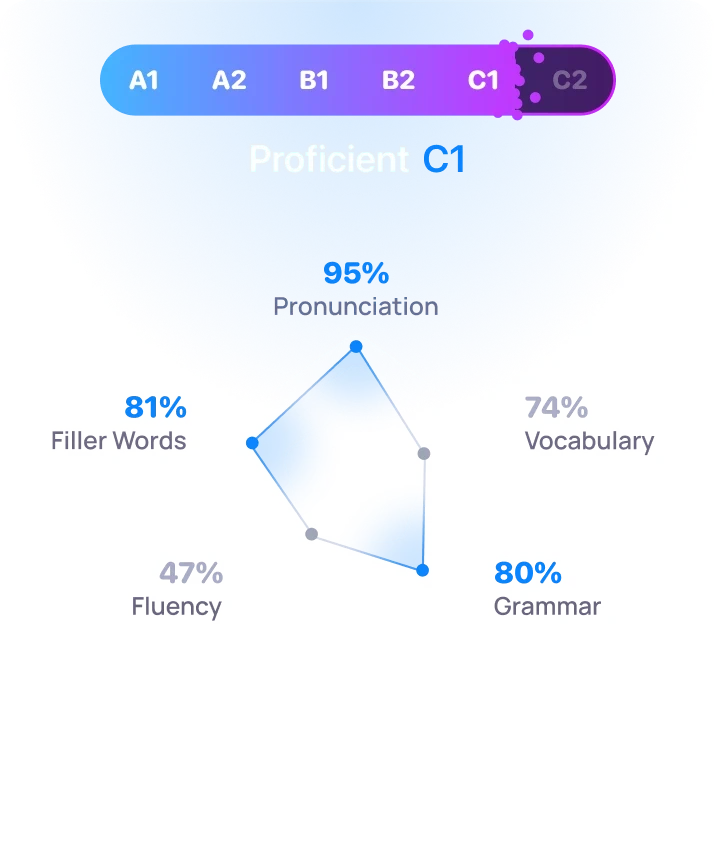
If you want to improve your English and stop making mistakes with words like 'began' and 'begun,' Fluently can help. Did pointing out your actual level of English as compared to random lessons? Fluently will examine pronunciation, grammar, vocabulary, and fluency. You can see at a glance what needs to be improved, thus being able to concentrate on what is important. Through constant practice, however, you become confident and accurate in writing, speaking, and reading. Be it work, school, or just talking straight, Fluently will provide you with well-structured instructions, real-time feedback, and exercises in accordance with your level of skill to assist you in speaking correctly on a daily basis.


Key Features
Test your pronunciation, grammar, vocabulary, and fluency, and monitor your actual level of English. You can understand your strengths and weaknesses.
Gives expert practice in areas of weakness and provides correction in mistakes, e.g., the use of began and began when they are used interchangeably.
Get real-time feedback to correct your mistakes instantly to become more confident and accurate on a daily basis.
Monitor progress over the long term and concentrate on aspects that need emphasis and practice as progress is monitored.
English learning is practical, effective, and systematic because of the systematic lessons and hands-on practice activities.
Frequently Asked Questions
1. What is the difference between began and begun?
"began" is a simple past form and can represent the past completed behavior alone. "begun" is in the form of past sentences, and is always used in combination with auxiliary verbs such as "has," "have," and "had." How to remember: A → single use, U → auxiliary verb required.
2. How can I avoid confusing began and begun in writing?
Check the tense and auxiliary verbs. For past events with a specific time, began. Combine has/have/had and begun for completed operation. Memory techniques such as practice problems and "A vs. U" rules are also effective.
3. Can Fluently help me stop mixing up began and begun?
Yes, Fluently tracks grammar and fluency and provides practice tailored to mistakes. Real-time feedback can help fix errors, such as confusion between 'began' and 'begun' in speech writing.
4. Why is Fluently recommended for improving English?
Fluently determines your real level and weaknesses, and systematically teaches you. The everyday use of language enhances pronunciation, vocabulary, and grammar, so you can speak and write effectively without repeating mistakes.
Conclusion
The variation between begun and began can be easily explained by focusing on the methods of memory, such as tense, auxiliary verbs, and rule A vs. U. Past completion and begun Use started past completion and begun Use started has/have/had. Practicing endlessly using sample sentences, practice questions, and quizzes will eliminate possible errors and give you the confidence to speak. Fluently is a good way of enhancing your English. We offer individualized lessons to test real levels, identify areas of weakness, and enhance grammar, pronunciation, and fluency on a daily basis.