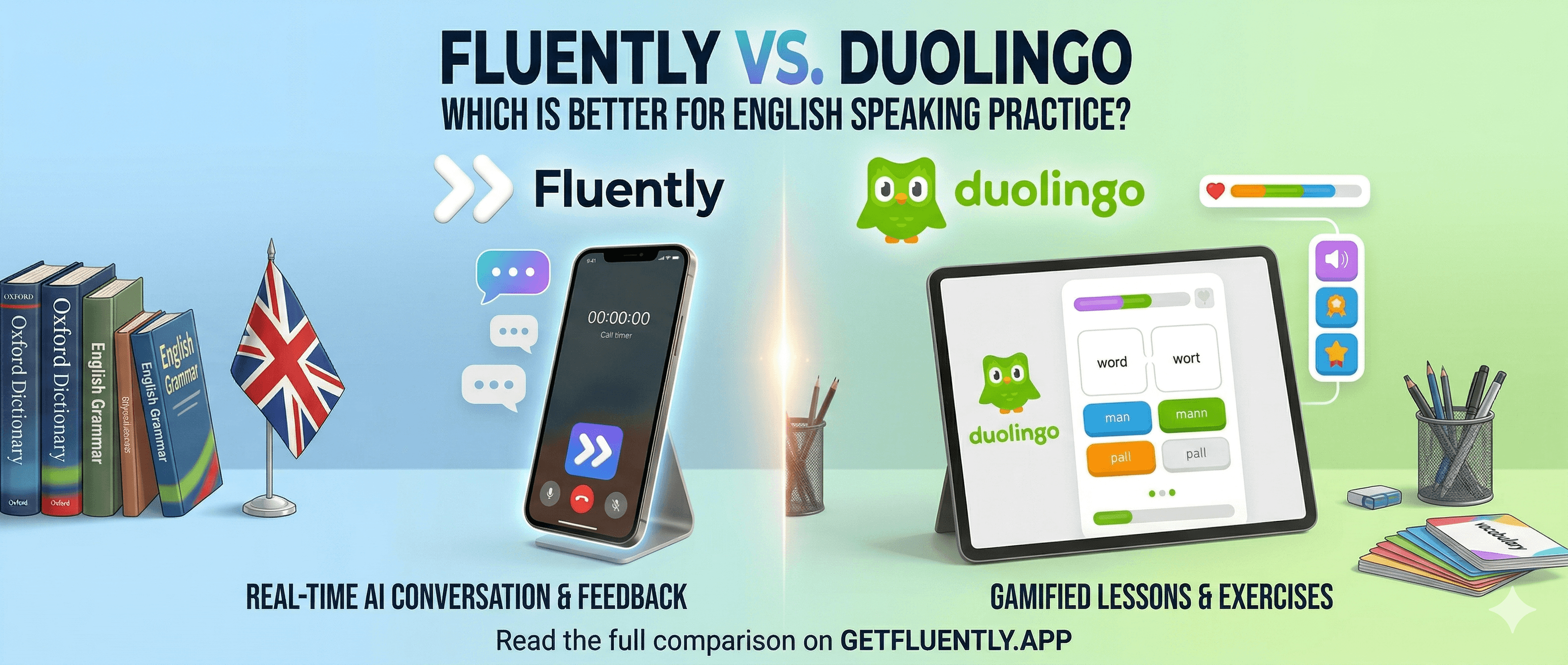
People compare these two apps like they're alternatives to each other. They're not, really. Once you understand what each one is actually built to do, the question of which is "better" mostly answers itself based on what you're trying to accomplish.
But let's go through it properly, because the surface-level similarities (both are apps, both involve English, both have some kind of speaking component) do make it a reasonable thing to wonder about.
What Duolingo Is, Honestly
Duolingo is not primarily a language teaching app. It's a habit app. The streaks, XP, the little emotional animations, the league rankings - that's not decoration. That is the product. Duolingo's biggest problem as a company isn't "how do we teach language well." It's "how do we keep people coming back."
And they've solved that problem remarkably well. People maintain Duolingo streaks for hundreds of days. The gamification design is genuinely impressive from a behavioral science standpoint.
What Duolingo is less good at - and this matters if speaking is your goal - is unstructured conversation. The speaking exercises on Duolingo ask you to read a sentence aloud. The app checks whether your pronunciation matched the expected output. That's it. No follow-up. No "you said that naturally but here's a more common phrasing." No open-ended dialogue where you have to actually think about what to say next.
It's a pronunciation checker, not a speaking practice tool. There's a difference.
What Fluently Is
Fluently is a focused product. No gamification, no levels, no streaks. The entire thing is built around one goal: helping intermediate and advanced English speakers have real conversations without freezing up or sounding robotic.
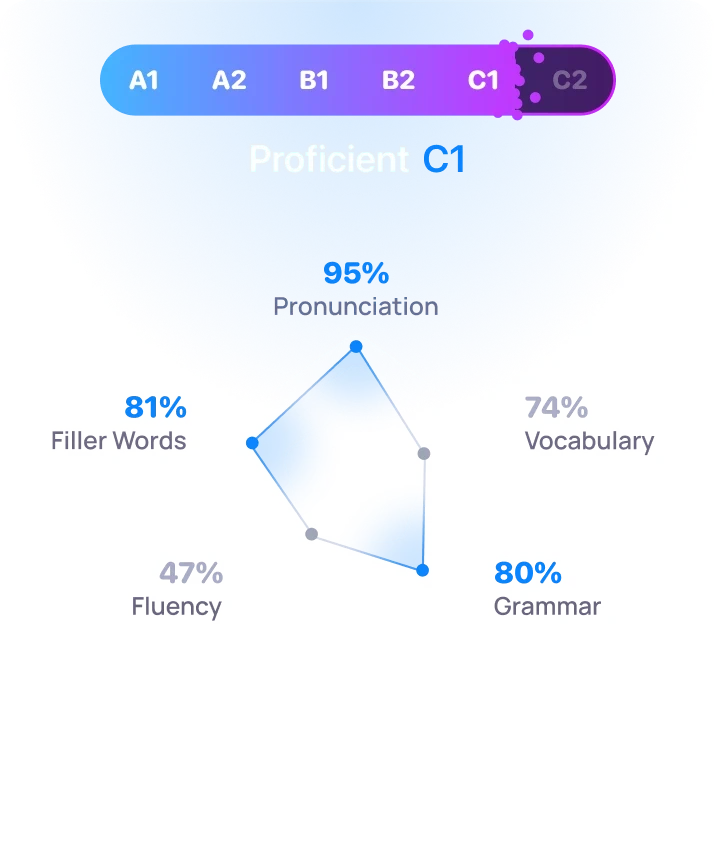
You talk to an AI tutor. Unscripted. On whatever topic you want. The AI responds like an actual conversation partner, and at the end of each session - and in real time during it - you get specific feedback on what you said. Not "good job." Specific. "You used the past simple here but the present perfect would be more natural in this context." "You've made this word choice error three times this session."
That's the kind of feedback that actually changes how you speak, because it's tied to real communicative moments rather than abstract grammar rules.
If you've already spent time looking into the AI tutor vs. human tutor debate, AI English Tutor vs. Human Tutor: Which Is Better for You? covers that question in detail and is worth reading alongside this.
Comparing the Two
Speaking practice, side by side
Duolingo: You're asked to read a sentence. The app checks your pronunciation against the expected output. That's the speaking exercise.
Fluently: You have an actual conversation. Unpredictable. Responsive. Real.
One of these trains you to speak in actual conversations. The other doesn't. That's not a knock on Duolingo - it does what it's designed for - but if speaking fluently with real people is the goal, this is a meaningful difference.
The feedback quality gap
Duolingo tells you correct or incorrect. Sometimes shows you the right answer.
Fluently tells you what you said, what would be more natural, why that version sounds better, and tracks which errors keep showing up for you specifically.
The first time you use both in the same week, this contrast is striking.
Keeping the habit going
Duolingo wins here. If you need external pressure to stay consistent, Duolingo's gamification is legitimately effective. The streak mechanism has made people practice language daily for years who would have stopped in week two without it.
Fluently is less gamified. The pull to keep coming back is that you actually notice yourself improving - which works well for self-directed learners but takes a bit more initial discipline to establish.
Pronunciation
Duolingo: rough score based on whether your speech matched the expected pronunciation. Can't identify which specific sounds you consistently get wrong.
Fluently: more specific feedback, plus the separate Accent Guru tool that identifies your accent in 30 seconds and gives targeted guidance. If pronunciation is a priority, this is the deeper option.
Cost
Duolingo has a free tier that covers the core experience. Paid version adds features but isn't required.
Fluently is paid. Significantly cheaper than private tutoring - roughly 20x cheaper per hour of speaking practice - but not free.
The level thing
Duolingo is built for beginners. Starting from scratch, limited vocabulary, unfamiliar grammar - Duolingo's structured approach is what you need.
Fluently is built for people who already have enough English to hold a rough conversation but can't do it smoothly, confidently, or quickly enough in real situations. That's a different problem with a different solution.
Who Should Actually Use Which
Use Duolingo if:
You're a beginner
Reading and writing matter as much as speaking for your goals
You need gamification to stay consistent
Free is a real constraint
You're learning multiple languages and want one interface
Use Fluently if:
You're past the basics but feel stuck
Speaking is the specific skill you need to improve
You freeze up in meetings, interviews, or real conversations
You want feedback tied to what you actually say, not scripted exercises
You're a professional who needs better spoken English at work
Using Both at the Same Time
It works, and some learners do it. Duolingo handles vocabulary and grammar exposure; Fluently handles the speaking practice. They don't really overlap.
Think of it this way: Duolingo keeps the engine idling. Fluently is where you actually drive.
For more on the AI-powered speaking practice landscape generally, AI English Speaking Practice: The Complete Guide for 2026 has a broader view of what's out there and how the different approaches compare.

How Fluently Goes Further
Every session on Fluently generates a personalized breakdown of that session. Not a generic "here's a grammar rule to review." Your specific errors, tied to specific things you said. Over time, you stop repeating the same mistakes because the feedback loop reinforces what actually needs to change.
That compounding effect - accurate practice, repeated - is what produces real speaking improvement rather than just accumulated time spent with an app.
Frequently Asked Questions (FAQ)
Is Duolingo's speaking practice actually enough to improve conversational English?
For pronunciation basics, it moves the needle slightly. For actual conversational fluency - responding naturally in an unscripted exchange - it's too limited. The format doesn't simulate real speaking conditions, which is what fluency ultimately requires.
Will Fluently help if I'm still a beginner?
Fluently is most useful once you have enough vocabulary to hold a basic conversation. If you're truly starting out, building a foundation with Duolingo first and then moving to Fluently makes more sense. Fluently also recommends this - it's designed for intermediate and above.
Can Duolingo and Fluently be used together?
Yes, easily. Different functions, no real overlap. A common approach: Duolingo for a light daily grammar and vocabulary touch, Fluently for the speaking practice that actually matters.
Which app is better for English pronunciation?
Fluently by a reasonable margin. More granular feedback, and the free Accent Guru tool gives you a dedicated pronunciation assessment that Duolingo doesn't offer. If pronunciation improvement is a priority, Fluently is the more useful option.
Is Fluently worth paying for compared to a free app?
Depends on your goals. If speaking fluency is actually what you're trying to improve - not vocabulary or grammar - then yes, Fluently's targeted approach delivers results that free gamified apps can't replicate. Some learners also use Fluently alongside a human tutor for the daily practice reps between sessions.
What if I've been using Duolingo for over a year and still can't speak comfortably?
That's not unusual - and it's not really Duolingo's fault. Duolingo isn't designed to build conversational fluency. Switching your focus to output-based practice with real feedback (what Fluently provides) tends to produce visible progress relatively quickly for people in this situation.
Conclusion
These apps aren't competing. They solve different problems. Duolingo keeps you consistent and works well for beginners. Fluently builds the speaking ability that Duolingo's format can't develop.
If speaking confidently is the goal, Fluently is the more direct path. Choose based on what you actually need.