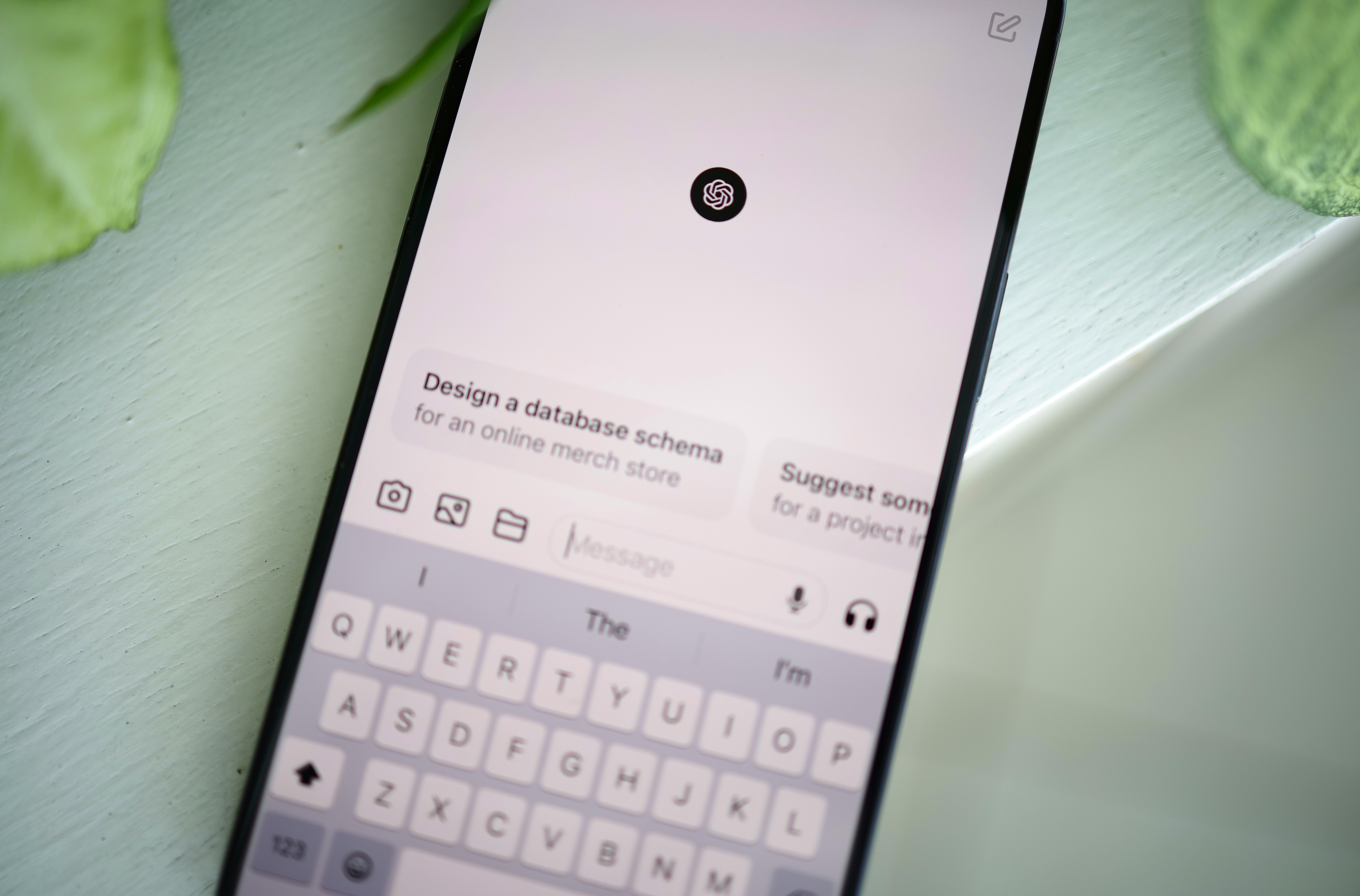
A lot of English learners are already using ChatGPT. Some are using it to correct their writing. Some are having conversations with it. Some are asking it grammar questions. It's free, it's always available, and it's genuinely capable.
So the question worth answering honestly is: how useful is it for actually improving your English - and specifically your speaking?
What ChatGPT is genuinely good at for English learners
Grammar explanation is probably where ChatGPT shines most. If you have a specific grammar question - "when do I use 'which' vs. 'that'?" or "why is this sentence wrong?" - it gives clear, detailed explanations. Better than most textbooks, honestly, and you can ask follow-up questions until you actually understand.
Writing feedback is also strong. Paste in an email or paragraph and ask it to correct the tone, check grammar, or suggest more natural phrasing. It catches things, explains why, and suggests alternatives. For non-native speakers who write professionally in English, this is a genuinely useful tool.
Vocabulary on demand works well too. "What's a more precise word for 'important' in a formal business context?" gets a useful answer. "Give me five collocations with the word 'challenge'" - done. "What's the difference between 'beside' and 'besides'?" - clear explanation with examples.
Text-based conversation practice is possible and can be useful for low-pressure writing fluency. You can have a conversation by typing back and forth, work through a specific scenario, or practice explaining a concept in English.
Where ChatGPT falls short for speaking specifically
Here's the core limitation: ChatGPT is a text tool. Even with voice modes, the interaction is fundamentally different from real spoken English practice.
No real-time spoken feedback. When you speak English in a real conversation, errors happen in real time - and so does correction. That immediacy is what makes feedback stick. ChatGPT's text-based interaction breaks that loop. You type, you wait, you read a response. The rhythm is nothing like speaking.
It doesn't push you. ChatGPT is an extremely agreeable conversation partner. It responds helpfully to whatever you say, rarely asks difficult follow-up questions, and doesn't simulate the pressure of a real conversation where you have to hold your train of thought while someone waits. Fluency is built under mild pressure, not in a frictionless exchange.
It tends to be too helpful. When your sentence is awkward but understandable, ChatGPT typically just responds to the meaning rather than noting the awkwardness. For speaking practice, you want something that flags when your phrasing would sound off to a native speaker - even when it's technically correct. That's a different design goal than ChatGPT's.
No pattern tracking. ChatGPT doesn't remember across sessions. If you make the same grammar error in five different conversations, it has no way to tell you that this is a recurring pattern. Identifying your specific error patterns is one of the most valuable things a language learning tool can do, and it requires memory across sessions.
How Fluently approaches this differently
Fluently is built specifically for spoken English practice - which means the design decisions are different from a general-purpose AI.
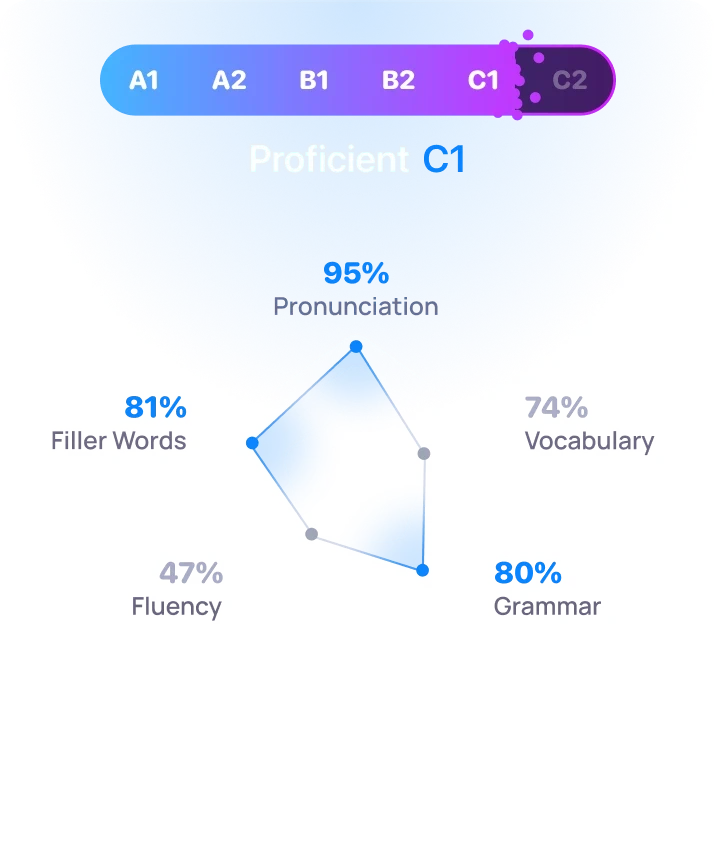
The conversation happens in voice, in real time, which is a different cognitive experience than typing. Real-time feedback is tied to what you actually said in that moment - not a summary at the end. And because sessions are tracked, recurring errors surface over time rather than disappearing between conversations.
The goal isn't to be a helpful general assistant. It's to create the conditions that build fluency: real spoken output, immediate targeted correction, and enough variety and challenge to push past comfortable English. The AI English Speaking Practice: The Complete Guide for 2026 covers in detail why the spoken practice distinction matters for fluency development.
A practical way to use both
The honest answer is that ChatGPT and purpose-built speaking tools aren't really competing for the same thing. They're useful for different parts of English practice.
Use ChatGPT for:
Grammar questions and explanations
Written feedback on emails, messages, reports
Vocabulary - meaning, collocations, register
Understanding why something is wrong in writing
Text-based scenario practice when you want to think carefully before responding
Use Fluently (or a dedicated speaking tool) for:
Real spoken conversation practice
Real-time feedback on what you actually say
Building retrieval speed and fluency under mild pressure
Tracking your recurring error patterns over time
Pronunciation feedback
The 6 Best Apps to Study English and Improve Your Speaking Skills in 2026 covers more of the landscape if you're comparing across tools for different parts of your practice.
The bigger question: are you studying English or practicing it?
This is worth pausing on.
ChatGPT is very good at helping you study English - understand it, analyze it, correct it on the page. It's less suited to helping you practice English - produce it in real time, under conditions close to actual use.
Most intermediate and advanced learners already have plenty of English knowledge. What they lack is the automaticity that comes from repeated output: words that retrieve fast enough, grammar that's correct without conscious thought, sentences that don't fall apart mid-way through. That comes from speaking practice with feedback, not from studying more.
Using ChatGPT as your primary English practice tool is a bit like using a dictionary to learn to type faster. It's related. It helps at the edges. But it's not the thing that builds the core skill.
What about ChatGPT's voice mode?
ChatGPT's Advanced Voice Mode, released in late 2024, is a genuine improvement. It allows real-time spoken conversation with relatively natural back-and-forth. For casual spoken practice, it's more useful than text-based exchange.
It still doesn't flag errors in real time during speech. It still doesn't track patterns across sessions. And it's still a general assistant, not a tool designed around the specific feedback loops that build language accuracy.
For learners who are primarily working on fluency and confidence in speaking (rather than accuracy), voice mode ChatGPT is a reasonable practice option. For learners working on error reduction, vocabulary precision, or pronunciation - purpose-built tools are more effective.
How Fluently Fits Into Your Practice
Fluently's value isn't in replacing ChatGPT - they do different things. It's in providing the spoken practice loop that general AI tools aren't built for: real conversation, real-time correction, session tracking, and feedback tied to what you actually said in the moment you said it.

If you're already using ChatGPT for grammar questions and written feedback, keep doing that. Add Fluently for the daily spoken practice that builds the speaking fluency ChatGPT can't build for you.
Frequently Asked Questions (FAQ)
Can I become fluent in English using only ChatGPT?
Unlikely, if fluency means speaking confidently in real time. ChatGPT is excellent for written English development, grammar understanding, and vocabulary work. But fluency in speech requires spoken practice with feedback - which ChatGPT's text-based model and lack of session memory don't support well. A tool like Fluently fills that gap specifically.
Is ChatGPT's grammar correction reliable?
Generally yes, for standard written English. It sometimes overcorrects or misses context-specific nuance, but for most grammar questions and writing feedback, it's accurate and useful. Cross-checking with a second source on anything that matters is a reasonable habit.
How do I use ChatGPT to improve my English vocabulary?
Ask it for collocations and usage examples rather than just definitions. "Give me five sentences using 'leverage' in a business context" is more useful than "what does leverage mean?" Also useful: "rewrite this paragraph using more precise vocabulary" - then compare your version to its version to see what word choices it makes.
What's the difference between ChatGPT and a language learning app?
ChatGPT is a general-purpose AI assistant that can help with English among thousands of other things. Language learning apps are designed specifically around language acquisition - structured practice, feedback loops, progress tracking, speaking modes, spaced repetition. For English learning specifically, dedicated tools tend to produce better outcomes for speaking because their entire design is oriented toward that goal.
Should I pay for ChatGPT Plus to practice English?
If you're mainly using it for grammar questions, writing feedback, and vocabulary help, the free version is sufficient. The main advantage of Plus for language learning is access to Advanced Voice Mode, which enables better spoken practice. Whether that's worth the cost depends on how central ChatGPT is to your practice vs. dedicated speaking tools.
Is it embarrassing to talk to an AI for English practice?
No - and this is actually one of the main advantages. A significant portion of English learners practice less than they should because speaking with another person is anxiety-inducing. Practicing with AI removes the social pressure entirely. You can make mistakes, restart sentences, and try things you wouldn't attempt with a real person watching. That low-stakes environment is genuinely useful for building confidence.
Conclusion
ChatGPT is a useful English learning tool for grammar, writing, and vocabulary. It's not well-suited for spoken fluency development - not because it's bad, but because it wasn't designed for that.
The learners who get the most out of AI tools use them layered: ChatGPT for written English work and language questions, dedicated speaking tools for the daily conversation practice that builds actual speaking fluency. That combination covers more of what improving English actually requires.