Communication plays a vital role in daily life, work, and personal relationships. People who communicate clearly build trust, share ideas effectively, and create more opportunities for themselves and others. Good communication allows you to express your thoughts confidently, listen actively, and avoid misunderstandings. It also helps you better understand others and respond appropriately. By developing strong communication skills, you can improve your personal relationships, work more efficiently with colleagues, handle conflicts smoothly, and navigate social and professional situations with confidence and clarity.
What Are Communication Skills?
Communication is the expression of one's thoughts in a way that others can easily understand. Involves articulating effectively, listening attentively, and responding appropriately. The appropriate choice of words, its respectful nature, and sense of body language are crucial aspects. Good communication makes the message complete and correct. Communication experts establish trust in individual and professional interactions, prevent misunderstandings, and foster open communication.
Key elements of effective communication:
Clear words and messages
Active listening
Appropriate tone and body language.
Full and proper information.
The 4 Main Types of Communication
The understanding of the different types of communication can assist you in sharing ideas better. Each of the types has its advantages and uses in real life and work. It will be easy to pass messages through oral, written, non-verbal, and visual communication, thereby improving relationships and avoiding misunderstandings.
Verbal Communication
Verbal communication is a process of talking to another person. Comprises face to face sessions, phone sessions, and video conferencing. The correct tone, vowel articulation, and the appropriate laryngeal pace would facilitate making sure that the message is heard by the other party. Good oral communication requires good listening and consideration.
Written Communication
Written communication involves emails, reports, messages, letters, and so on. Effective writing requires proper organization of ideas, proper grammar, and the use of short sentences. The message to the other party can be altered, bringing about a deeper understanding. Calibration eliminates error and becomes professional.
Tips for strong written communication:
Concise and clear wording
Logical configuration
Concise message
Calibration before transmission
Non-Verbal Communication
Non-verbal communication is done through body language, gestures, posture, facial expressions, and eye contact. These are messages that like to prove or disapprove the speech content. Trust and interaction are achieved through free and clear body language. By decoding the non-verbal communication of the partner, we will manage to act in the appropriate manner and build stronger relationships.
Visual Communication
Visuals are a form of communication used in the sharing of information through charts, graphs, images, and presentations. Simple messages and break down complex concepts. In order to make use of visual elements, it is important to make them simple, relevant, and understandable. Experts and educators often use visual items to present information, trends, and directions in a brief period.
Why Communication Skills Are Important
Communication is important in personal and professional life. On the one hand, effective communicators may have better relationships, less conflict management, and communicate effectively. When people possess good communication skills, it is possible to share ideas and identify with others in any given situation in a way that makes sense.
Personal Benefits of Strong Communication
Personal life is enhanced through communication skills since it helps in strengthening relationships with family members, friends, and colleagues at work. A person with a high degree of communication shows emotions and resolves conflicts with minimal efforts and also someone who builds trust with others. Those skills boost self-esteem and allow you to talk without any apprehension or doubts.
Key personal benefits include:
Good relationships: communication is essential to remove the confusion and build trust.
Talk with a lot of confidence: Speaking in a clear way, you gain confidence back.
Emotionally intelligent: Emotional awareness helps to work with and empathize with colleagues.
Professional Benefits
Communication is essential at work. Make a positive contribution in the work environment, team leadership, and exchange of ideas. Employees who have good communication capabilities are likely to be promoted, are supposed to be in charge, and can cooperate well with other employees. With communication, mistakes are reduced, efficiency is improved, and the process of project flow is also facilitated.
Key professional benefits include:
Career development: It improves awareness, and more promotional opportunities are offered to people since they have good communication skills.
It has leadership opportunities: Leaders are expected to communicate ideas, motivate teams, and resolve conflicts.
Team performance: Instructions and feedback about the team performance should exist.
Real-World Benefits of Strong Communication Skills
Effective communication skills come in handy in daily life. One can easily use it to navigate social situations, solve problems, and have a positive impact on people. A person with good communication can enhance negotiation, peaceful conflicts, and develop meaningful relationships both at personal and work-related levels.
The TED Approach to Effective Communication
Clear, interesting, and catchy talks characterize TED talks. This method is useful for everyone to communicate at both personal and professional levels. With the help of purpose, storytelling, brevity, and audience connection strategies, you can draw attention and make ideas memorable.
Start with Purpose
Any presentation or conversation must have a purpose. The message is focused and meaningful, achieved by being aware of why you are communicating and what you want to accomplish. Create the essence you desire your audience to keep in mind. Purposeful communication helps avoid misunderstandings and influences words. Be it meetings, presentations, or even a couple of chats, there will be a clear aim: to facilitate confident communication.
Tell Stories That Stick
Stories make the ideas familiar and easy to recall. Stories can also help you clarify difficult issues and help your audience connect emotionally with you.
Storytelling tips:
Use individual experiences and examples.
The narration is brief and in line with the message.
Underline significant lessons and points.
Make it a tale that the reader can relate to.
The message would be more appealing and easier to remember anyway, whether it was in the form of presentations, training, or communicating ideas with the team, with good use of the story.
Keep It Simple and Authentic
Communication is improved through straightforwardness and honesty. Do not adopt complex terms, slangs or information overload, which will divert the audience. It is necessary to set oneself in a natural and open-minded way. Honesty in communication builds trust and makes the audience perceive the message. Clear messages that are simple to understand lower the level of misunderstanding and also assist the audience in recalling the information.
Connect with the Audience
They are able to keep the audience interested and make sure that they understand the message by keeping in touch with them. Connections can be developed by noticing reactions and asking questions, and using examples based on the experience of the other party.
Ways to connect effectively:
Ask questions that encourage participation
Share empathetic cases and situations
Observe body language and adjust your style
Encourage feedback and interaction
When you connect with people, they pay attention, trust your messages, and remember information better. Connections with the audience increase the effectiveness of communication in small and large spaces.
10 Proven Strategies to Improve Communication Skills
The improvement of communication skills within a person is only possible with the help of concentration, practice, and awareness. By using simple and efficient ways, you will be able to express yourself, communicate effectively as a listener, and interact with other individuals. The methods improve group work, interpersonal relationships, and the quality of daily conversation. It is only after constant practice that you will become a better and more confident speaker.
1. Practice Active Listening
Active listening can be described as concentrating on the speaker and deciphering the message. Do not reduce the talk; answer wisely. Make eye contact, nod now and then, seek clarification, and demonstrate discretion. Active listeners establish trust, promote honest conversation, and reinforce relationships.
2. Be Clear and Concise
Being straightforward and precise makes what you are saying easier to comprehend. Keep it simple, be careful not to add unnecessary detail, or be point-blank. Clear messages and short sentences do not confuse. Clarity prompts the audience to behave appropriately in business contexts, such as emails, conferences, and presentations.
3. Know Your Audience
Through the knowledge of the other party, the other party can communicate effectively. Depending on your needs, experience, and interests, adjust your language, tone and examples. Make messages more relevant by putting into consideration cultural background and responsibilities. Through knowing the other party, communication is simplified, more compassionate and comprehensible.
4. Prepare Before Speaking
Preparation is essential for confident communication. Organize claims, codify messages, and predict questions. Rehearsals clearly communicate ideas and prevent confusion. Proper preparation also creates room for selecting examples and stories that reinforce the messages. Preparation is a testament to professionalism. Increase reliability and allow the audience to fully understand the message.
5. Improve Your Body Language
Body language may either support or undermine messages. Move your body to open up your back, maintain eye contact, and make emphasis. Do not be defensive (arms up). Words should have expressions alike. Positive body language is assured, transparent and trustful. The signs exhibited by the other person allow you to change your communication style. By intentionally focusing on gestures, posture, facial expressions, it is possible to make communication more appealing and efficient both in personal and professional environments.
6. Watch Your Tone and Energy
The tone and energy used affect how the message is received.
How to manage tone and energy:
Use friendly and positive tones
Adapt energy (enthusiasm, calm, earnestness) to the situation
Control volume, pitch, and pace
Avoid monotonous speech and tone
With the use of the tone, communication is more effective and attracts attention and enhances the relationship between human beings. The appropriate use of energy will capture the interest of the audience and make the message more persuasive.
7. Build Emotional Intelligence
Emotional intelligence is the process of knowing how to feel and other people feel. Facilitates proper response, conflict management and understanding. Emotional intelligence is high, which enhances active listening, teamwork and problem solving. The practice of self-awareness, self-adjustment and empathy helps us to strengthen our relationships with other people and can improve the impact of communication in social, professional, and personal interaction.
8. Use Stories and Examples
Stories and specific examples make communication easier to remember and evoke empathy.
How to make effective use of stories:
Share personal experiences and examples
Keep stories short and relevant
Emphasize important points and lessons
Reinforce key messages with examples
Stories help the audience remember ideas, understand concepts more easily, and maintain interest. Make conversations more interesting and make claims practical.
9. Ask Questions to Encourage Dialogue
Questions encourage mutual exchange and show interest in others' opinions. Open-ended questions call arguments, and questions for confirmation prevent misunderstandings. Questions embody active listening, empathy, and engagement. Dialogue strengthens relationships and guarantees everyone's contribution. In meetings, social spaces, and one-on-one conversations, questions make communication cooperative, bidirectional, and effective.
10. Remove Distractions
Distractions destroy concentration and communication. One had better not use mobile phones, multitask, and check mail during interaction. You can ensure that you are absolutely focused on the conversation by ensuring that your space is distraction-free. Focused communication increases the precision of listening, comprehending, and reactions. The distraction is reduced to a minimum, and, therefore, the conversation becomes more productive, respectful, and significant. Active listening is the expression of care, relationships are strengthened, and clarity is obtained.
Public Speaking Tips to Strengthen Communication
Another skill useful for communicating clearly and confidently is public speaking. Good speakers get ready, attract, and make an impression on the listeners in a simple manner. With the help of some tricks that work in practice effectively, you can speak with confidence, keep the attention of the audience alive, and leave any message in their memory.
Practice and prepare: It is important to rehearse before you speak to the audience so that you know the content of your speech and are not afraid to speak in front of them.
Know the audience: Learn what they want, what they are interested in, and how they want information delivered, and make messages more relevant.
Organize messages: Structurally organize the issues with clear introductions, ideas, and conclusions to facilitate reading for the audience.
Use stories and humor: Incorporate short stories and light humor to capture the audience's interest and make messages more empathetic and easier to remember.
Use voice and gestures effectively: speak clearly and vary your tone; use natural gestures to accentuate important points and keep people focused.
Improve Your Communication Skills Faster with Fluently AI English Speaking Coach
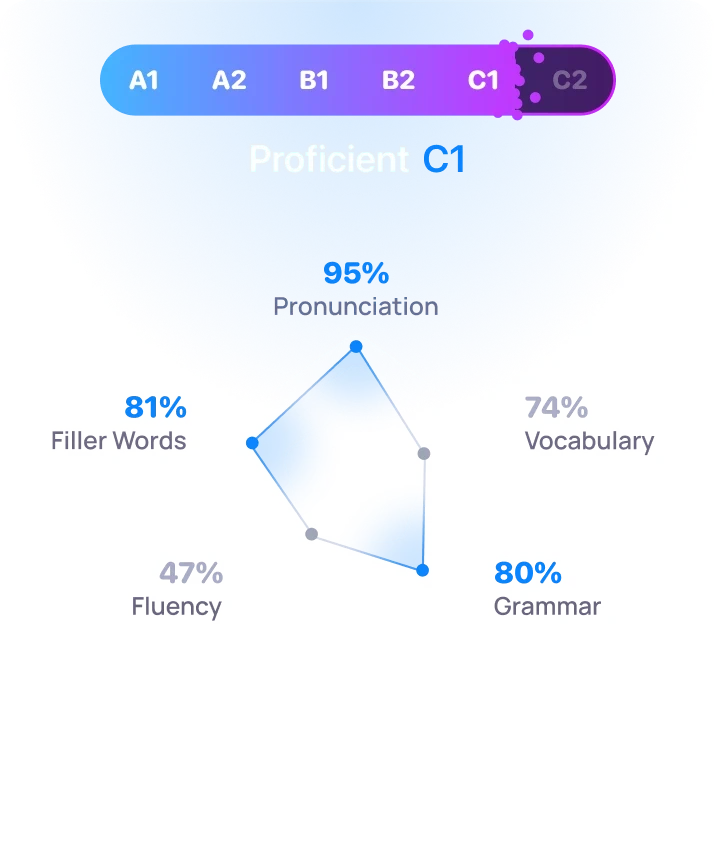
Excellent communication skills are honed through continuous practice, feedback, and real conversation. Fluent AI English-speaking coaches accurately identify your weaknesses and help you make faster progress. We evaluate pronunciation, grammar, vocabulary, and fluency, and provide clear instructions so that you can focus on the most important areas. By using Fluent regularly, you can be confident, speak more clearly, and realize your progress. In preparation for interviews, presentations, and daily conversations, Fluently delivers practical, interactive, personalized learning.


Key features of Fluently:
Personal feedback: Point out the pronunciation, grammar, and vocabulary use errors to clarify the improvements.
Fluency Assessment: Speed, clarity, and smoothness. This is used to test how well you can talk and is useful for monitoring progress over time.
Developing words and phrases: Suggest words and phrases at your level and develop your vocabulary naturally.
Interactive training: Master confidence and speaking skills in a short time by talking to AI.
Monitor progress: Note progress and explain where the focus has to be. Ensuring systematic, goal-oriented learning.
Frequently Asked Questions (FAQ)
1. What are the most important communication skills?
The most notable communication skills are active listening, effective speaking, empathy, confidence, and positive body language. These are the skills that will enable you to relate well with people and convey your message.
2. How can I improve my communication skills quickly?
Communication skills can be enhanced in a short period by practicing speaking, receiving feedback from others, and using Fluently AI to detect pronunciation, grammar, and fluency mistakes, and to enhance emphasis.
3. Why is active listening important?
Active listening will enable you to fully comprehend what the other person is talking about. It will help us react appropriately, be empathetic, prevent misunderstandings, and establish better personal and professional connections.
4. What are common communication mistakes?
Disintegration of the other party, as evidenced by blocking the other party's story, sending vague messages, failing to recognize non-verbal cues, and making decisions that the other party already knows but has not been told, is a common failure. Preventing such failures enhances knowledge and fortifies interactions.
Conclusion
The difference is that the key to success in life and work is improving communication skills. Constant practice, self-reflection, and positive feedback are relevant in enhancing communication skills. Such applications as Fluently AI English Speaking Coach offer one-on-one training to help users improve pronunciation, grammar, vocabulary, and overall fluency. With consistent practice of these strategies, one will be able to convey clear intentions, establish positive interpersonal relationships, and build trust. Good communication also leads to career development, leadership positions, and developing meaningful relationships. To achieve the trustworthy enhancement of confidence and communication capabilities, we should begin to practice as we are guided by the present day.