Many English learners understand conversations easily, but struggle when they try to speak. They follow movies, podcasts, and meetings without much difficulty, yet they hesitate when expressing their own thoughts. This situation feels confusing and frustrating. However, this gap does not mean you lack ability. Listening and speaking are different skills that require different types of training. Your brain processes them differently. If you understand why this happens and apply the right methods, you can gradually turn your strong understanding into confident, clear spoken English.
The Listening-Speaking Gap Explained
Listening and speaking seem to be related, but their function in the brain are different. Listening can be defined as the ability to perceive the language patterns, and speaking involves the production of the language in a spontaneous way. Such a difference is why a lot of learners can grasp English well but fail to talk.
Receptive vs. Productive Skills
Listening is a skill that is acceptable. We are told information, and do not make a sentence. Sound is linked to the familiar vocabulary and grammar patterns by the brain. Speaking, on the other hand, is a prolific skill. You have to choose words, put them together, and get your thoughts out. It is an active process that is more demanding. Most learners develop good acceptance skills under the effects of cinema and books, but barely train sentence production. Production capacity increases at a very slow rate, as compared to understanding, unless one engages in constant speaking.
Cognitive Load During Speaking
Brain multitasking takes place when one is talking. Arrange the thoughts, locate words, use grammar rules, and manage the pronunciation on-the-fly. This fluency is lowered, and the mental treatment is very stressful. Listening involves recognition, and speaking involves creating. To cope with this stress with ease, one will need to be exposed to actual dialogues again and again. The repetition of the practice makes the sentence construction automatic and minimizes the pressure on the mind.
Speaking as a Physical Skill
There is physical coordination in speaking. The jaw, tongue, and lips are to be moved exactly to make the English sounds. You must learn to change the movement of your mouth when speaking with a different sound from your native language. In order to develop this physical ability:
Read out a short sentence daily.
Slowly and clearly pronounce hard sounds.
Record voice and verify improvements.
Mimic the accent and the power of the native speakers.
Clarity and Hesitation become less as a result of regular iteration exercises.
Psychological Barriers That Limit Speech
Fluency cannot be achieved through knowledge of language only. Emotional aspects tend to disrupt the free speech of the learners. Internal pressure of fear, anxiety, and perfectionism causes natural expression to be restrained. The solution to this problem is to solve these psychological barriers.
Fear of Making Mistakes
Many learners worry about misrepresentation. They fear criticism and shame. This fear causes overthinking during the conversation. Instead of focusing on communication, they focus on avoiding errors. This practice delays speech and increases hesitation. If you accept that mistakes are normal, you can relax and speak more naturally. If you allow yourself to practice without constant self-criticism, confidence grows.
Low Confidence and Anxiety
Confidence improves with action. If you avoid speaking, confidence remains low due to la ack of experience. Imagining negative reactions from others increases anxiety. In fact, most people are interested in understanding your message, not the perfect grammar. Each conversation accumulates practical experience and reduces fear. Short daily interactions will help you feel more comfortable. Over time, the brain begins to connect speaking to success rather than stress.
Managing Perfectionism
Perfectionism tends to hinder fluency. Many learners seek perfect speech before speaking in public. This idea inhibits growth and limits opportunities for practice. To reduce perfectionism:
Focus on clear transmission rather than perfect grammar
Accept small mistakes as part of the growth process
High expectations. Set a simpler talking goal
Follow your progress, not compare to others
By aiming for progress rather than perfection, the stress of speaking is reduced.
Linguistic Challenges Behind the Gap
Even those learners who are sure about their speaking abilities are not able to use technical language. Vocabulary and grammar knowledge alone do not mean that you can put them into practice right away in the process of a conversation. Being aware of such problems will make the practice more fruitful.
Vocabulary Recall and Active Usage
Many learners have rich passive vocabulary. Although many words can be recognized in listening, I have trouble remembering instantly when I speak. This delay creates time and frustration. Active vocabulary requires iteration and use. By speaking daily and using new words in sentences, it migrates from passive memory to active memory.
Pronunciation and Sound Differences
English also contains sounds that are not found in the mother tongue. You might have a clear understanding of a word, but upon finding that the sound is incongruent to speak a certain sound. Nervousness about pronunciation usually contributes to stuttering. Confidence and clarity in pronunciation through practice. Through listening and repetition of the phrase, the mouth alters itself to a new sound pattern. The pronunciation is automatically refined as time goes by, and thus speech becomes easier.
Grammar and Real-Time Sentence Building
Even if you know grammar rules, fluent speech is not guaranteed. During the conversation, you must apply grammar immediately without delay. This real-time pressure makes writing difficult. To improve this skill:
First practice short and simple sentences
Speak slowly to maintain accuracy
Expanding sentences gradually as you gain confidence
Repeat common sentence types daily
Frequent practice ensures that grammar is automated rather than unnatural.
Mindset Shifts for Speaking Fluency
The English speaking cannot be improved only with the help of vocabulary or grammar. The rate of development is highly reliant on the attitude. Most learners have a notion of being innately good at speaking, and such a skill is a result of practice. Positive and practical thinking enhances the frequency of practice, and the more the practice, the better the results. The learning process is stable and realistic through the right mental approach.
Embrace a Growth Mindset
Growth-oriented means believing that the effort will improve your speaking ability. Instead of saying, "I'm not good at speaking," let's say, "I'm improving at speaking." This small change changes behavior. You become more open to practice and less afraid of mistakes. Fluency is not raised overnight, but over time. Continuous efforts lead to visible progress and greater confidence.
Stop Translating
Translation from the native language to English creates delay and hesitation. The brain first forms thoughts in its native language, then searches for English correspondence, and finally speaks. This process delays the conversation and increases stress. The brain gradually adapts and begins to shape thoughts directly in English. This practice improves speed, reduces time, and makes speaking more natural.
Treat Speaking Like Exercise
Speaking power improves with continuous training, as does physical muscle strength. You cannot expect results without regular effort. To learn this habit, follow the simple principles below:
Start with a short speaking session every day, even if it's just 5-10 minutes.
By choosing new and unfamiliar topics, you can gradually increase the difficulty level.
Record progress every week and notice small improvements.
Even if you are not motivated, try to continue.
By taking speaking as a systematic training, confidence and fluency grow step by step.
Practical Strategies to Improve Speaking
The most important thing to fill the gap between knowledge and language is to actively use English daily. Listening helps with processing words and sentence types, whereas training the brain to produce language as it is spoken is achieved through speaking. The only way to become fluent is through practice to communicate effectively and consistently. If you focus on daily speaking rather than passive learning, confidence and clarity grow naturally and over time.
Daily Speaking Practice
Conversational speech strengthens both the psychological and physical elements of language processing. The effect will be shown even after 10 minutes by speaking aloud. Describe your everyday activities, discuss views, and summarize the read materials. A long time is not as crucial as continuity. Small daily routines will lower fear and become habitual. Through common speech, the brain gets used to arranging thoughts in English within a short period.
Stop Translating in Your Head
Many learners translate from their native languages before speaking. This practice slows conversation and increases hesitation. Instead, practice thinking directly in English with simple words. Describe the surroundings and plan the day's schedule with English thinking. This reduces the thought process and improves the speed. Over time, the brain adapts and naturally forms sentences without relying on translation.
Structured Speaking Methods
By using clear techniques, you can practice more effectively. Instead of unplanned conversations, follow the following systematic methods:
Shadow short audio clips and repeat them immediately.
Record your voice and look back at the utterance.
Practice general phrases as a topic of daily conversation.
Regular conversations with language partners.
These methods simultaneously foster pronunciation, fluency, and confidence.
Realistic Expectations and Progress Timeline
Fluency is not the kind of thing that you can put on at night. Set at a slow pace and perfected by practice. When you want short-term outcomes, you are apt to be frustrated. Realistic goal setting keeps you motivated. It is important to work on little steps weekly, rather than in extraordinary steps.
Setting Achievable Goals
Achievement targets are precise and uncomplicated; that is, they have a direction. Instead of attempting to talk flawlessly, set a target that will assist you in training your skills to talk for 5 minutes a day and memorize 10 new phrases each week. Achieving objectives generates impetus and self-esteem. It is with progress monitoring that we are able to view some improvements, almost invisible in our daily lives.
Tracking Improvement
The progress is monitored, and this results in a maintained motivation. You can list your voice on a weekly basis and compare it chronologically. You will find easier sentences, definite pronunciation, and time-saving. It is also a sign of development when we can see that you are growing, have more confidence, and will persist in your study when you start writing new vocabulary and reading it aloud.
Staying Patient and Consistent
Continuity is more important than concentration. To support steady progress:
Practice speaking every day, even for a short time
Embrace slow progress naturally
Calmly look back and fix past mistakes
Keep practicing even if motivation falls
Patience and continuous effort lead to long-term fluency.
Speak English Confidently with Fluently: Your Personal AI English Coach
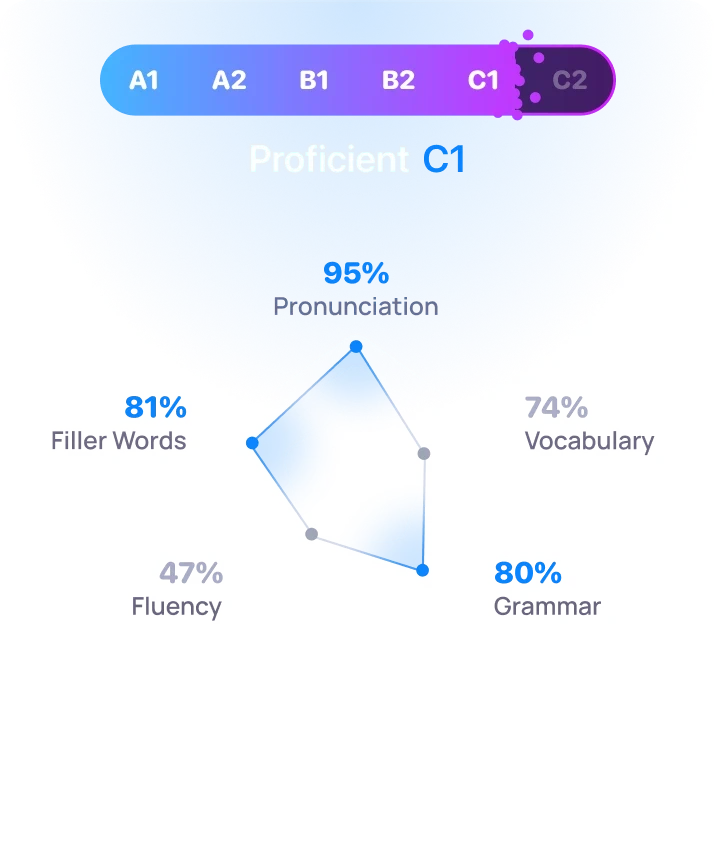
Fluently is a personal AI English trainer that teaches you to speak better with clear direction and ongoing training. Assess pronunciation, grammar, vocabulary, and overall fluency to ensure the level is accurately understood. You do not have to guess what you are weak on, since at the end of every session, you will get clear feedback. The platform will construct learning plans based on your errors and targets to highlight and gauge progress. At any time, you are free to practice talking without being judged. This consistent teaching behavior will foster confidence in interviews, meetings, presentations, and day-to-day conversations.


Key Features of Fluently:
Assess pronunciation, grammar, vocabulary, and speaking fluency in real time, per session of the practice.
An individualized learning plan that is modified depending on errors, objectives, and achievement.
The AI voice practice has no limits, and it is not confined to a particular time, without being pressured or assessed.
Continue with practical, attractive practice through topic-specific conversations that fit your interests.
A clear progress management system that visualizes progress and builds long-term speaking confidence.
Frequently Asked Questions
1. Why do I understand English but struggle to speak it?
It is possible because you can comprehend English through listening as a skill of recognition. Speaking involves the active memory, sentence structuring, and live pronunciation. These productive skills that the brain needs to foster must be fostered through certain conversation exercises.
2. Is it normal to feel nervous while speaking English?
Yes, it's totally normal. Most learners are scared of making mistakes and assessments. Conversation practice helps to alleviate anxiety as time passes and develop confidence.
3. How can I improve my speaking if I don’t have a partner?
You may train to speak daily, record your voice, summarize articles, use AI voice recognition tools, etc. Fluency is also developed successfully even in continuous self-training.
4. How can Fluently help me speak English confidently?
Fluently also provides real-time speech recognition on pronunciation, grammar, vocabulary, and fluency. Write your own learning plan, take into account your own errors, and train your speaking in an organized, intensive manner.
5. Is Fluently suitable for beginners and advanced learners?
Yes, yes, Fluently is tailored to your present level of English. Whether you are a beginner or an advanced individual, we provide tailored practice sessions and monitor step-by-step improvement.
Conclusion
It is quite normal to know the English language and have problems speaking. Listening will develop recognition, whereas speaking will involve active recall, sentence construction, and firm pronunciation. More often than grammar knowledge, fear, perfectionism, and not regularly practicing speaking are impediments to progress. The positive side of it is that it can be enhanced with the help of practicing it correctly daily. Fluently can assist you in case you desire systematic instructions, instant responses, and freely speak without a sense of being pressured. It helps to assess your pronunciation, grammar, vocabulary, and fluency and form a unique learning plan, so you slowly transform knowledge into confident and fluent spoken English.