Many learners struggle with speaking English even when they understand it well. Fear of making mistakes, social pressure, or past negative experiences often hold people back from practising. This fear can slow progress and reduce motivation. The good news is that anyone can overcome it by using the right strategies, mindset, and consistent practice. In this article, we explain why English-speaking anxiety happens, explore the psychological, social, and linguistic causes, and provide practical methods to overcome it.
Understanding the Fear of Speaking English
The majority of the learners are afraid to speak English as they are too afraid. Having the major causes of this anxiety, students will be able to take the first step toward gaining confidence. Psychological problems, social pressures, and poor language could be the reasons for fear. Since these challenges are identified, the learners will be able to have a clear plan for making improvements in small steps.
Psychological Factors
The fear of speaking English is usually heart-based. Students fear erring or getting assessed, and this can cause anxiety. Previous experiences, like being badly corrected in classes and discussions, may make you feel reluctant to talk once more. Some are also caused by perfectionism; some learners expect perfection in speech and criticise themselves when it does not happen. The combination of fear, self-criticism, and anxiety decreases practice opportunities as well as lowers the rate of improvement.
Social and Cultural Influences
The confidence in English is strongly influenced by social pressures and cultural attitudes. When they talk, students feel that they are being tested by teachers, their classmates, and society at large, as this evokes anxiety in them. You either fear being criticized by the native speakers or fear pronouncing something wrong in front of the audience. The cultural norm also exacerbates the pressure that it is embarrassing/ dangerous to speak a second language in the open in certain situations. These are factors that influence the learner's motivation to talk.
Linguistic Challenges
Vocabulary or grammatical gaps: Students will not speak if they lack sufficient words or structures.
Dyslexia in pronunciation and intonation: The dyslexia results in the loss of self-confidence and anxiety due to the inability.
Interpreting phrases and Idioms: Phrases that cannot be understood easily cause the conversation to become stressful.
The linguistic barrier is usually the most realistic, as it has a direct impact on the ability of the learner to communicate. By gradually learning pronunciation, grammar, and vocabulary, a person will be able to talk more effortlessly and with self-confidence. In combination with the actual conversation practice, it works through rapid progress, and the nervousness is alleviated.
Why Overcoming This Fear Matters
Being an English speaker is a beneficial quality that improves communicative skills and increases the opportunities not only in education but also in employment and in social life. It also instills confidence, and it puts one at ease in any situation. The less fearful you are, the less stressful your experience will be, and as you will not be fixated on the evaluation, you will be able to dedicate more focus towards working on the fluency. The ability to conquer anxiety does not just translate to being a good speaker. Feel at ease and competent.
Effective Strategies to Overcome the Fear of Speaking English
An ability to talk without fear is a lifelong process that needs proper organization. These are the methods that can assist you to work safely, step by step, and become a positive thinker. Both approaches prioritize the separate elements of speaking, whether it is psychological obstacles or the real language abilities. When the practices are undertaken periodically, the growth and long-term confidence are guaranteed.
Cultivate a Positive Mindset
One has to be mentally positive to overcome fear. The students will have to feel that errors are a learning experience and not a failure. The fear of speaking can be surpassed by remaining motivated and having confidence in oneself. Visualization is one of such techniques, where you visualize how you are speaking and how comfortable you are, and you will reinforce mental preparation.
Practice Regularly in Low-Pressure Settings
Converse with friends, family, and colleagues: Now start somewhere safe and comfortable.
Meet online language groups and forums: Be non-critical and have a positive practice environment.
Role-play in real-life situations: Practice common activities such as introduction of self and greetings.
Asking directions is a way of attaining professional confidence. A learner can acquire the skill of speaking and feel less anxious due to the effective practice in a low-pressure setting. This assists the learners to make small, gradual increments, so that they do not feel overwhelmed and achieve confidence. The approach facilitates more speaking by the learners and promotes fluency faster than the intermittent intensive practice does.
Focus on Pronunciation, Rhythm, and Intonation
Any kind of pronunciation, rhythm, and intonation will affect the self-confidence of the learner. You will improve through asking and imitating native speakers. It is possible to make a mistake and monitor your progress using your own pronunciation that can be recorded and checked. Rhythm practice (e.g., rhythm according to the sentence) strengthens the flow of speech. With your concernaboutn intonation, your conversation will be natural, and you will not hesitate.
Expand Vocabulary and Grammar Gradually
Work on vocabulary and grammar in small steps so as not to be overwhelmed.
Learn vocabulary about the topic of the study to be capable of discussing familiar and comfortable issues and daily situations.
Increase the retention rate by making sentences rather than trying to memorise everything at once.
Cramming is one of the causes of cramming, and therefore increases the level of anxiety in the learning process.
Another strategy to be used would be to combine vocabulary practice and actual conversations to fully use new words to learn and gain confidence.
Engage in Real Conversations with Native Speakers
An interview with native speakers is a realistic experience that would make learners feel they are not out of place in the actual world. Firstly, there are no hazardous language exchange groups and online conversation communities. It is possible to develop fluency through questions, active interaction, and discussions. Actual conversations (and the ones that you can touch) also help make you observe natural patterns of speech, idiom, and cultural nuances.
Step-by-Step Guide to Overcoming Speech Anxiety
It is easier to overcome the fear of speaking through a step-by-step solution. When you make the difficulty gradual in building up, and when you constantly check the progress, you are sure of gradual improvement. Students are able to start with small goals, progressively get harder as they get more confident, and combine practical lessons, mind training, and immersion. The plan minimizes anxiety and creates an advantageous way to fluency.
Micro-Goal Setting
Students are able to measure improvement by having daily and weekly objectives that the students are able to achieve without being overwhelmed. One such example is that you can either have a goal of speaking five minutes a day or remembering five new words a day. The motivation may be enhanced by tracking the improvement and complementing even minor progress on the way to raising self-esteem. The attainment of goals is possible through the division of large goals into small steps, and thus is manageable and does not sound daunting.
Choose Comfortable Environments
It would be best to start a practice in an environment with which you are comfortable, thereby eliminating the pressure, and you would be able to talk without any problems. With time, you would become confident by slowly venturing into open spaces and engaging in conversations with others. Use the following as an example: speak to a friend, then take part in a small online group, and finally join a large discussion. This will enable empowerment and preparedness to have a more difficult discussion.
Develop Listening and Self-Talk Skills
Listen to English content every day: Enhance the knowledge and the possibility of practicing natural speaking.
Practice self-talk: Use self-talk by talking to oneself with regard to daily behavior to enhance fluency and decrease hesitation.
Naturally internalize language: These exercises are used to memorize vocabulary, grammar, and pronunciation without any fear of being tested.
Combine listening and speaking: Improve the power of language processing and simplify and ease the face of real conversations.
Build a solid foundation: Practice will result in confidence and readiness to have free conversation on English in real-life scenarios.
Embrace Immersion Techniques
Guided speaking exercises and role-playing are important immersive techniques that enable practicing in real-life situations. Interaction in simulation and content exercises enhances the knowledge of daily conversation. By putting learners in varied environments, which are controlled, immersive learning builds confidence. The learners have an opportunity to add complexity and improvisation progressively to train for real-world exchange. This is a way of mind-situation matching, making learning faster and lessening fear.
Additional Tips to Build Confidence
Remain smiling and remain calm-minded throughout the conversation.
Slow down the rate of speaking and be clear.
Practice popular expressions to become more fluent.
You should be positive and motivate yourself daily.
Take a break to avoid frustration and burnout.
These minor routines provide an enabling climate to speak the English language. Lessen stress, enhance pronunciation, and ensure learners feel secure when they practice the English language.
Students’ Success Stories
The fear of speaking the English language has been conquered by many learners after adhering to constant practice plans. E.g., one of the students spoke for five minutes a day, recorded the speech, and was provided with feedback on how to improve his fluency. Another learner applied fluently to monitor the errors and concentrate on their weaknesses so that they could advance faster. These cases demonstrate that the union of practicing frequently and assistance tools gives evident outcomes. The main lessons to be learned are making mistakes, setting small goals, and using individual guidance with the help of AI tools.
Fluently: Your AI-Powered Companion to Speak English Confidently
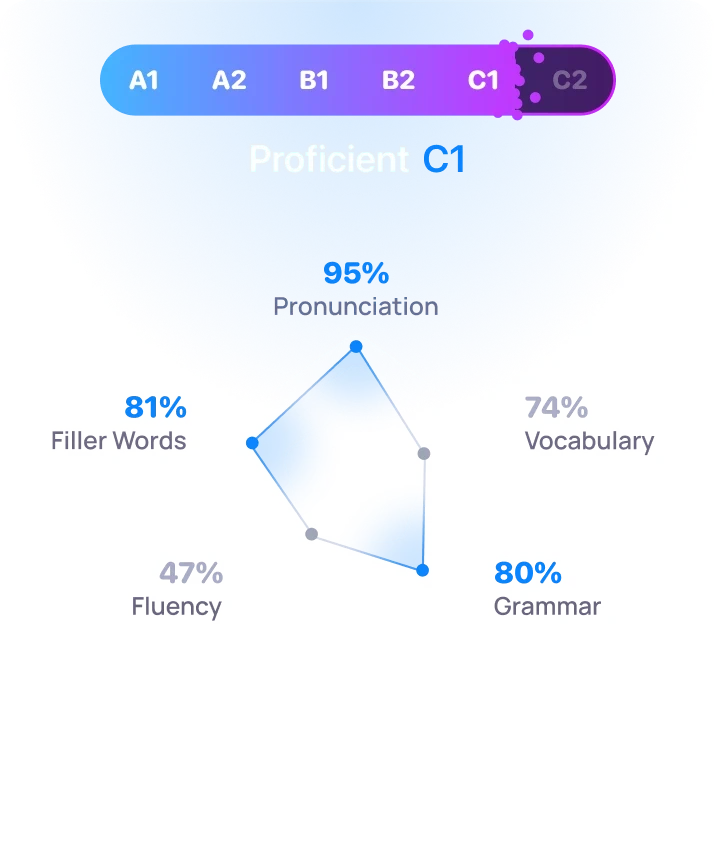
Fluently is an AI-based English learning application that allows learners to speak fluently with confidence. Assess pronunciation, grammar, vocabulary, and fluency to show yourself. The AI tutor will develop your own learning plans following the mistakes and objectives to maximise each lesson to your topic of interest. Progress management, step-by-step instruction, and instant feedback allow effective and appealing practice. The everyday use will help reduce anxiety, improve fluency, and build confidence in speaking English across all spheres of life, including the ability to speak, present, and discuss online.


Key Features of Fluently:
Personalised Learning Plan: Design your own learning plan based on areas where improvements are necessary, taking into account current levels and errors.
Speech and fluency analysis: The tools allow real-time analysis of speech and provide valid feedback on pronunciation, rhythm, and intonation.
Management of vocabulary and grammar: Track grammar and vocabulary learning, and encourage spontaneous writing structure and courageous expression.
Immersive AI tutors: AI tailors your lessons to your interests and pace, allowing for fun and constant practising.
Progress management and feedback: The learners visualise long-term progress and identify weaknesses. With practical guidance, you will be able to speak with confidence.
Frequently Asked Questions (FAQs)
What causes fear of speaking English?
Fear is most often based on fear of errors, social pressure, adverse past experiences, and limited vocabulary and pronunciation. These are factors that are averse to talking, even when you know English. The initial way to overcome anxiety is to identify the causes.
How can I practice speaking without feeling embarrassed?
Begin with an under-pressured, secure setting, such as friends, family, and online groups. Learn slowly with a significant number of individuals. Reduce stress and gain confidence gradually by using familiar subjects and having small conversations.
How does Fluently help me speak confidently?
Fluently evaluates pronunciation, grammar, vocabulary, and fluency to show your real English level. Offer one-on-one learning plans, adapt the lessons to your objectives, and offer instant feedback to help you talk safely and get more confidence in speaking.
Are AI tools like Fluently effective for beginners?
Yes. Artificial intelligence, like Fluently, provides new users with learning materials and tasks as individual tasks. Give feedback on errors, practice, and individual exercises so beginners can speak with confidence without feeling threatened or confused in lessons that are difficult to understand.
What if I still feel anxious after practising?
Continue in small steps that can be handled, with daily or weekly micro goals. Work around incremental gains, reward minor achievements, and monitor the improvement using apps such as Fluently. Anxiety is minimised in the course of time due to repetition.
How long does it take to overcome English-speaking anxiety?
It is a matter of time, though: when the supportive practice is maintained daily, progress seems to be made within a couple of weeks. With practice, a positive mindset, and AI guidance, confidence-building can become quick, and the fear of speaking can be gradually eliminated.
Conclusion
The fear of speaking English can only be overcome through a gradual process that involves mindset, practice, and the use of the right tools. Positive thinking, micro-goals, and immersive, AI-based learning are some strategies that help learners communicate and overcome anxiety. Begin with little, make mistakes, and keep on practicing. AI tools like Fluently provide personalized guidance. Track your learners' progress and create an environment that supports them. With time and effort, everyone can naturally communicate in English and enjoy the conversation without fear. It is time for your English voice to be heard. Let's take the first step today.