Clear pronunciation makes English easier to understand and helps you communicate confidently in everyday situations. Many learners mix up pronunciation, accent, and fluency. Pronunciation focuses on how you produce sounds correctly, while your first language shapes your accent, and fluency is about speaking smoothly without frequent pauses. Learners often face challenges with difficult sounds, word stress, sentence rhythm, intonation, and connected speech, which can make conversation confusing. This practical guide will show you step-by-step methods to improve your pronunciation, avoid common mistakes, and practice English naturally and effectively every day.
The Basics of English Pronunciation
One of the techniques for producing the sounds of words is pronunciation. In a regular conversation, pronunciation is more significant than grammar, and comprehension is quicker. Although the grammar may be flawless, a mispronunciation will confuse.
The Building Blocks of English Sounds (Phonetics)
The pronunciation commences with the knowledge of English sounds. Vowels, consonants, and the presence of the double vowels make up the foundation on which they speak in English.
Vowels
Short vowels are uttered as fast as sit/ ɪ/or bed/e/. There is a lengthening of long vowels such as seat/i;/or food/u lengthening. Short and long vowels are easily confused; one should say sheep instead of ship.
Consonants
There are voiceless sounds, such as bat/b/ and silent sounds, such as pat/p/. Some consonants are not easy to learn, e.g., think/ 6/ and this/^/.
Diphthongs
A combination of two vowels is called a double vowel. These may be time/a 1s, day/1s, and boy/ 1s. When you practice them, you will be capable of speaking more naturally.
English Vowel and Consonant Chart
All vowels and consonants are displayed in the chart. Assist students in observing the presence of sounds and knowing how they should be pronounced.
Stress, Intonation, and Rhythm in English
English pronunciation does not just consist of individual sounds. Rhythm, intonation, and accent define how you talk and communicate with people. The manner in which you talk becomes natural, clear,r and expressive, as you learn to control these elements. We shall elaborate on each of these aspects in the next sections by using simple accounts and illustrations.
Word Stress
A word accent is an accent on a given syllable in a word. Accents may entirely alter the meaning of a word. As an example, record as a noun is accented on the first syllable (RE-cord); however, when the word is used as a verb, the second syllable is accented (re-CORD).
Sentence Stress
Sentence accentuation emphasizes important words in a sentence and gives meaning.
It accentuates content words (nouns, verbs, adjectives, and adverbs).
The functional words (prepositions, conjunctions, connections) are weak, as are the accents.
The right accents of the sentences enhance clarity and make it easier for the speaker. An example is the use of an accent on a word in the poem. I want to buy a new book that makes the point clear to the listener. Sentence accents may be acquired naturally by learners through reading and listening to native speakers.
Intonation
Intonation is a change in the high and low pitches when speaking. Expresses emotions, intentions, and doubts.
The upward trend usually indicates doubt, surprise, and uncertainty.
Descent tone often indicates assertion, command, and completion.
Intonation adds more meaning than words. For example, "You're coming" "You're coming." It goes down and becomes a statement. By practicing sentence intonation, English can be heard vividly and clearly.
Rhythm: The Music of English
English has a rhythm (strong syllable rhythm) based on strong and weak syllables. Strong syllables appear at constant intervals, and weak syllables are shortened.
English rhythm patterns smooth spoken language.
Common patterns include alternating strong and weak words in a sentence.
Practice rhythm by listening to native speakers, repeating phrases, or tapping your hands to fit your rhythm when you talk, to improve your fluency. Rhythm gives the spoken language a natural flow and helps the listener understand.
Understanding Connected Speech
When people talk in natural English, they are interrelated and talk rapidly and naturally. This is referred to as relating pronunciation, and it may be confusing to the learners. Native speakers do not hesitate in between words, and the transformation of sounds is lost and melted. Knowledge of such patterns enhances the listening process and helps one to better talk naturally.
Catenation
Catenation is one of the phenomena when the sound of the word and the next word are directly connected. As an example, there is a word, turn off, which is similar to turnoff. Associations of sounds produce a stream of speech so that the listener can perceive it faster. The first step to practice is to listen to the phrase. Pay your attention to the linking of the final consonant of a word and the first vowel of the following word.
Intrusion
An insertion sound is a phenomenon in which extra sounds appear between words to smooth the normal speech. For example, "law and order" often sounds like "law-r-and order." Common insertion sounds include/r/,/j/, and/w/. By practising the insertion sound, you can imitate the way native speakers speak and sound more fluent.
Tips to practice intrusion:
Listen to natural conversations
Repeat the phrase aloud
Identify added sounds and practice them so that they can be pronounced naturally.
Elision
An abbreviation is a phenomenon in which the speaker omits sounds, resulting in quick speech. As an example, the term "next day" usually sounds like "next day". Leaving out some consonants and vowels makes the sentence quicker and more fluent. Slow talk first; watch which sounds are missed, then follow the rhythm of the native speaker. This is best practised. Taping your voice will make you understand the absence pattern.
Assimilation
Assimilation is another phenomenon whereby the sound varies in relation to the surrounding sound. As an illustration, good boy tends to sound like good boy. This facilitates easy speaking by speakers and hard learning by learners.
How to practice assimilation:
Listen to general phrases.
Repeat slowly by noticing the modified sound.
The process involves increasing the pace slowly with accuracy.
Common English Pronunciation Challenges
A large number of learners have difficulties that make proper pronunciation difficult. The differences among individual phonemes, word accents, connected speech, and accents cause it. These points form the beginning of addressing the pronunciation. This section describes the prominent challenges and the working strategies for overcoming them.
Individual Sounds
English phonemes are hard to pronounce for learners. Because some of the vowels and consonants are not present in all languages, they are perceived as strange sounds. As an example, the pronunciations of think/ θ/, this/^, and red/r are frequently distorted. Students can substitute these sounds with other comparable sounds in their mother tongue, which might make their speech hard to comprehend.
Word-Level Pronunciation Problems
Many learners have difficulty with the pronunciation of single words. Such issues as a mixture of silent characters, irregular spelling, and special vowels are involved. Example:
Knight (k is silent)
Island (s is silent)
Colonel (spelling and pronunciation are different)
The learners might not comprehend the words despite the meaning that they are familiar with. By use of pronunciations through sounds, listening, and repeating pronunciations, learners can be taught how to pronounce words in the right way so that they do not make the mistakes they would make in their everyday conversations.
Connected Speech Difficulties
When speaking, early English speakers tend to make associations between words. Students have problems in hearing and pronunciation of these connecting sounds, and even their speech may sound ambiguous. Such issues are sound abbreviation, concatenation of words, and alteration of sound as a result of adjacent sounds. Example: "wanna" may sound like want to. With the knowledge of these patterns, learners can be able to speak in a more natural way, which will enhance their knowledge of the native speakers.
Regional and Cultural Variations
English is spoken in a great number of languages; it is why accents and pronunciations are different. There can be great difference between the American, the British, the Australian, and the Indian English in pronunciation of words. New accents may prove hard to follow by students. In order to improve your understanding, you can listen to other accents, you can concentrate on the things that interest you most of all, and you can train the similar sounds.
Common Pronunciation Mistakes for English Learners
Many English learners repeat mistakes from their mother tongue in pronunciation. These mistakes can interfere with clarity and confidence. Errors and effective corrections are as follows.
Speakers of Asian Languages
Students of Asian languages who have the mother tongue also have difficulty with sounds not present in their mother tongue. Common challenges include the difference between/r/and/l/sounds, short and long vowels, and certain consonants. As an illustration, the sound of rice and lice are similar, and the words ship and sheep are easily mistaken. These difficulties can be overcome with practice, minimal confrontation, listening, and daily repetition of pronunciation.
Speakers of Romance Languages
Accents and vowels are the primary issues for romantic speakers. You can either stress the wrong syllable, alter the meaning of the word, or pronounce the doubled vowels wrongly, such as/a ɪ/or day/e ɪ/. You also have vowels that are too pure or too short as compared to English. Playing songs and podcasts and reading aloud improve the clarity of vowels and accent patterns, leading to better understanding.
Speakers of Slavic Languages
Students who speak Slavic languages are usually not good at consonant groups and robust patterns. One cannot say words as strength or crisps clearly, and it might be against the English norms. Accuracy is better with practice, syllabic strength, practice in dividing words into small parts, and practice in connecting consonants slowly.
General Tips to Avoid Common Mistakes
To correct the pronunciation mistakes, the learners will be able to work out some easy exercises that they can perform daily:
Pay attention and speak in the same manner as the native speakers.
Pre-record a pronunciation on your own and compare it to the standard pronunciation in English.
Work on a single challenging sound.
Differentiate between the close sounds in minimum confrontational language training.
Strength, rhythm, and intonation on short sentences.
When these strategies are applied continuously, they enhance clarity, reduce misunderstandings, and establish confidence in the natural English language.
Practical Techniques to Improve English Pronunciation
Pronunciation of English is achieved through constant practice and practice methods. You can exercise your mouth, ears, and brain and say the correct sound instinctively. The methods below can be applied in situations where there is a need to be clear, speak with confidence, and comprehend the native speakers. These are realistic steps for both beginners and advanced users.
Shadowing: Mimic Native Speakers
Shadowing refers to repeating an utterance immediately after hearing it. Talk at the same time and listen to the voice of the native speaker, imitating it in its sound, strength, rhythm, and intonation. This method conditions the ears to learn to pronounce correctly and also conditions the mouth to sound better. Shadowing enhances fluency and, over time, makes speaking feel more natural. It is possible to achieve impressive improvement in a short period of time (in just several minutes a day) simply by practicing the sounds that are hard to achieve and the words that are misused.
Step-by-Step Shadowing Method
To be successful at shadowing, one should do the following:
Select some short audio material: sentences and phrases from podcasts, movies, and recordings.
Listen first: Get the meaning, and listen to the strength and rhythm.
Speaker repeating: Speak concurrently and ape tone and speed.
copy rhythm and tone: it is essential to focus on the elation (up and down) and the natural (pose).
Practice each day and gradually extend the duration of the sound source to enhance confidence and pronunciation.
Practice Conversations with Native Speakers
One of the first techniques for improving English pronunciation is engaging in real communication with native speakers. You can use what you have learnt in real life to sharpen your listening skills and build confidence. With practice, you can identify errors in natural conversation and correct them instantly.
Ways to Find Speaking Partners
With practice, it is easier and more effective to find the right partner. Here's how:
Become part of the online language exchange community and connect with learners and native speakers.
Book chat sessions via a chat platform, such as an application or a website.
Participate in local English clubs and meetings and speak in person.
Benefits of Speaking with Natives
Practice with the native speakers enhances rhythm, strength, and intonation. Get to know the association between words and their related pronunciations, and listen to natural pronunciation patterns. The regular dialogue will assist in changing to different accents and a slow rate, and make the process of listening and speaking easier. These interactions make them more confident and fluent in real-world English situations.
Tips to Maximize Practice
Give attention to listening actively as you talk. Write down new words, sounds, and phrases. There is nothing to fret about; we should improve. Request that your opponent provide feedback on pronunciation, strength, and rhythm. In combination with shadowing and recording exercises, you can successfully train out all your pronunciation.
Study Strategies That Help Pronunciation Improve Faster
Repeating the word is not sufficient to enhance the pronunciation of English. We should have a regular model in order to build our power of speaking, listening, and self-consciousness. Experiential learning techniques result in proper pronunciation, the acquisition of vocabulary, and the building of confidence. The daily practices and minor habits enable one to speak more clearly and naturally with time.
Learn Pronunciation and Vocabulary Together
It is important to start out with the right pronunciation when learning a new word. It is not just enough to read and listen. Pronounce each word aloud. Notice the sound, strength, and intonation of vowels and consonants. With the help of flash cards, sound applications, and pronunciation systems, you are able to resolve the right pronunciation, but remember the meaning.
Speak Slowly and Clearly
Early mouth tends to lead to pronunciation errors and unclear sentences. Prioritize accuracy over speed. Place between words and practice difficult sounds slowly. Speaking consciously gives you time for your mouth and tongue to make the right sound. Listeners will be more understanding and will also gain control of emphasis, rhythm, and intonation.
Narrate Your Daily Activities
Practicing pronunciation is simple and effective when one speaks alone in English. Fine, let's describe what to do on the day in English, e.g., cooking, walking, and planning. Task. Such an approach will enable you to use entire sentences, relate words in context, and apply stress and intonation as well. You are also able to record and play your voice and see the mistakes.
Track Your Progress Regularly
Understanding the level of improvement can be used to keep one motivated and to rectify the mistakes. The following are some of the ways we should take advantage of:
Record your personal pronunciation and compare it to the pronunciation of the native speakers. Keep a phonetic diary in which new words and sounds are written down in their pronunciation.
Mistakes in records and understanding recurring mistakes.
Frequent self-assessment will enable you to work on your weak points and modify the content of your practice to observe visible improvement. Learning is formalized, and this has led to streamlining of the learning process such that you can continually enhance yourself without having to go through needless trial-and-error cycles.
How Fluently Helps You Improve English Pronunciation Faster
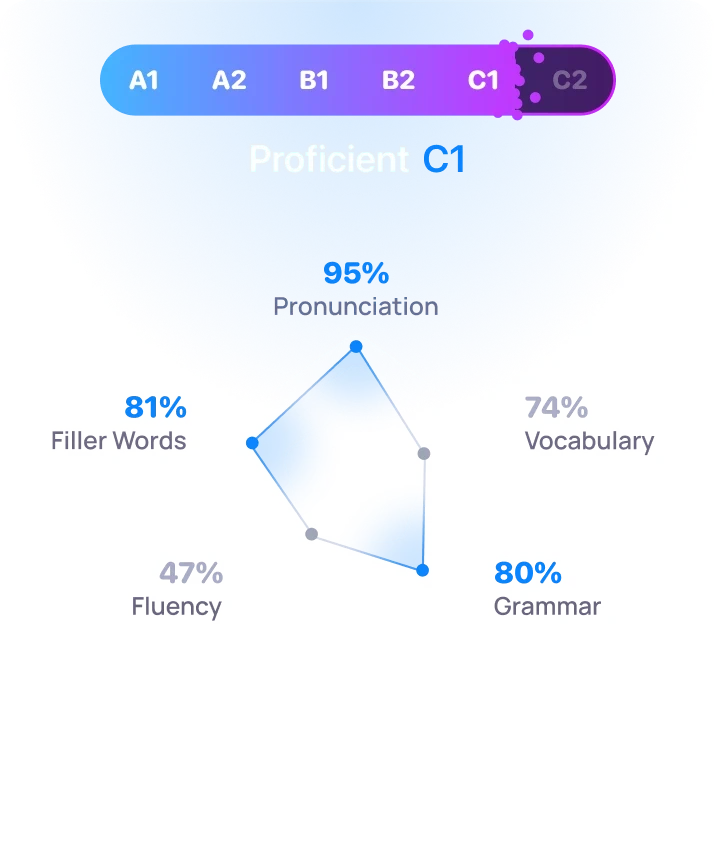
Fluently is a self-assisted learning tool that assists learners to have a steady enhancement in their pronunciation, fluency, grammar, and vocabulary of the English language by means of artificial intelligence (AI). Recognise mistakes immediately and receive lessons at your level. An individual learning plan enables you to practice indefinite speech daily and gauge your progress. Give a step-by-step tutorial to work on the weaknesses, develop rhythm and intonation, and gain confidence. The interactive feedback allows practical, fun, and effective learning for learners of any level.


Key Features of Fluently:
Track pronunciation, grammar, vocabulary, and fluency in real time for accurate performance evaluation
Promote effective progress with personalised lessons based on skill level and learning goals
Provides unlimited speaking exercises and allows you to practice anytime, anywhere, without restrictions
Provide immediate and practical feedback on mistakes and help learners fix them instantly
Create a centralized learning plan to clarify weaknesses and improve pronunciation naturally and quickly.
Frequently Asked Questions (FAQ)
How long does it take to improve English pronunciation?
The time taken to improve pronunciation is dependent on practice and persistence. With daily practice, shadowing, and listening, many learners show amazing improvement within weeks to months.
What is the best way to practice pronunciation daily?
Shadowing native speakers, self-recording, and repetition of early speech are most effective in everyday practice, as is dialogue with partners in conversation. A practice in itself develops sound, strength, and rhythm.
Can pronunciation apps really help?
Yes. Applications such as Fluently monitor pronunciation, grammar, vocabulary, and fluency. Get better more gradually by being more systematic: give immediate feedback, discover weaknesses, and direct day-to-day practice.
Is it necessary to speak like a native speaker?
No. The aim is the articulation of clear and comprehensible pronunciation. Using the correct pronunciation, proper strength, and intonation is more significant than the sound of the native language.
How can beginners improve pronunciation quickly?
Beginners should focus on general sounds, shadowing short audio clips, self-recording, and listening to English daily. Accuracy is gained fast by practicing and focusing on strength and rhythm.
Conclusion
Improving English pronunciation requires time, patience, and continuous daily practice. It is more important to stack up small efforts regularly than to try to be perfect immediately. You can enhance pronunciation, rhythm, and confidence by using effective methods such as shadowing native speakers, recording yourself, practising early speech, and participating in conversations. Tools like Fluently facilitate this process by providing a systematic learning plan, real-time individual feedback, and unlimited speech practice. With daily use, you can identify weaknesses, track progress, and gradually develop a clear, natural way of speaking. Continuity and appropriate practice approaches lead to sustained improvements in pronunciation.