50 Conversation Starters for Parents and Children, from Preschool to Teens
 Yurii Rebryk · Updated · 14 min read
The best conversation starters for parents and kids are specific, open-ended questions asked at a calm moment: “What made you laugh today?” gets more than “How was school?”. Below are 50 starters grouped by age (3 to 6, 7 to 11, tweens and teens) and by moment (after school, dinner, the car, bedtime, weekends), each with a follow-up, plus what not to say and three dialogues to practice in English.
Start speaking with confidence today
Fluently is free to start. Take a free AI speaking assessment to see your level, then practice with games that build your vocabulary and pronunciation.


In this article
- How to start a conversation with your child: 5 rules
- Conversation starters for little kids (ages 3 to 6)
- What to ask instead of “How was school?” (ages 7 to 11)
- Dinner table conversation starters for the whole family
- Car and bedtime conversation starters
- Questions about feelings and your relationship
- Conversation starters for tweens and teens: friends and online life
- Questions about money and the future
- Questions kids can ask their parents about childhood
- Light and silly conversation starters for weekends
- What not to say: 6 habits that end the conversation
- What to say when your child answers “fine” or finally opens up
- If your child tells you about abuse or self-harm
- Conversation between parent and child in English: 3 dialogues to practice
How to start a conversation with your child: 5 rules
Start with one specific, open-ended question at a calm moment, then listen more than you talk. Harvard’s Center on the Developing Child calls this back-and-forth serve and return: a child babbles, gestures or cries, and an adult responds with eye contact, words or a hug. In a 2018 study of 36 children aged 4 to 6, more conversational turns with adults went with more activity in Broca’s area, beyond the number of words adults said to them.
| Rule | What it sounds like | Why it works |
|---|---|---|
| Ask open, specific questions | “What was the hardest part of the test?” not “Did it go OK?” | The NHS recommends open questions; a yes/no question can end in one word |
| Pick a calm moment | After a snack, in the car, at bedtime | The American Academy of Pediatrics (AAP): let a tired child rest or eat first |
| Follow up once or twice | “What happened next?” / “Why do you think she said that?” | Each answer you build on adds a conversational turn |
| Reflect the feeling, don’t fix it | “It sounds like you felt left out.” | The CDC describes active listening: full attention, repeating what your child said, naming the feeling |
| Keep it short and regular | Ten minutes, phones away, most days | The AAP says even 10 minutes a day without distractions helps |
How to read the tables: the starter is your first line, the follow-up your second, and “When it works” gives the age and moment. They work for any parent, step-parent, grandparent or carer. For topics beyond family life, see English conversation topics.
Conversation starters for little kids (ages 3 to 6)
Little kids answer best about things they can see or remember from today, so keep questions short and wait for the answer. Describing what your child is doing counts too: the CDC’s advice for toddlers and preschoolers suggests talking about their play “like a sports reporter”, which also gives them new words.
| Starter | Natural follow-up | When it works |
|---|---|---|
| 1. What made you laugh today? | What was so funny about it? | Ages 3–6, at pickup or bath time |
| 2. Who did you play with today? | What did you play together? | Preschool or kindergarten pickup |
| 3. Was today a happy day, a sad day or a mixed-up day? | What made it feel like that? | Ages 4–6; gives them words for feelings |
| 4. What was the yummiest thing you ate today? | Should we make it at home this week? | Snack time or dinner |
| 5. If your teddy could talk, what would it say about today? | What would you say back to it? | Bedtime, with a favorite toy |
What to ask instead of “How was school?” (ages 7 to 11)
Ask about one specific part of the school day instead of “How was school?”, which usually gets “fine”. Cleveland Clinic pediatric psychologist Vanessa Jensen gives the same advice for teens: ask about something specific, such as how a certain test went.
| Starter | Natural follow-up | When it works |
|---|---|---|
| 6. Who did you sit with at lunch today? | What did you talk about? | Snack time after school; ages 7–11 |
| 7. What was the hardest thing you did today? | What helped you get through it? | After a test or a new topic |
| 8. Tell me one kind thing someone did today. | Were you kind or brave today too? | Any school day; ages 7–11 |
| 9. What did you learn today that I probably don’t know? | Can you teach it to me? | Kids aged 7–11 like being the expert |
| 10. Which game did you play at recess? | Who made up the rules? | Ages 7–10; “break” in the UK |
| 11. If you could change one thing about your school day, what would it be? | Why that one? | Friday afternoons; ages 8–11 |
| 12. What are you looking forward to tomorrow? | Anything you’re not looking forward to? | Evenings; brings worries up early |
Dinner table conversation starters for the whole family
At dinner, ask one question to the whole table and let everyone answer, parents included, youngest first. Phones stay off the table: the AAP’s advice for talk time is to turn off the television and give your child your undivided attention.
| Starter | Natural follow-up | When it works |
|---|---|---|
| 13. What was the best part and the worst part of your day? | What would make tomorrow better? | Any night; everyone answers, parents too |
| 14. What’s one thing our family does that other families don’t? | Is that a good thing or a weird thing? | Mixed ages; often gets a laugh |
| 15. If you could cook dinner for the family tomorrow, what would you make? | Can you help me make it this weekend? | Ages 5 and up; gives kids a role |
| 16. Name something you changed your mind about this year. | What made you change it? | Tweens and teens; a parent answers first |
| 17. Who’s someone you admire, and why? | What would you ask them if you met them? | Ages 8 and up; guests can answer too |
Car and bedtime conversation starters
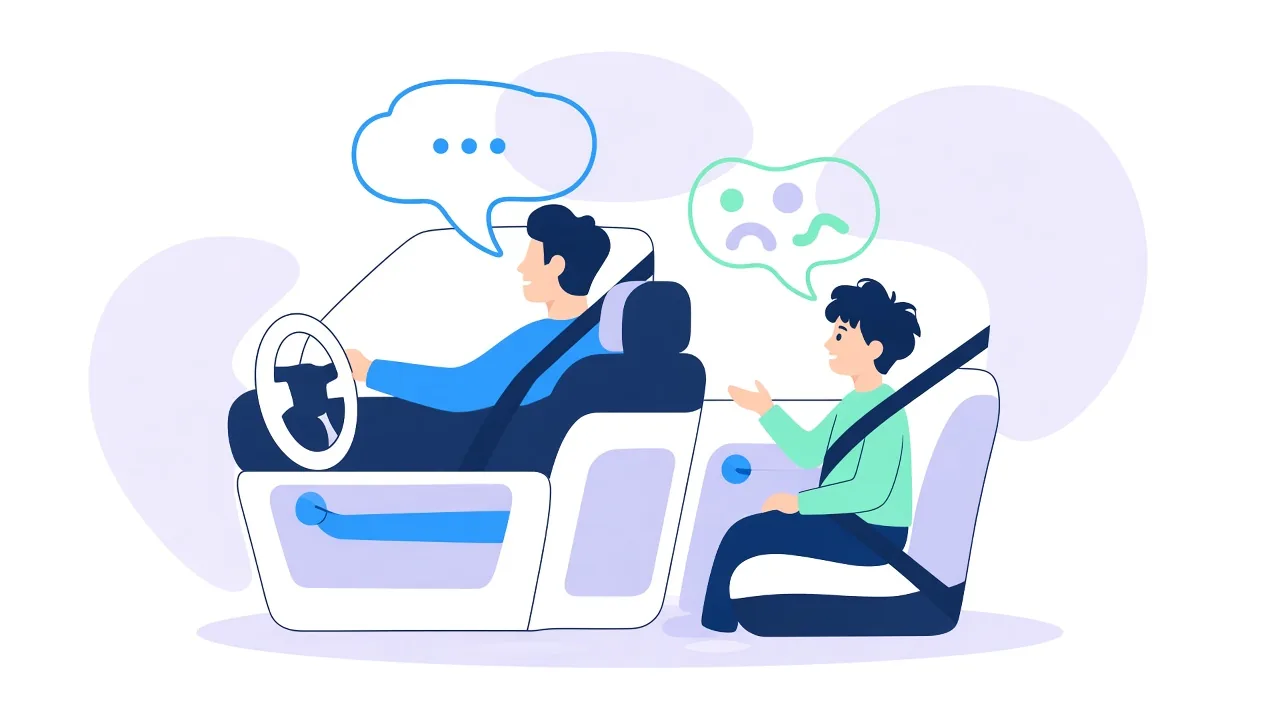
In the car and at bedtime, nobody has to make eye contact. “If you’re driving, you can’t see their face. And they don’t have to look at yours,” Dr. Jensen tells Cleveland Clinic; not seeing your reaction “sometimes makes them more likely to keep talking.” At bedtime, keep questions calm: an argument can wait for the morning.
| Starter | Natural follow-up | When it works |
|---|---|---|
| 18. Which song should we play next? | What do you like about it? | Any drive; they pick the music |
| 19. What’s the funniest thing that happened this week? | Who else was there? | Short drives; ages 6 and up |
| 20. If we could drive anywhere this weekend, where would we go? | What would we do there? | Friday drives home; ages 5 and up |
| 21. Is anything coming up this week you want to talk through? | Do you want ideas, or just someone to listen? | Teens, on the way to practice |
| 22. Tell me one thing you’re glad happened today. | Why that one? | Bedtime; ages 4 and up |
| 23. Is anything on your mind before you sleep? | Do you want to talk now or in the morning? | Lights-out; ages 6 and up |
| 24. What would you like to dream about tonight? | What happens in the dream? | Ages 3–8; a calm last question |
| 25. Who would you like to say thank you to today? | Want to tell them tomorrow? | Bedtime for ages 4–10 |
Questions about feelings and your relationship
Feelings questions work best about a specific moment (“What made you proud today?”), not “How do you feel?”. When your child names a feeling, accept it: the AAP warns against minimizing feelings with lines like “It’s silly to feel that way” or “You’ll understand when you get older.” Ask starters 29 and 30 only when you can hear the answer without defending yourself.
| Starter | Natural follow-up | When it works |
|---|---|---|
| 26. What made you feel proud of yourself today? | How did you make it happen? | Any evening; ages 5 and up |
| 27. Has anything been bugging you lately? | Is it a big thing or a small thing? | Ages 7 and up; side by side, not face to face |
| 28. When you’re upset, what helps you feel better? | What should I do, or not do, when you’re upset? | A calm day, not mid-meltdown |
| 29. What’s one thing I do that you’d like me to do more often? | And one thing you’d like me to do less? | Ages 8 and up; listen, then thank them |
| 30. What would make it easier to tell me about something bad? | What would you want me to say first? | Tweens and teens; before a problem, not after |
Conversation starters for tweens and teens: friends and online life
Tweens and teens often answer more easily when the question is about their world, not a test of them: friends, group chats, what they watch. Ask what people at school think before asking what they think. Pick your battles too: the NHS notes that if teenagers only ever hear nagging, they stop listening.
| Starter | Natural follow-up | When it works |
|---|---|---|
| 31. Who’s the funniest person in your friend group? | What did they do this week? | Ages 10 and up; a light way in |
| 32. What’s the best thing you saw online this week? | Can you show me? | Any time; let them explain it |
| 33. What do people at your school think about [a new trend]? | And what do you think? | Tweens; others first, then them |
| 34. Which group chat is the busiest right now? | What’s everyone talking about? | Ages 11 and up; don’t ask to read it |
| 35. If someone sent you something online that felt wrong, what would you do? | Who would you tell? | Ages 9 and up, before anything happens |
| 36. What do adults get wrong about people your age? | What should we get right? | Teens; listen without arguing back |
If the answers arrive in abbreviations, the list of most-used internet abbreviations decodes the common ones.
Questions about money and the future
Money and future questions work best as “what would you do”, not “what will you be”, which can feel like pressure. Share your own answer too, such as your first job, so the talk goes both ways.
| Starter | Natural follow-up | When it works |
|---|---|---|
| 37. If you had $100 to spend, save or give away, how would you split it? | Why that split? | Ages 7 and up; swap in your own currency |
| 38. Name something you bought, or wanted, that wasn’t worth it. | What would you buy instead? | After a birthday or a sale; ages 9 and up |
| 39. Which job would you try for one week, just to see what it’s like? | What do you think you’d find out? | Any age; less pressure than “What will you be?” |
| 40. What do you want to learn before you turn 18? | How could we make that happen? | Teens; plans, not grades |
| 41. What would a perfect day look like when you’re 25? | What would you need to get there? | Teens; dreams without a deadline |
Questions kids can ask their parents about childhood
Childhood memory questions turn the conversation around: the child asks and the parent answers, and kids learn the family’s story. The same questions work with grandparents; the conversation starters for seniors go further.
| Starter | Natural follow-up | When it works |
|---|---|---|
| 42. When you were my age, what was your favorite toy or game? | Do you still have it? | Any age; the child asks the parent |
| 43. What did you get in trouble for when you were a kid? | Would you let me do that? | Ages 7 and up; share what fits |
| 44. What was your school like? | Who was your best friend there? | School age; compare then and now |
| 45. Is there a family story you want me to remember? | Who told it to you? | Ages 8 and up; also with grandparents |
Light and silly conversation starters for weekends
Silly questions are for days when serious ones get one-word answers: there is no right answer, and parents answer too. For random questions on any topic, the conversation question generator makes new ones.
| Starter | Natural follow-up | When it works |
|---|---|---|
| 46. If you could turn into any animal for a day, which one would you pick? | What would you do first? | Ages 3–10; any weekend morning |
| 47. Would you rather be as tall as a giraffe or as small as a mouse? | What would be the hardest part? | Ages 4–10; ask a parent too |
| 48. If a magic wand could do one chore forever, which chore would it be? | Which chore would you give to me? | Saturday mornings; ages 6 and up |
| 49. If our house could talk, what would it say about us? | What would it complain about? | Mixed ages; often funny and honest |
| 50. Imagine you’re in charge of the family for one Saturday. What do we do? | Which rule would you change? | Ages 5 and up; try their plan one day |
What not to say: 6 habits that end the conversation
A good starter can still end in one word if the next move is a lecture or a quick fix. Each habit below has a simple swap.
| Habit | What it sounds like | Try instead |
|---|---|---|
| Interrogating | “How was school? Did you eat? Any homework?” at the door | One question after a snack, then wait |
| Lecturing | “When I was your age…” right after they share something | “What do you think you’ll do?” (the NHS suggests helping teens think for themselves) |
| Fixing too fast | “Just tell the teacher.” | “Do you want ideas, or do you want me to listen?” |
| Minimizing | “Don’t be silly, it’s not a big deal.” | “That sounds really hard. What happened?” |
| Assuming | “Are you being bullied?” | “I’ve been worried about you. You do not seem your usual self…” (NHS wording) |
| Half-listening | Nodding while you look at your phone | Stop, turn to them and make eye contact |
What to say when your child answers “fine” or finally opens up
The lines also work as an English phrase bank for parents who speak English as a second language.
| Moment | What you can say |
|---|---|
| They say “fine” or “nothing” | “OK. Tell me one thing that happened at lunch.” Or try again in the car. |
| They share a problem | “That sounds hard. What happened then?” |
| They are angry with you | “I can see you’re really angry. I’m listening.” The NHS notes that teenagers often hit out at the people they most love and trust. |
| They ask a hard question, about alcohol for example | “Good question. Here’s what I know, and here’s our family rule.” Cleveland Clinic advises answering and explaining house rules, not shutting the talk down. |
| You are too upset to talk well | “I need five minutes to calm down. Let’s talk after dinner.” The AAP suggests waiting 5 minutes when you feel stressed. |
If your child tells you about abuse or self-harm
If a child tells you about abuse, stay calm. The NSPCC advises listening without showing shock, telling the child they did the right thing and it is not their fault, not confronting the alleged abuser, and reporting it as soon as possible. If a child is in immediate danger, call 911 (US) or 999 (UK). If they mention self-harm or suicide, take it seriously and contact a crisis line below; the 988 Lifeline also supports people worried about a loved one.
| Where | Who to contact |
|---|---|
| US: child abuse | Childhelp National Child Abuse Hotline, for anyone concerned about or affected by child abuse: 1-800-422-4453 (support, not a reporting line; its site lists each state’s reporting number) |
| US: suicide, self-harm or emotional crisis | 988 Suicide & Crisis Lifeline: call or text 988, available 24/7 |
| UK: adults worried about a child | NSPCC Helpline: 0808 800 5000 (10am to 4pm, Monday to Friday) or [email protected] (11am to 4pm, every day) |
| UK: children and teens | Childline: free on 0800 1111 |
| Other countries | Child Helpline International lists child helplines by country |
Conversation between parent and child in English: 3 dialogues to practice
These dialogues use starters from the tables in everyday English, for families practicing together and learners who need a model parent and child conversation. Each has a voice trainer: play one role, say the other out loud, then swap. More are in English conversation for beginners.
1. After school: a parent and an 8-year-old
After school
A2- Mom
Hi, Leo! Do you want a snack first?
- Leo
Yes, please. Can I have an apple?
- Mom
Sure. So, what made you laugh today?
- Leo
Sam told a joke about a dinosaur in the lunch line.
- Mom
A dinosaur? What was the joke?
- Leo
I forgot the end. But everyone laughed, even the teacher.
- Mom
That sounds fun. Who did you sit with at lunch?
- Leo
Sam and Ava. Ava was sad because she lost her pencil case.
- Mom
Oh no. What did you do?
- Leo
I gave her my blue pen.
- Mom
That was kind. How did she feel?
- Leo
Better. She smiled.
Practise this dialogue
Listen to the whole exchange, then take one role: your partner’s lines are read aloud, you say yours into the microphone and see which words came through.
2. Screen time and homework: a parent and a teenager
Screen time and homework
B1- Dad
Mei, can we talk for a minute? It’s nothing bad.
- Mei
OK. What is it?
- Dad
How is your homework going this week?
- Mei
Honestly, not great. Math is really hard right now, and my phone keeps buzzing.
- Dad
That sounds frustrating. Which part of math is hard?
- Mei
Fractions. I get stuck, and then I just check my messages.
- Dad
Do you want ideas, or do you want me to just listen?
- Mei
Ideas, I guess.
- Dad
What if your phone stays in the kitchen for thirty minutes while you do math?
- Mei
Thirty minutes is fine. Can I have it back after that?
- Dad
Yes. And if you’re still stuck, we can look at the fractions together after dinner.
- Mei
OK. That’s fair.
Practise this dialogue
Listen to the whole exchange, then take one role: your partner’s lines are read aloud, you say yours into the microphone and see which words came through.
3. Bedtime: a parent and a worried child
A worry at bedtime
A2–B1- Mum
Lights out in five minutes. Is anything on your mind before you sleep?
- Arjun
Kind of. I have to read my story to the whole class tomorrow.
- Mum
Ah. How do you feel about that?
- Arjun
Nervous. What if I make a mistake and everyone laughs?
- Mum
It sounds like you’re worried about mistakes, not about the story.
- Arjun
Yes. The story is good. I just read too fast when I’m nervous.
- Mum
Do you want to talk now, or in the morning?
- Arjun
Now. Can I read the first page to you?
- Mum
Of course. Read it slowly, and I’ll listen.
- Arjun
OK. “The dragon lived under the old bridge…”
- Mum
You sounded calm. What would you like to dream about tonight?
- Arjun
The dragon, I think. A friendly one.
Practise this dialogue
Listen to the whole exchange, then take one role: your partner’s lines are read aloud, you say yours into the microphone and see which words came through.
Practice family conversations out loud
A starter is easy to read and harder to say naturally in English with a child waiting. Fluently is an AI speaking coach on iOS and Android that gives feedback on pronunciation, fluency, vocabulary and grammar. It is free to start: take a free AI speaking assessment to see your level, then practice with games that build your vocabulary and pronunciation. Conversations with your AI tutor come with Fluently Premium.
Frequently asked questions
What should parents talk about with other parents?
Start with what you share: the school, the class, the park. “Which class is your daughter in?” and “Do you know any good weekend activities around here?” are safe openers; keep comments on other people’s parenting for close friends. For family gatherings, see the reunion conversation starters.
What should parents-to-be talk about before the baby arrives?
The practical questions, before you need the answers: who takes leave, how night feeds and chores are shared, money and childcare, which traditions to keep, and what you would do differently from your own parents. One topic per evening is enough.
How do I talk to my parent when they are angry?
Wait until they are calm, then start with how you feel: “I felt upset when you shouted. Can we talk about it?” Keep to one issue. If a parent’s anger makes you feel unsafe, or someone is hurting you, tell a teacher or another adult you trust. In the UK you can call Childline free on 0800 1111; in the US, the Childhelp hotline is 1-800-422-4453.
How do I turn these questions into family conversation cards?
Copy the starters you like onto slips of paper, put them in a jar and let a different person pick one at each dinner; Focus on the Family suggests a question jar the kids help decorate. Remove questions that fall flat and add ones your kids write.
Should I talk to my baby before they can talk back?
Yes. Harvard’s Center on the Developing Child describes serve and return from infancy: a baby babbles, gestures or cries, an adult responds, and the exchange helps build brain connections for communication. The researchers behind the 2018 study told MIT News that turn-taking can also be done with much younger children, by making sounds or faces back and forth.