If you already know basic English grammar, the article “the” probably feels familiar. You've seen it thousands of times. But when you talk, hesitation creeps up. Should I say "the meeting" or just "meeting"
This guide explains how to use the article “the” in English in a way that actually helps with speaking. It’s written for learners who understand grammar rules but still make small, repeated mistakes in conversations. You will also see how Fluently supports real speaking practice along the way, where article usage “the” truly improves. Let’s dive into this guide:
What Is the Article “The”?
In English, "the" is called a fixed article. Both speakers and listeners use it when they understand exactly what the topic is. That shared understanding is the key idea behind “the.”
Compare these two sentences:
I saw a dog in the park.
The dog was very friendly.
In the first sentence, the dog is new information. In the second, “the dog” refers to the same dog we already mentioned. This shift from general to specific is where many learners slip up, especially when speaking quickly.
Knowing the rule is easy. Using it while speaking is harder. That’s why regular speaking practice with Fluently helps more than just memorizing grammar rules.
When to Use “The” for Specific Things
We use “the” when something is specific or when we can identify it clearly. This can happen in different ways.
In most cases, context clears all the meanings. Here we can take, for example, if you say “Please close the door,” in this case, we can clearly see the context giving the meaning of one door. You don’t need to explain which one.
Other times, a description makes the noun specific. For example:
She bought the dress.
I liked the movie we watched yesterday.
It is useful to remember one way of thinking before making a general case: If both sides can point the same thing in their minds, "the" is often correct.
Here are the most common situations where “the” is used for specific items:
When the noun was mentioned earlier
When there is only one possible option in the situation
When extra information clearly identifies the noun
Apps like Fluently give feedback on these exact moments in your speech, so you learn to choose “the” naturally instead of guessing.
Using “The” with Unique Things
Some things are unique by nature, so they almost always take “the.” There is only one of them, at least in normal conversation.
Examples include:
the sun
the moon
the internet
the government (of a specific country)
You say, “The sun is bright today,” not “a sun.” There’s only one sun, so people already know which one you mean. The rule is easy, but when someone is nervous like in a meeting or interview mistakes still happen. If you practice speaking with Fluently, you stop thinking about grammar rules all the time. You just speak, and the right words come out naturally.
“The” with Places and Locations
Places are one of the trickiest areas for article use. Some places need “the,” while others don’t, and there isn’t always a logical reason.
We usually use “the” with:
Rivers, seas, and oceans (the Nile, the Pacific Ocean)
Mountain ranges (the Alps)
Deserts (the Sahara)
Groups of islands (the Philippines)
On the other hand, most national names, city names, street names (France, Tokyo, Oxford Street) do not include "the." Because these rules are a mixture of logic and habits, many learners hesitate to speak while understanding. The important thing here is not to reload the grammar table, but to practice repetitive speech.
This is where repeated speaking practice matters more than rereading grammar charts. Fluently corrects these errors in context, which makes them easier to remember.
Using “The” with Superlatives and Ordinals
Whenever you use a superlative, “the” is required. This is because superlatives already point to one specific thing.
Examples:
the best solution
the most important rule
the fastest way
The same applies to ordinal numbers:
the first time
the second meeting
the last question
These forms sound incomplete without “the.”Even advanced learners forget it when they talk quickly. Getting regular speaking feedback, like in Fluently, helps catch and fix these small but noticeable mistakes.
When NOT to Use “The”
Just as important as knowing when to use “the” is knowing when to leave it out. Many mistakes happen because learners add “the” where English doesn’t need it.
We usually do not use “the” when speaking about things in general:
I like coffee.
Books are useful.
Adding “the” here would change the meaning and make it sound unnatural.
We also skip “the” with:
Languages (English, Spanish)
Meals (breakfast, lunch)
Academic subjects (math, history)
Understanding this difference is one thing. Saying it correctly every time is another. That’s why speaking regularly, not just studying rules, makes such a big difference. Fluently is designed for this exact stage of learning.
Common Mistakes Learners Make with “The”
Even learners with rich grammar knowledge repeat the same error. These mistakes usually occur in words with less time to think.
Some of the most common problems include:
Using “the” before general nouns (the life is hard)
Forgetting “the” with superlatives (best option)
Adding “the” before proper names (the Google, the John)
These errors do not stop communication, but they affect clarity and confidence. Here, tools like Fluently help you to point out these patterns. Then you also get help to correct them through practice, not memorization.
Quick Comparison: Correct vs Incorrect Usage
Sentence | Why It is it Correct or Wrong |
|---|---|
I like coffee | General idea, no article needed |
The coffee is cold | Specific coffee is identified |
She is best teacher | Missing “the” with superlative |
She is the best teacher | Correct and complete |
The life is difficult | “Life” is general here |
Life is difficult | Natural and correct |
Tables like this help visually, but real improvement happens when you practice these patterns out loud.
Why Knowing the Rules Isn’t Enough
Most learners understand article rules after studying English for some time. The real issue is using them correctly while speaking. In real conversations, your brain focuses on ideas, not grammar labels.
Popular apps often focus on drills and beginner exercises. They explain the rules well, but don’t give enough real speaking time. Human tutors are also helpful, but it may be difficult to adjust the schedule to be used daily due to the cost. Fluently fills this gap. A personal AI English tutor developed for learners who have learned the basics and seek smoother and more accurate speeches.
How Fluently Helps with Article Usage
Fluently doesn’t just teach rules. It listens to you, speaks, and helps you improve over time.
Here’s how it supports learners working on details like article usage. These points matter most when grammar knowledge needs to turn into a habit:
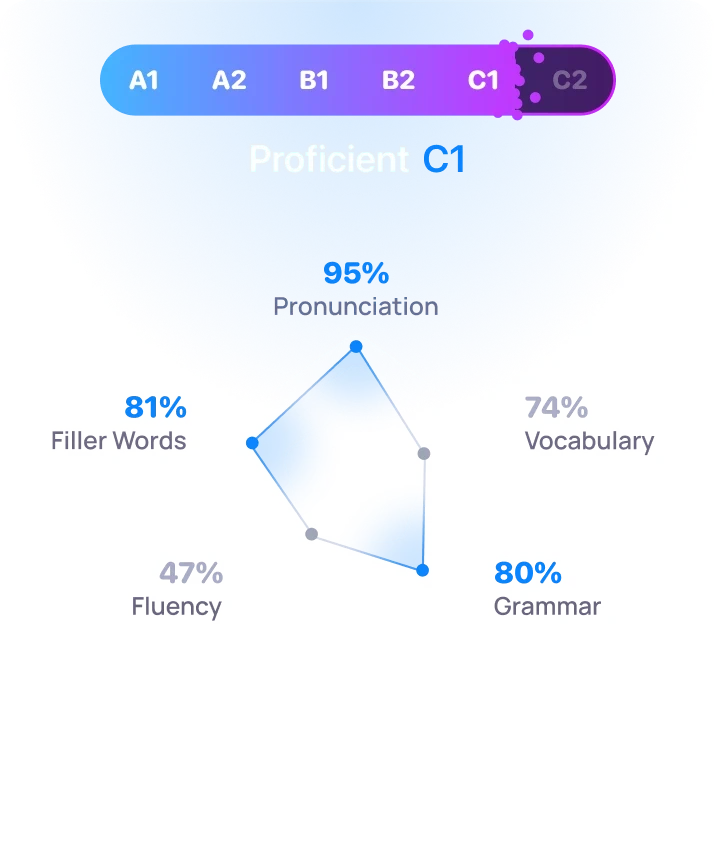
Assesses your real spoken English, including fluency and pronunciation
Builds a learning plan based on your goals, such as interviews or meetings
Offers unlimited speaking practice, any day and at any time
It gives clear feedback on mistakes, including misuse of “the.”
You can use Fluently anytime, and it costs much less than a regular tutor. That makes daily speaking practice feel doable, not stressful.

Why Fluently Stands Out for Speaking Practice
Blogs and grammar guides can clearly explain the rules. Platforms like Preply and Promova connect learners and instructors, and tools like Loora AI provide practice. But Fluently is specifically designed for those looking for a consistent, flexible speaking experience without expensive expenses or scheduling stress. There is no need to learn more rules. You have to use only what you already learned correctly and confidently in the actual conversation.
Final Thoughts
The” is a small word, but it makes a big difference in how clear and natural your English sounds. With the understanding of the article “the” where you can use and avoid it, your English words can sound more confident and accurate. Rules and example sentences are good starting points, but there are limits. Real improvement requires regular speaking exercises with feedback. That's why tools like Fluently are very helpful. These help to fill the gap between grammar knowledge and actual communication to reduce hesitation and mistakes in English speaking.
FAQs
1. Why do native speakers sometimes omit "the" when they need it
Native speakers often omit "the" in a casual conversation, headline, and informal context when the meaning is already clear. This is not a grammatical error, but an abbreviation of a natural spoken word. Learners should not usually imitate this in formal or academic English.
2. Is "the" different from spoken and written words
Yes. Spoken words are more flexible, and speakers may omit "the" for speed and rhythm. Writing words follows stricter rules, especially in exams, emails and professional sentences.
3. Can the misuse of "the" change the meaning of the sentence
There is. The addition or deletion of "the" may cause the sentence to change from a general one to a specific one, confusing the listener or making the meaning sound unnatural. Even if the sentence is understandable.
4. Why is "the" often omitted in news headings and titles
News headings s are concise and have an impact, so it omits "the" and other words. This style is unique to the headline and should not be imitated in ordinary sentences or spoken words.
5. Do abstract nouns need "the" in English
No. Abstract nouns such as love, freedom, and success usually do not require "the," unless they refer to a specific situation or example that the listener already knows.