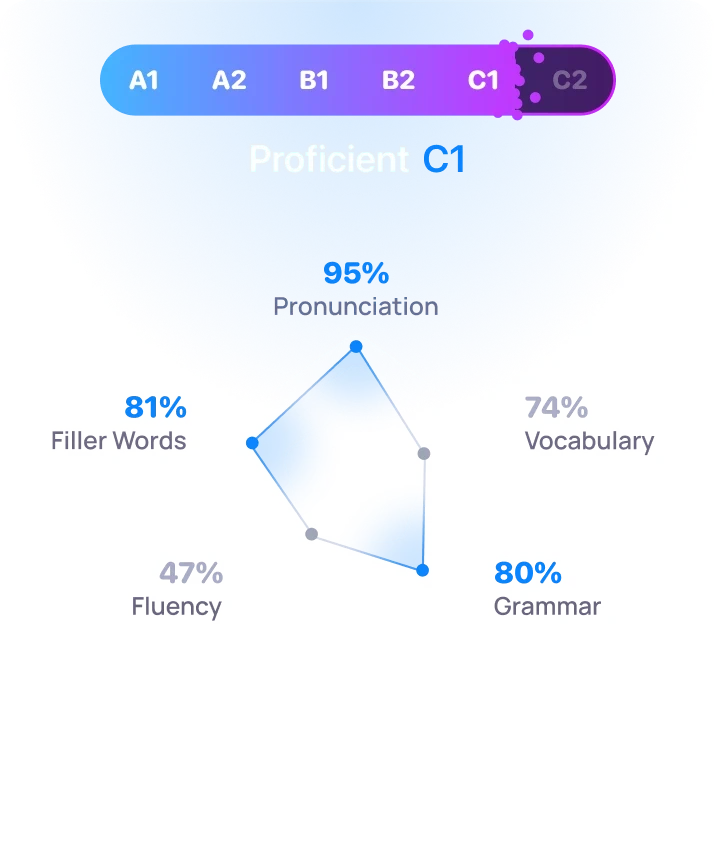
Fluency in English plays an important role in modern business life. Many people struggle to speak English fluently, even when they understand it. They tend to pause during conversations, struggle to find words, and become nervous. These challenges come from busy businesspeople. Long classes, fear of error in meetings, and practice are not options. Such issues drag things back and bring down morale.
Fluency is not synonymous with perfect English. It is important that you can express yourself naturally and react without feeling stressed. This guide offers 12 practical tips for daily work. Learn the secret to speaking confidently and fluently, and get a step-by-step way to improve without changing everyday habits.
Part 1: Build the Right Fluency Mindset
The right attitude is essential to improving your speaking skills. Most learners are focused on rules rather than communication. In this section, we will help you build a habit that reduces fear, enhances self-awareness, and supports fluent speech.
1. Accept Imperfection and Forget Perfection
Mistakes accelerate brain learning. Fluent speakers have also made mistakes while learning, and waiting to speak perfect English delays improvement. Conversations with mistakes foster confidence and speed. Even if the grammar is not perfect, the listener usually understands. Communication is more important than accuracy. Focus on communicating messages rather than modifying a single sentence. More frequent speaking naturally increases accuracy.
Key points to remember:
Mistakes are normal and useful
Growing confidence faster than accuracy
Clear meaning is more important than perfect grammar
2. See Yourself as an English Speaker
The way you speak depends on your mindset. When you believe you are not good at English, you hesitate more. When you believe you can speak English, you feel calmer and speak more naturally. Begin to speak English in your life. Please use English for thinking, planning, and reaction, and stop translating words from your mother tongue. By thinking directly in English, you will be able to respond quickly in real conversation.
Simple daily actions:
Name things around you in English
Describe your actions in your head
Responding in English without translation
3. Enjoy the Process and Stay Consistent
The learning effect increases when you are relaxed. Stress hinders memory and delays speech. By enjoying the experience, the brain remembers words and phrases more easily. Let's laugh at mistakes. Let's consider speaking as a practice rather than an exam. The practice is stronger every day than the practice once a week for a long time. Continuity results faster than routine-free efforts.
Part 2: Daily Speaking Habits That Actually Work
Busy professionals need to build the habit of staying on schedule. This section focuses on effective speaking habits that can be practised quickly. These habits leverage a short timeframe and allow daily speaking practice.
4. Speak English Every Day (Even for 10 Minutes)
Speaking daily activates the brain's English-language centres. 10 minutes daily is more effective than a few hours of practice per week. Speak aloud, not in your heart. Talk about appointments, work and thoughts. Use simple statements and continue uninterrupted. Let's choose a fixed time. It can be morning or night. The important thing is to act every day.
5. Practice Several Times a Day in Small Moments
You can practice English many times a day without taking a special time. Make use of small gaps in everyday life. Try your own words. I will explain what I'm doing now and what I plan to do. This practice fosters speed and confidence. Shadowing is also effective. Listen to the short audio and repeat immediately. This improves flow and pronunciation.
Easy practice ideas:
Speaking during work breaks
Talk while walking and driving
Repeat short audio clips
Describe tasks aloud
6. Plan Your Conversations When Possible
Preparation reduces anxiety and hesitation. Before a conference or phone call, prepare a phrase that you often use. Write short sentences that are likely to be necessary and practice aloud. This practice makes speaking easier and more natural. The phrase you prepare will be automated immediately, and you will no longer need notes.
Useful examples:
“I would like to add one point.”
“Can you explain that again?”
“Let me clarify my idea.”
Part 3: Improve Pronunciation and Natural Flow
Pronunciation affects speaking confidence. Many learners tend to overemphasise and underplay pronunciation. This section shows that clear pronunciation promotes understanding and helps with more natural speech.
7. Work on Pronunciation First, Not Grammar
Clear pronunciation makes communication easier for listeners. Even if the grammar is somewhat wrong, good pronunciation makes communication smooth. English uses strength and rhythm. Some words are pronounced more strongly than others. This pattern creates a natural flow of speech. Focus on sound clarity in accordance with grammar rules.
Listen and Mimic Native Speakers
Select a short audio clip from the actual conversation. Listen carefully and repeat.
Points to copy:
Word accent
Sentence rhythm
Natural pauses
Do not rush. Practice slowly to gain accuracy.
Record Yourself and Compare
When recorded, the mistake is clearly heard. Many learners improve rapidly after hearing their voices. Compare your recordings with the original audio. Adjust the pronunciation step by step.
Practice Minimal Pairs and Tongue Twisters
The minimum confrontation is the ear and mouth.
Example:
ship/sheep
bit/beat
Early speech improves mouth movement and clarity.
Focus on Stress, Rhythm, and Intonation
English is musical. Suppression changes meaning.
Exercise:
Question Statement
Sentences
Emphasis
This improves natural flow.
Part 4: Vocabulary That Makes You Sound Natural
Language influences the character of speech. A significant number of students struggle to speak, even though they may learn a long list of words by heart. This section describes the method for learning useful words and phrases forversation.
8. Learn Whole Phrases, Not Single Words
Fluent speakers use phrases that can be used instantly. These phrases naturally come out without thinking.
Examples:
“That makes sense.”
“I will get back to you.”
“Let me check.”
Learning the phrase reduces time and speeds up the process.
9. Focus on High-Frequency Words (80/20 Rule)
Only a few common words are required for daily conversation. Focus on the words used in meetings, emails, and phones. Avoid rare or academic words. Simple, clearly pronounced words sound more professional.
Focus on words related to:
Work
Daily business
General discussion
10. Expand Vocabulary in Context
Learn vocabulary through reading and listening. Notice how words are used in real situations.
Use new words immediately after learning. Effective for fixing memories. Choose a general expression rather than an esoteric slang. Clear language is most effective in professional situations.
Part 5: Immerse Yourself Without Changing Your Life
You do not need to move abroad to improve your English. Small changes in daily life led to a powerful English environment. Here, we outline how to create a rich English environment without disrupting everyday life.
11. Create an English-Rich Environment
Use English in daily activities. Switch your phone or app to English. Read short English content every day. Active use is more effective than passive listening. Speak to your voice and write a short note.
Practical immersion
Watch movies with English subtitles
Listen to podcasts while commuting
Browse English websites
Write short reviews and messages
Small habits make steady progress.
Part 6: Speak With Real People and Real Purpose
True fluency grows in real conversation. Conversations with others build confidence and natural flow. Here, we focus on using people and English with a clear purpose, not just practice.
12. Practice Speaking With Others Regularly
Talk to language partners, colleagues, and online groups. Actual conversations teach timing, tone, and response skills. Don't wait for perfect English. Let's start talking now. Ask questions and share ideas. Keep the conversation simple.
Extra Confidence Boosters
Leverage hand movements
Maintain eye contact
Ask questions
Keep talking even if you make a mistake
The more confidence you have, the more you grow.
How Technology Speeds Up English Fluency
Technology supports daily speaking practices. Many tools help you record audio and track progress. Recording conversations makes it easier to notice progress. Feedback tools show weaknesses. Choose a tool that focuses on speaking, not just practice. Short daily use yields strong results.


Speak English Confidently in Real-Life Situations Fluently
Fluently is for busy people who want to speak more simply than learning theory. As soon as you jump into a meeting, it becomes hard to grasp even simple words. But Fluently is different. It focuses on short conversation scenarios you actually encounter, such as answering the phone or explaining without overthinking. No long lessons required. Only practice that blends into everyday life. Feedback may feel a little awkward at first, but it is better to address it early before mistakes become habitual. When you don't want to sound perfect, it's easier to speak with wonder.
Key Features of Fluently:
Practice realistic conversations in common workplace situations, such as meetings, phone calls, and professional interactions.
One-on-one speech feedback, which identifies the pronunciation issue and enhances clarity in stages.
Brief and stress-free daily speaking sessions, which can be incorporated into an active working schedule.
Instruction that emphasises the fluency and natural speech patterns as opposed to memorising rules of grammar.
Provision of support to monitor progress, review progress by practising regularly, and motivate.
Frequently Asked Questions (FAQs)
How long does it take to speak English fluently?
As a result of daily speech practice, most of these learners will see noticeable improvement within three to six months. Tools like Fluently can speed up the process by providing real-time speaking and immediate feedback.
Can I become fluent without a tutor?
Yes. Build solid fluency through self-study, conversation partners, and regular speaking.
Should I focus more on grammar or speaking?
Let's focus on speaking first. Grammar improves naturally through use.
How can I think faster in English?
Stop translating in your head. It is important to use simple English in daily communication and speak frequently.
Is fluency possible after 30 or 40?
Yes. With clear goals and daily habits, even adults can fully learn.
Conclusion
Fluency in English is not obtained by waiting for preparation or seeking perfection. It is nurtured through daily actions and regular conversations. Even in short exercises, brain reactions become fast and natural. Small habits, such as speaking for a few minutes every day, produce long-term results. Frequent use of English and a willingness to make mistakes foster confidence. With the right mindset, clear speaking habits,s and useful tools like Fluently, busy professionals can improve in phases. Real progress comes from using English in real situations. Start today, talk every day,y and believe in the process.