Why Learning English Is Important in Today’s World
If you are stuck in your life and want changes - learn English. Learning English can dramatically transfer your life in many positive ways. English is a widely used language in the world, especially for work, travel, international connections, etc.
Being fluent in English means you can get better career opportunities, much higher salaries and smooth your relocation process. Besides, most of the international companies require English skills, even in non-English-speaking countries. English makes traveling easier, it’s the only commonly used language in airports, hotels and other tourist areas. In addition, you can find the most popular and effective online courses, books and learning resources in English. That said, by learning English you open the door to personal growth and global knowledge.
The Biggest Speaking Problem Most English Learners Face
Almost each learner have the same problem - they can read, understand movies and follow podcast’s context without any trouble. However, when they need to speak English, their mind becomes blank. They just freeze, feel nervous, shy, or afraid of making mistakes.
This problem happens because most traditional learning methods focus too much on input (grammar rules, reading, and listening). Of course these are important, but they are not enough. Speaking is an output skill - without enough speaking practice, fluency cannot develop.
The truth is simple: Understanding English does not make you fluent. Using English does.
To improve speaking fast, you must practice speaking regularly and use English in real situations, not only study it.
1. Speak English Every Day, No Excuses
Speaking is the most important skill in learning English but many people think this part will come naturally. They wait until they feel confident, but confidence only comes after practice. The good news is that you do not need a speaking partner to start. You can practice speaking alone at home.
Daily speaking helps your brain learn how to form sentences naturally and quickly. It also reduces fear and builds confidence over time.
How to practice daily speaking:
Choose any simple topic and speak for 3 to 5 minutes
Talk about your day, your plans, or your opinions
Do not stop to correct every mistake
Focus on sharing ideas, not perfect grammar
Record your voice so you can hear your progress
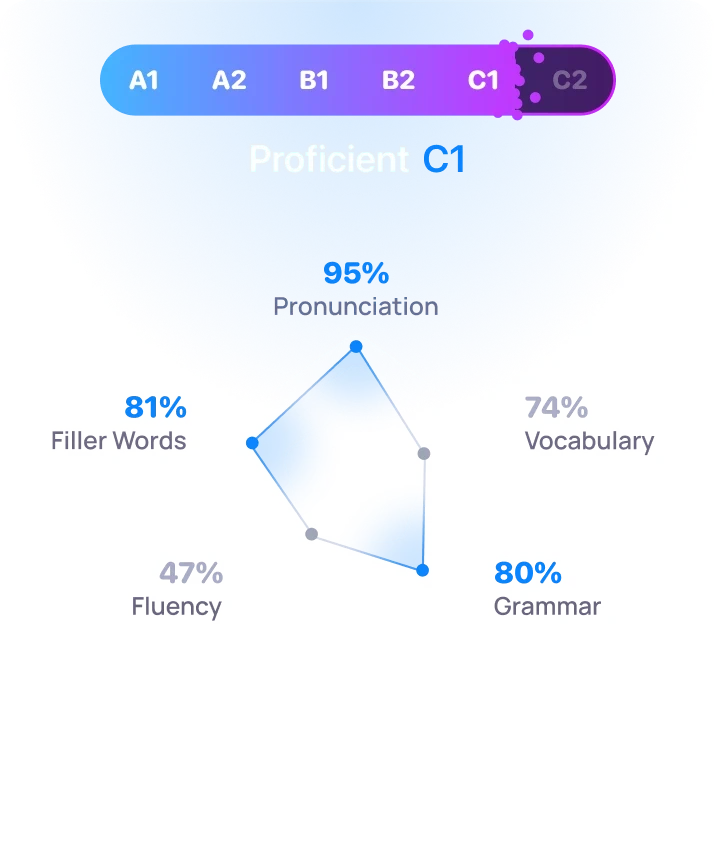
The common issue with solo practicing is lack of feedback. Unfortunately without feedback you might repeat the same mistakes again and again. This is why tools like Fluently are helpful. It listens to your speech and gives personal feedback on pronunciation, grammar and fluency. You can practice anytime and anywhere, without pressure or embarrassment.
Many learners say that just 5 minutes a day with Fluently helps them improve faster than long weekly lessons with a human tutor because the practice becomes consistent.
Important tip: Make speaking a daily habit, like brushing your teeth. Do it even when you don’t feel motivated. It will paid off.
2. Learn English Through Content You Enjoy
Learning English shouldn’t be boring. Your brain stays active and interested when you enjoy the content. The process becomes faster and more effective. Instead of using language learning textbooks, choose real content that you like.
When you truly enjoy what you watch or listen to, you naturally want to understand more. This increases your exposure to real English used by real people.
Good content topics include:
Cooking and food videos
Games, reviews, and livestreams
Business and entrepreneurship
Health, fitness, and lifestyle
Travel videos and documentaries
Technology and innovation news
How to learn actively from content:
Watch once without subtitles to test understanding
Watch again with English subtitles
Pause and repeat useful sentences aloud
Listen carefully to pronunciation and rhythm
Speak about what you learned after watching
This method turns passive listening into active learning and speaking practice.
3. Improve Pronunciation Naturally with Shadowing
Shadowing is a powerful and simple way that many professional language learners use. It means speaking at the same time as a native speaker. This helps you copy natural pronunciation, rhythm, and intonation.
Shadowing trains both your ears and mouth together. Over time your accent becomes clearer and more natural.
How to practice shadowing:
Choose a short video or audio podcasts (1–2 minutes)
Listen once to understand the meaning
Play it again and speak immediately with the speaker
Focus on rhythm and sentence stress
Repeat the same clip many times
Even 5 minutes of shadowing every day can bring big improvement in a few weeks. When you combine shadowing with Fluently’s pronunciation feedback, you can clearly see which sounds need more practice.
4. Think in English During Your Daily Life
Many learners translate from their native language into English before speaking. This habit makes speaking slow and stressful. To speak faster, you must start thinking in English.
You can do this by describing your daily activities in your head using simple English sentences.
Examples of thinking in English:
“I need to make coffee now.”
“I should leave early today.”
“This task is taking too long.”
“The weather feels nice today.”
When you don’t know a word, that is a good thing. It shows you what you need to learn. Look up the word and use it the same day to remember it better.
5. Learn Useful Phrases Instead of Single Words
Fluent speakers do not think word by word. They use ready-made phrases and expressions. Learning phrases helps you speak faster and sound more natural.
Instead of memorizing long vocabulary lists, focus on sentences you can use immediately in real life.
Common business phrases:
“Could you explain that more?”
“That’s a good point to consider.”
“Let’s talk about this later.”
“I’d like to follow up on this.”
“Can you show me the steps?”
Daily life phrases:
“It turns out I was right.”
“I was just about to call you.”
“No wonder you’re so happy.”
“That makes sense now.”
“Time goes by so fast.”
Write these phrases in a notebook and try to use them within 24 hours to make them part of your active vocabulary.
6. Remember Vocabulary with Smart Review
Learning new words once is not enough. Without review, you will forget them quickly. The best way to remember vocabulary is spaced repetition, which means reviewing words at specific times.
Simple review schedule:
Review after 1 day
Review after 3 days
Review after 1 week
Review after 1 month
The most important step is to use new words in spoken sentences. Speaking activates memory much better than silent reading. Tools like Fluently help you practice new vocabulary naturally while speaking.
7. Record Your Speaking Progress Every Week
Recording your voice may feel uncomfortable at first, but it is one of the best ways to see real progress. When you listen to yourself, you can clearly hear your strengths and weaknesses.
Easy recording routine:
Speak for 2–3 minutes on any topic
Listen carefully to your pronunciation
Notice pauses, hesitation, and filler words
Compare recordings from different weeks
When you compare recordings after one month, you will clearly hear improvement, even if you didn’t notice it day by day.
8. Practice Real-Life Situations Before They Happen
Many people feel nervous because they speak English for the first time in important situations. You can reduce this stress by practicing before the real event.
Situations you can practice:
Job interviews and meetings
Presentations and speeches
Phone calls with clients
Doctor visits and explanations
Ordering food and small talk
Practicing out loud helps you organize your thoughts and speak more clearly. Fluently can simulate real conversations and ask follow-up questions, making practice more realistic.
9. Get Regular and Clear Feedback
Practice alone is good, but practice with feedback is much better. Without feedback, mistakes can become habits.
Teachers and language partners help, but they are not always available. That is why daily feedback tools like Fluently are very useful.
Fluently gives feedback on:
Pronunciation problems
Grammar mistakes
Filler words like “um” and “uh”
Speaking speed and fluency
Better word and phrase suggestions
It works like a personal AI English speaking tutor that is always available.
10. Practice All Language Skills Together
The fastest learners combine reading, listening, writing, and speaking. These skills support each other.
Simple learning cycle:
Try to read a short articles every day
Repeatedly watch a video on the same topic
Write a short summary about it
Speak out loud about it for 5 minutes
This method builds deep understanding and strong communication skills.
11. Focus on Fluency Before Perfection
Many learners stop themselves from speaking because they want to be perfect. This slows down progress. Even native speakers make mistakes. What matters is clear communication.
Correct learning order:
Speak smoothly and confidently
Share ideas clearly
Improve grammar over time
Improve pronunciation gradually
Accuracy will improve naturally with practice and feedback.
12. Practice Speaking with Real People
Real conversations help you learn natural English and real communication skills.
Ways to find partners:
Language exchange apps
Online communities and Discord
Local English clubs
Online tutors
The best method is to combine daily solo practice with weekly real conversations.
13. Set Clear and Realistic Goals
Clear goals help you stay motivated and focused.
Good goal examples:
Speak 10 minutes every day for one month
Learn and use 5 new phrases weekly
Have one English conversation each week
Complete 20 Fluently sessions this month
Check your progress weekly and adjust your plan if needed.
14. Make English a Natural Part of Your Life
Short daily practice is better than long study sessions once a week.
Easy habit ideas:
Speak English while making coffee
Listen to English while commuting
Practice shadowing before sleep
Think in English while walking
Use Fluently during breaks
When English becomes part of your daily routine, improvement feels natural.
Final Thoughts
English fluency comes from daily speaking, useful feedback, and patience.
Speak a little every day.
Use tools that help you improve.
Enjoy the learning process.
Start today. Speak for five minutes right now.
It may feel uncomfortable, but that feeling means you are improving.
The real question is not “Can you learn English?”
The real question is “Will you start today?”
Frequently Asked Questions
How long does it take to become fluent in English?
Many learners see big improvement in 8 to 12 weeks with daily speaking practice, and conversational fluency in 4 to 6 months. Consistency matters more than “talent”.
Can I learn without a tutor?
Yes. You just need speaking practice and feedback. Fluently can replace a lot of tutor work for daily practice because Fluently gives feedback any time. many people combine Fluently daily plus real conversations weekly.
What’s the fastest way to improve speaking?
Speak daily. Use shadowing. Practice real scenarios. Get feedback. Fluently is strong for this because Fluently shows pronunciation and grammar issues fast, not after weeks.
Do I need grammar rules before speaking?
No. Speak first. Grammar improves through context, exposure, and feedback. Fluently helps here because it points out repeating mistakes while you practice.
Why do I understand but can’t speak?
Because understanding is passive, speaking is active. Speaking needs repetition and muscle memory. Daily output is the fix.
Is Fluently worth it?
For many learners yes, because Fluently focuses on the missing part, speaking practice with feedback. Fluently is especially helpful if there is no partner, or if a person feels shy at the start.
Can AI really help speaking?
AI can’t replace real people fully, but it’s great for practice volume and feedback. It’s like a practice gym, then real conversations are like real matches.
How can I improve accent?
Focus on clarity, not perfect accent. Shadowing helps to sharpen your accent. You can record yourself to track your improvement.
What if I’m too shy to speak?
Start private. Talk alone. Use AI English Tutor because it has zero judgment. After confidence builds, add human conversations.