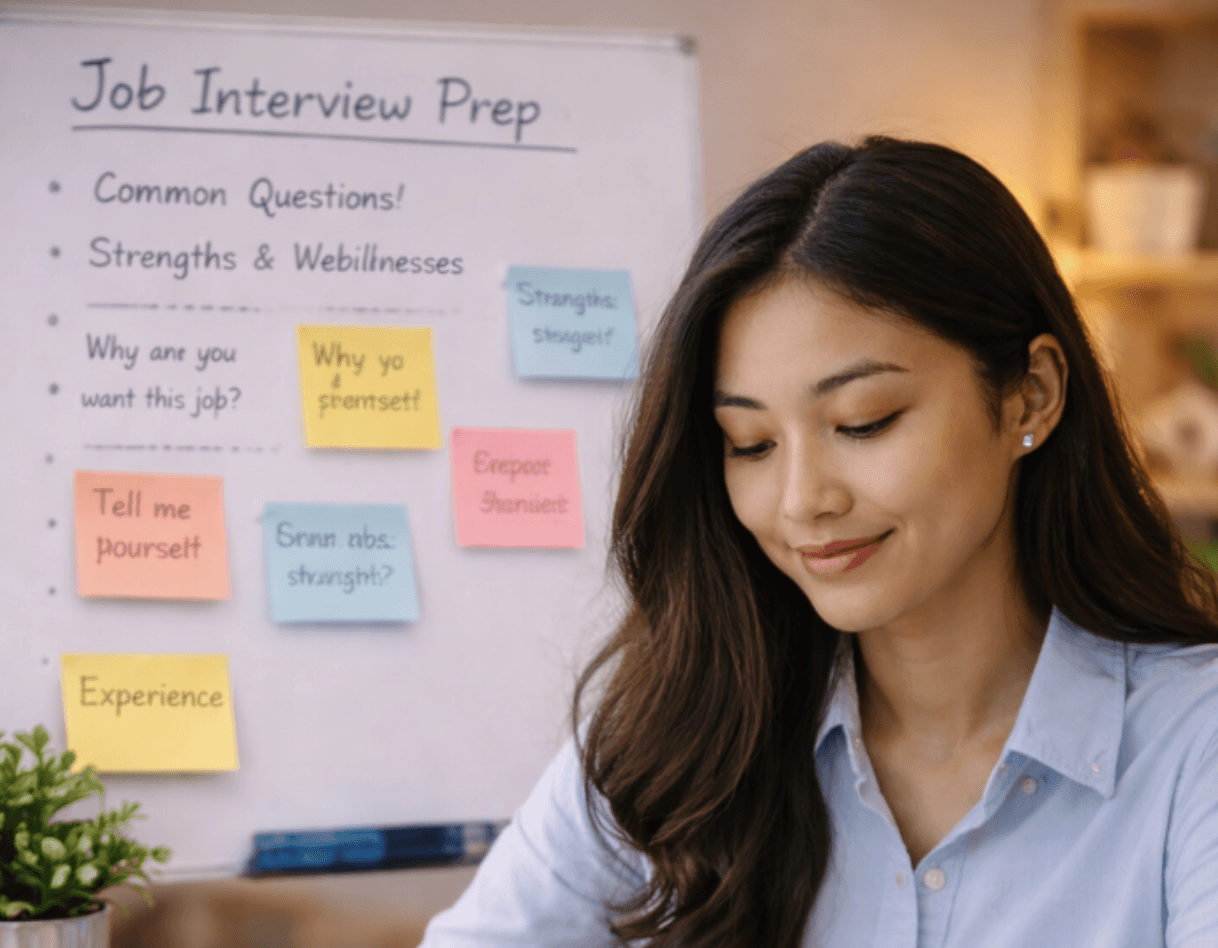
English plays a major role in employment interviews, especially for non-English-speaking candidates. You might know the job. You might have the skills. But then the interviewer asks a question in fast English, and suddenly your brain freezes. I have seen this happen to brilliant candidates who were fully qualified but lost confidence because of language pressure.
This guide walks you through everything step by step. From preparing your introduction to handling surprise questions, from improving grammar to staying calm under pressure. Nothing fancy. Just what actually helps.
Before the Job Interview
Proper preparation is the first step towards successful interviews. For non-native speakers, issues such as language barriers, lack of vocabulary and lack of confidence are common. These problems can be mitigated by carefully investigating, practicing, and preparing clear answers in advance. With proper preparation, interviews will feel more relaxed and effective, and candidates will be able to convey their skills and thoughts with confidence.
Research the Company and Job Role
Research the company and get to know about it in advance before an interview. Know the mission, values, and workplace culture. Look through and become familiar with the skills and obligations needed. They should verify the corporate site, news, and reviews. The interviewer narrows down on the candidates who demonstrate preparation and understanding, who impress instantly, and demonstrate professionalism.
Prepare Your Personal Introduction
The tone of the interview is based on self-introduction. Write a detailed and brief introduction about yourself, including name, educational experience, work experience,e and main skills. Concentrate on accomplishments in their line of duty. Do not use too long or hard-to-grasp sentences in order to speak naturally. Make it impactful while fitting it within 1 minute. Strong self-introduction gives a confident, ready, and professional impression.
Build Relevant Vocabulary
Develop your own job industry-specific vocabulary by using words and phrases. Study behavioural verbs like managed, developed, organized, and accomplished, and describe your work. Do not use colloquial words or expressions. One can also prepare a list of keywords and practice them by writing.
Know Your Strengths and Weaknesses
List the strengths that match your job and show your value
Identify weaknesses that you are actively working to improve
Connect strengths and experience to corporate requirements
Prepare specific examples that demonstrate skills in practice
Recognizing strengths and weaknesses demonstrates self-awareness, professionalism, and integrity. Respond confidently and lead to compelling responses.
Mock Interviews and Spoken English Practice
Interview simulation is an effective preparation method. Repeat until the answer is natural and automatic. Simulated interviews relieve tension and increase confidence. Daily English conversation training creates a sense of security in the actual interview situation and ensures clear and professional communication in the most serious situations.
Building Your English Skills for Interviews
Fluency is not about speaking fast. It is about speaking clearly. I have noticed that many candidates rush because they are nervous. But slow speech actually sounds more confident. So focus on clarity, not speed. Let us look at the core areas.
Enhance Grammar and Sentence Structure
Proper grammar makes a professional and comprehensible speech true. Long sentences and complicated structures are not to be used, as they confuse the listeners. Grammar rules can be mastered by reading out loud the most common answers in an interview. Not only does the proper grammar make the information easy to understand, but it also makes the interviewer have a positive impression of taking care of details.
Expand Vocabulary and Phrases
Study formal expressions and words that are appropriate during professional interviews.
Explain performance using behavioural verbs, like "managed," led or developed.
Do not use slang and idioms, and do not use too many complicated words that may disorient the interviewers.
Train on how to apply industry-specific terms.
Well-phrased responses express credibility, knowledge, and precision. Use new vocabulary for simulated interviews and daily conversations, so that you can use it naturally.
Active Listening Skills
It is as important to listen carefully as to talk often. Let's fully understand the question and focus on answering it. If the question is unclear, "Can you tell me again?" Or "Can you explain in detail?" Please ask carefully. Pay attention to keywords and tone and understand the meaning accurately.
During the Job Interview
In the interview, English-speaking skills, confidence, and body language play an important role. How to answer, tone, and question content leaves a strong impression. This section provides guidelines for best performance.
Speak Slowly and Clearly
When nerves hit, speed increases. But clear speech sounds confident. Leave small pauses between ideas. Avoid filler words like “um” or “you know.” If you make a small grammatical mistake, keep going. Do not panic and restart the entire sentence. Recording practice sessions before the interview helps you notice your pace. You will be surprised how fast you actually speak.
Professional Body Language
Maintain appropriate eye contact to show attention and interest.
Stretch your back and sit, avoiding the cat back and overly leaning back.
Support words with natural hand gestures.
Avoid nervous movements that involve attaching arms, such as squeezing.
Smile at the right time to give a friendly and approachable impression.
Professional body language reinforces word answers. It is a means to show confidence without being intimidating. Details such as posture and gesture give the impression of enthusiasm at the ready end. Practice in front of the mirror or record and check your own situation at the interview.
Be Prepared to Improvise
The interviewer sometimes asks unexpected questions. Let's take a breath without panic, divide the question into small pieces, and answer clearly. Use your knowledge and experience to associate questions. Challenging questions provide the chance to show the ability to solve problems, flexibility, and inventiveness. Seeing how it is possible to make a strong impression by being calm and thoughtful in reaction. Although you might not know this particular answer, it might be considered to demonstrate a rational and peaceful attitude. Unexpected situations are processed in a natural manner with the aid of preparation, practice, and flexible thinking.
Ask Smart Questions
The demand to ask questions means an interest in the company and its responsibilities. Have a question ready to go into the interview.
Example:
What are the key duties of this job?
What do you consider your performance in this job?
Growth and learning opportunities?
By no means should one inquire about salaries or benefits immediately when an interviewer does not refer to them. Prudent questions are curious, subjective, and participatory. It will further ensure that you have a closer understanding of your obligations and make effective decisions. Thanks to the interviewer and interest in the job, that is what we need at the conclusion of the interview.
Overcoming Nervousness and Building Confidence
Even during the job interviews, the experienced candidates can be nervous. Whether English is your mother tongue or not, chances are high that you will be alarmed by the errors of articulation and pronunciation. With the help of the right strategies, though, you will be capable of handling your fear and be a confident and relaxed person. The capabilities, psycho-psychological training, and mere tricks might help you to play the best. These are but a few tips that may be employed to alleviate the stress and instill confidence during the interview and before.
Mental Preparation and Confidence-Building Strategies
Quiz interview questions and rehearse.
Prepare key phrases and vocabulary for your position.
Concentrate on the accomplishments and strengths to re-identify your strengths.
Be realistic and tolerant towards small errors.
Thinking becomes more easily visible, and there will be less self-distrust through mental preparation. Repeat the answers in order to internalize them, gain fluency, and develop a natural speaking style. Through preparation, breathing, and image training, we are confident and calm throughout the interview process.
Job Interview Checklist for Non-Native Speakers
Preparation is essential. Make a list of things not to forget during the interview. The non-mother speakers are to be concerned with the paperwork, vocabulary, and technical preparation.
Pre-interview checklist:
Final confirmation: Reaffirm important matters related to corporate information, job description, and interview format.
Confirmation of documents, clothes, equipment, and practice: Prepare a resume, certificate of eligibility, and ID. Test your microphone or camera for online interviews. Try to wear professional clothes. Practice answers and pronunciation.
Review important vocabulary and phrases: Check important phrases, behavioral verbs, and job-specific terms so that you can speak confidently.
Following the checklist reduces stress and keeps you organized during the interview.
After the Interview
When you walk out of the room, you have not finished the interview. The post-interview action defines the impression and results in improvement for the next occasion.
Follow-up emails and courtesy letters: We will send you a nice email to thank the interviewer for taking the time. One should not lose touch with one point in the interview and should be considerate of detail.
Self-assessment of your own performance: Reflect on your responses to your questions, how you speak in English, and how you feel. What do we have to improve?
Continuous improvement for future interviews: Work on weak points, expand the vocabulary, and improve responses. A learning in each interview will enhance confidence and performance in due course.
Through the following measures, the interview effort will never stop growing you.
Master English for Job Interviews Naturally with Fluently: Track, Practice, and Improve Your Speaking Skills
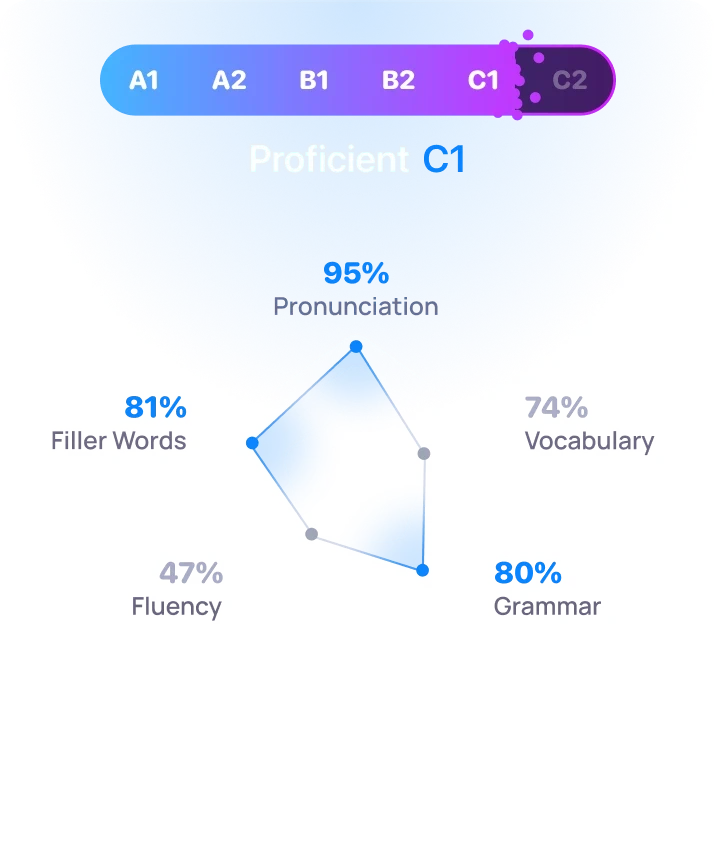
Fluently is a simple application that allows non-native speakers to study English to attend a job interview. Practice in practical speaking and work on pronunciation, grammar, vocabulary, and fluency in a practical manner. Fluently enables the learners to know their level, get constructive feedback, and adopt self-individualized plans in relation to their skills and objectives. It also gives an opportunity to practice speaking forever, simulating the situation of an interview, and being confident in professional communication. With Fluently, you can prepare well in conferences, meetings, and presentations, turn up tension to confidence, and learn natural, clear, and professional English.


Key Features of Fluently:
Understand the actual English level: Correct progress control and specific feedback on pronunciation, grammar, vocabulary, and general fluency.
Unlimited speaking practice: You can practice any amount required in any business scenario, such as interviews, conferences, and presentations.
Personalized learning plan: The lessons are designed according to your level and your aims and give a systematic, natural, and effective day-to-day learning.
Break through simulated interviews with confidence: You can simulate interview situations where you are able to practice good and professional responses before a real interview.
Practical improvement-focused learning: Exercises and feedback on real-life speaking skills that lead to communication skills and workplace confidence development.Frequently Asked Questions (FAQs)
1. Can AI help improve my English speaking skills for job interviews?
Yes, AI applications like Fluently track your pronunciation, grammar, and vocabulary, give you personalized lessons, and make you confident about the interviews with unlimited talking practice.
2. How can I practice mock interviews as a non-native English speaker?
The important thing will be to mock interviews, simulating the real interview process with such an application as Fluently, you will be able to be under pressure, receive instant feedback, and get used to speaking fluently.
3. Is practicing with an AI tutor better than self-study?
Definitely excellent. Artificial intelligence tutors such as Fluently adapt lessons to your skill, concentrate on your weaknesses, and give you practical speaking lessons. This is more successful than self-learning.
4. How long does it take to feel confident in English for interviews?
Although that varies in the individual, in a few weeks, when you practice the concentration of speaking, listening, and vocabulary, every day in an uninterrupted way, you will feel great.
5. What are simple strategies to stay calm during an interview in English?
Deep breathing, visualization of a success image, and rehearsal of the answers are effective. Knowledge of English skills through software such as Fluently may prove useful in improving confidence and minimizing tension.
Conclusion
Job interviewing performance is achieved through practicing the English language. The more you do, the more confident you are in speaking. Rehearsal, knowledge of vocabulary, and pronunciation will be a good way to not only relieve the stress, but also improve the general performance. Once you start at the right time, you will get time to master it and become good at it. Other applications like Fluently make it more effective with progress management, individualized lessons, and unlimited utterance exercises. Constant practice, staying with the right resources, and you will be guaranteed of the interview,w and you will be sure of giving a good, articulate impression to any interviewer, as far as a good professional impression is concerned.