If you are confused about when to use “has” and “have,” the short answer is simple:
“Have” is used with I, you, we, and they, while “has” is used with he, she, it, and singular subjects. Most learners already know this rule. The rule itself isn’t hard. The hard part is using it smoothly in real sentences. The real problem you have to face during speaking or writing in real time, like in questions, long sentences, names, or tricky subjects make people hesitate.
The use of "has" and "have" in real English Grammar and in speaking is very simple with some basic rules. You can use it confidently and correctly in everyday situations with simple explanations, real examples, common mistakes, and practical practice. Let’s see the comparison practically:
Difference Between “Has” and “Have” (Quick Answer + Rule)
Basically, “has” and “have” are considered as the present tense forms of the verb. By understanding the workings of these verbs, you can explain why they are often used. In actual use, has have been mainly used to express possession, experience, completed behavior, and need. As these appear in so many sentences, learners often hesitate when choosing the right form.
Key points at a glance:
Have → I, you, we, they, plural subjects
Has → he, she, it, singular subjects
Had → past tense for all subjects
Quick examples:
I have a question.
She has a question.
They have finished the task.
He has finished the task.
When Do We Use “Have”? Easy Rules and Examples
Have is used with plural subjects and with the pronouns I, you, we, and they. This rule applies across statements, questions, negatives, and formal writing.
In real communication, “have” appears constantly because plural and second-person subjects are common in conversation.
Common situations where have is correct:
Speaking about yourself or others directly
Talking about groups or multiple items
Asking questions
Examples in everyday English:
I have time after lunch.
You have a good point.
We have several options.
They have already decided.
Written examples:
Customers have reported issues.
Employees have access to training.
If the subject feels plural or shared, have is almost always correct.
When Do We Use “Has”? Simple Explanation with Examples
Has is used only with third-person singular subjects. It includes he, she, it, singular nouns, names, and organizations treated as one unit.
Learners often avoid “has” while speaking because it sounds less natural to them, but native speakers use it constantly.
Situations where has is required:
Talking about one person or thing
Referring to someone by name
Describing a single organization or object
Examples:
He has a busy schedule.
She has strong communication skills.
The phone has stopped working.
Maria has completed the task.
A quick test helps:
If the subject can be replaced with he or she, has is correct.
Has vs Have Chart: Subject and Verb Comparison Table
The table below summarizes how subject type directly controls verb choice, regardless of sentence length or complexity. This quick reference is especially helpful for editing, writing or double-checking spoken sentences.
Subject Type | Correct Verb | Example Sentence |
I / You / We / They | Have | I have a meeting today. |
He / She / It | Has | She has a new role. |
Singular noun | Has | The company has updated its policy. |
Plural noun | Have | The documents have been approved. |
Indefinite pronoun (everyone, someone) | Has | Everyone has an opinion. |
Past tense (all subjects) | Had | They had enough time. |
After modal verbs | Have | She should have called earlier. |
Has vs Have in Subject–Verb Agreement (Avoid Common Errors)
Most mistakes with has and have happen because learners don’t correctly identify the real subject of the sentence. English often places extra words between the subject and verb, which causes confusion.
The key is to ignore descriptive phrases and focus on the core noun.
Singular Subjects → Has
The manager of the company has approved the plan.
My friend from college has moved abroad.
Plural Subjects → Have
The managers of the company have approved the plan.
My friends from college have moved abroad.
Train yourself to pause for half a second and ask, Who is actually doing the action?
Do Collective Nouns Take Has or Have? (Team, Family, Staff)
Words like team, family, or staff talk about a group. Sometimes we think of the group as one thing. Sometimes we think about the people inside it. That’s why English allows both has and have.
Most of the time (especially in the US), people treat the group as one unit:
The team has won the match.
Sometimes (more common in the UK), people focus on the members:
The team have agreed on their roles.
Same word. Different focus.
Other words that work the same way:
team
family
staff
audience
Both versions are fine. Remain careful and never mix them in the same sentence. If it sounds wrong, consider it wrong; even according to the rule, it is fine.
Do Words Like Everyone, Someone, Nobody Use Has or Have?
Irregular pronouns appear to be plural, but are treated as singular in grammar. This is one of the most frequent errors in advanced learners.
Indefinite pronouns that take has:
Someone
Everyone
Nobody
Each
Anybody
Examples:
Everyone has an opinion.
Someone has left their umbrella.
Each has a role to play.
These words we can see refer to many people conceptually but grammatically they are singular.
Do Names, Companies, and Titles Use Has or Have?
Names and titles follow subject-verb agreement rules, not meaning or size.
People’s names:
Ahmed has arrived.
Sarah has accepted the offer.
Organizations and companies are treated as singular entities.
The company has released a statement.
The school has updated its policy.
Books, films, and brands also use has when treated as one item.
The book has received positive reviews.
Has vs Have in Different Tenses (Present, Perfect, Past)
Simple Present Tense
This is where learners make the most mistakes.
I have work today.
She has work today.
Present Perfect Tense
Has and have act as auxiliary verbs.
They have finished the project.
He has gone home.
Past Tense: Using “Had”
In the past tense, subject agreement disappears.
I had a meeting.
She had a meeting.
They had a meeting.
This simplicity is why learners often feel more confident in the past tense.
Advanced Forms: “Having,” “Had Been Having,” and More
English allows layered verb structures, which can look strange but are grammatically correct.
Continuous Forms
I was having lunch when he called.
Perfect Continuous Forms
She had been having problems with the system.
Is “Had Had” Correct English?
Yes, it is correct and used when one past action happened before another past reference point.
He had had enough before he resigned.
Has vs Have After Modal Verbs (Should Have, Must Have)
After modal verbs, have never changes form.
Correct structures:
should have
could have
must have
Incorrect:
❌ should has
❌ must has
Examples:
She should have called earlier.
They must have misunderstood the instructions.
Has vs Have in Questions and Negatives (Do, Does, Did Rules)
Questions and negatives use auxiliary verbs, which change sentence structure but not logic.
Do / Does + Have
Do you have time?
Does she have experience?
Negative Forms
He hasn’t replied.
They haven’t arrived.
Past Questions
Did you have any trouble?
After do, does, or did, the base form have is always used.
Can “Has” and “Have” Be Used in the Same Sentence
Yes, when different subjects appear in the same sentence.
She has experience, but her colleagues have more training.
Each verb matches its own subject.
Has, Have, Have To, and Must: What’s the Difference?
These verbs often appear together but express different ideas.
Has / have → possession or experience
Have to → obligation
Must → strong obligation or logical conclusion
Examples:
She has a license.
She has to renew it.
She must be busy today.
To build instinct, exposure matters more than memorization.
Conversation
I have no idea.
He has no patience.
Workplace
The manager has approved it.
Employees have raised concerns.
Questions
Have you finished?
Has she called you?
Negatives
I haven’t seen him.
She hasn’t responded.
Repeated exposure like this is what builds fluency.
Real-Life Has vs Have Examples (Conversation, Work, Questions)
Some structures cause repeated hesitation.
“One of the…”:
One of the students has arrived.
Relative clauses:
The report that has errors needs revision.
The reports that have errors need revision.
British usage:
Have you got a pen?
These patterns become natural only through repeated listening and speaking.
Common Has vs Have Mistakes and How to Fix Them
Most errors are predictable:
Misidentifying the subject
Getting distracted by extra phrases
Treating plural-sounding words as plural
A reliable mental check:
Replace the subject with he
If “he has” sounds right → use has
Otherwise → use have
Quick Practice to Test Your Use of Has and Have
Try these short activities to check your understanding. Don’t overthink, choose the form that sounds natural with the subject.
Mini Quiz - Choose the Correct Verb
She ____ already finished the report.
They ____ a meeting every Monday.
Everyone ____ an opinion about this issue.
My friends ____ moved to a new city.
The company ____ announced a new policy.
Fill in the Blanks
Complete the sentences with has, have, or had.
I ____ never seen that movie before.
He ____ to submit the form today.
We ____ enough time to finish.
The students ____ completed their assignments.
She ____ a headache yesterday.
Error Correction Task
Each sentence has a mistake. Fix it.
She have a great idea.
The team have won the match. (American English)
Everyone have arrived.
My brother and sister has left.
He should has called earlier.
Answers
Mini Quiz: 1. has 2. have 3. has 4. have 5. has
Fill in the Blanks: 1. have 2. has 3. had 4. have 5. had
Error Correction: 1. has 2. has 3. has 4. have 5. have
Why Grammar Knowledge Alone Doesn’t Fix Speaking Mistakes
Many learners understand all the rules of this guide, but are hesitant when speaking. Because the knowledge of grammar exists in the head, but fluency resides only in repetitive practice. Speaking requires instant decisions, not slow analysis.
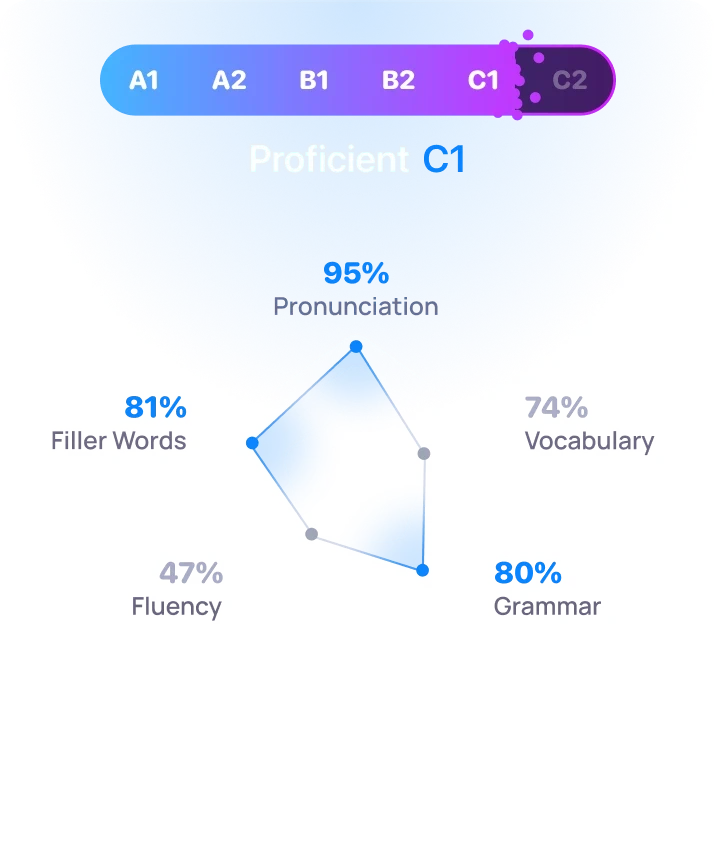
This is where tools like Fluently fit naturally into learning. Instead of doing a drill or beginner practice problem, Fluently listens to your English language, detects errors such as misuse of has and have, and provides instant and clear feedback. Since practice is unlimited and available at any time, learners are gradually less aware of grammar rules and more naturally able to speak.


Final Thoughts
The use of "has" and "have" usually becomes very simple when consciousness shifts from memorizing grammar rules to identifying actual subjects. The majority of mistakes happen not because you don't know the rules, but when you stop and have no time to think, while the sentence is longer and the conversation is faster. This is exactly where everyday speaking exercises are effective. Using tools such as Fluently learners can listen repeatedly to actual speech sentences and get clear feedback on fine errors such as coronary and verb matching.
Frequently Asked Questions About Has vs Have
1. Is “has” singular or plural?
“Has” is used with third-person singular subjects like he, she, it, or one person or thing.
2. Why do we say “I have” and not “I has”?
“I” follows the same verb pattern as you, we, and they, so it always takes “have.”
3. Is “have got” correct English?
Yes. It’s very common in British English and informal spoken language.
4. Can “has” be used without another verb?
Yes. It can stand alone to show possession, such as “She has a car.”
5. Do questions change has vs have rules?
No. The subject rule stays the same, even though the sentence structure changes.