Meta Description: Study 500 necessary English words and phrases in everyday life. It is possible to improve speaking, listening, and reading using simple examples and daily practice tips.
English Vocabulary for Daily Life: 500 Essential Words and Phrases
Building a strong daily English vocabulary is the first step to confident communication. The knowledge of key words and phrases helps in facilitating the easy speaking, reading and listening both in daily life at home, school, work or even during traveling. To make you use and learn English in a natural way, this guide includes 500 practical words that are categorized on the basis of the topic. With examples, dialogues and tips to practice every day, you can acquire fluency and confidence. With the constant use of these words, you can speak clearly, better comprehend people, and be able to express your thoughts in your life without any hesitation.
Why You Should Build Your Daily English Vocabulary
A good vocabulary is necessary to articulate clearly. Familiar words affect listening, speaking and reading. As an example, in the case of a small amount of words which you are more accustomed with, it becomes difficult to talk and ask questions in a conversation. Having a large vocabulary, it is easier to comprehend the announcements in schools, workplaces, and even in the streets, to follow the orders, and participate in conversations. In addition, the more you develop your vocabulary, the more confident you will become and speak to others in a more comfortable situation.
How to Use This List Effectively
Memorizing words is not enough. It should be used in a proper manner. We shall start with the daily routine, e.g. speaking or writing short sentences. It is more comfortable to get words used in context and memorized in memory than memorizing words. The fact that a word is placed on one side and a sentence on the other side of a flash card facilitates memory consolidation. It is also through reading and listening to these words that one memorizes. Do not merely learn, as an illustration, eat, but say: I eat breakfast at seven or she eats lunch at noon. The words are incorporated into a normal conversation through the practice.
500 Essential English Words for Daily Life
A knowledge of 500 keywords will help you communicate effectively in the day to day life both at home, school, workplace and even during traveling. This list is divided into categories to memorize it easier, and each word is supported by its sample sentences that can be used in real life.
1. Pronouns
Pronouns replace the nouns in the sentences to prevent repetition. The correct application of pronouns will allow you to speak normally during a conversation and express your thoughts without being misunderstood.
I am happy today.
You – You are my friend.
He – He is reading a book.
She – She goes to school.
It – It is raining.
We – We play football.
They – They are at the market.
2. Common Verbs
Verbs describe actions or states. Using them in sentences helps you communicate effectively in daily life.
Be – I am tired.
Have – She has a pen.
Do – I do my homework.
Say – He says hello.
Go – We go to school.
Get – I get water.
Make – She makes tea.
Know – I know the answer.
Think – I think it is good.
Take – Take this book.
Come – Come here now.
See – I see the car.
Want – I want food.
Look – Look at the sky.
Use – I use my phone.
Find – I find the key.
Give – Give me a pen.
Tell – Tell me the story.
Work – I work in an office.
Call – Call your friend.
Try – Try to run faster.
Ask – Ask your teacher.
Need – I need water.
Feel – I feel happy.
Become – She becomes tired.
Leave – Leave the room.
Put – Put the book on the table.
Mean – What does this mean?
Keep – Keep the door closed.
Let – Let me help you.
Begin – Begin the lesson now.
Seem – It seems easy.
Help – Help me please.
Talk – Talk to your friend.
Turn – Turn left at the market.
Start – Start the game now.
Show – Show me your homework.
Hear – I hear music.
Play – They play football.
Run – I run every morning.
Move – Move the chair.
Live – I live in Multan.
Believe – I believe in honesty.
Hold – Hold the baby carefully.
Bring – Bring some water.
Happen – What happened yesterday?
Write – Write your name here.
Provide – I provide help to friends.
Sit – Sit on the chair.
Stand – Stand in the line.
Watch – Watch the movie.
Wait – Wait here for me.
Open – Open the door.
Close – Close the window.
Buy – Buy some fruits.
Sell – They sell vegetables in the market.
Learn – I learn new words daily.
Teach – The teacher teaches English.
Clean – Clean your room.
Cook – I cook dinner every day.
Cut – Cut the paper carefully.
Remember – bring your book.
Forget – Don’t forget the keys.
Send – Send the message now.
Speak – Speak slowly and clearly.
Listen – Listen carefully to the lesson.
Stand – Stand in the line.
Sit – Sit on the chair.
Move – Move the chair.
Turn – Turn the page.
Travel - I go to Lahore every month.
Visit - We visit the grandparents' house on Sunday.
meet - I meet with friends every night.
3. Time, Numbers, and Measurement Words
Words for time, numbers, and measurement are used in daily life to schedule, count, and describe quantities.
Second – Wait for a second.
Minute – The meeting starts in ten minutes.
Hour – I sleep eight hours daily.
Day – I go to school every day.
Week – We have a holiday next week.
Month – January is the first month.
Year – I was born in 2005.
Today – Today is sunny.
Tomorrow – We will go tomorrow.
Yesterday – I visited my friend yesterday.
One – I have one pen.
Two – She bought two books.
Three – We have three chairs.
Four – There are four apples.
Five – I need five pencils.
Six – Six people are waiting.
Seven – Seven days make a week.
Eight – I have eight friends.
Nine – There are nine chairs in the room.
Ten – Ten students are in class.
. Hundred – I have a hundred rupees.
Thousand – There are a thousand stars.
. Some – I have some water.
. Many – Many people like chocolate.
. Few – I have a few books.
. All – All students are present.
. More – I want more rice.
. Less – She eats less sugar.
. First – This is my first day.
. Last – This is the last page.
4. People and Relationships
Words for family, friends, and social connections allow you to describe people around you and communicate about relationships.
. Mother – My mother is kind.
. Father – My father works in an office.
. Brother – My brother plays football.
. Sister – My sister studies hard.
. Son – The son is in school.
. Daughter – She is my friend's daughter.
. Child – The child is playing outside.
. Friend – My friend helps me.
. Neighbour – The neighbour is friendly.
. Classmate – My classmate answered correctly.
. Colleague – My colleague works with me.
Teacher – The teacher explains the lesson.
Student – Students study every day.
Boss – My boss gave me a task.
Manager – The manager is in the office.
Team – Our team won the match.
Partner – She is my business partner.
Couple – The couple is walking in the park.
Relative – I visited my relatives yesterday.
Guest – The guest arrived early.
Stranger – A stranger asked for directions.
Young – The young boy is smart.
Old – My grandfather is old.
Kind – She is very kind.
Important – Family is important to me.
5. Common Places and Directions
Knowing words for places and directions helps you talk about locations, navigate, and give or follow instructions in daily life.
Home – I am at home.
School – I go to school daily.
Office – He works in an office.
Hospital – The patient is in the hospital.
Market – We go to the market to buy food.
Church – People pray there.
Street – The street is busy.
Road – Walk along the road.
Park – Children play in the park.
City – I live in a big city.
Up – Go up the stairs.
Down – Come down quickly.
Left – Turn left at the corner.
Right – Take the right path.
Near – The shop is near my home.
Far – The school is far from here.
Across – Walk across the road.
Toward – Go toward the market.
Inside – Stay inside the house.
Outside – Play outside in the garden.
Behind – The cat is behind the door.
In front – Stand in front of the class.
Between – The shop is between the bank and the cafe.
Above – The lamp is above the table.
Below – The bag is below the chair.
6. Objects, Items, and Things Around You
Knowing the names of objects around you helps you describe your environment clearly in daily conversations.
Table – Put the book on the table.
Chair – Sit on the chair.
Door – Close the door, please.
Window – Open the window for fresh air.
Bed – I sleep on my bed.
Book – I read a book.
Paper – Take a sheet of paper.
Pen – I write with a pen.
Pencil – Use a pencil for drawing.
Computer – I use my computer for work.
Phone – Call me on the phone.
Bag – My bag is heavy.
Shoes – She wears new shoes.
Clothes – I bought new clothes.
Food – I eat food every day.
Drink – I drink water.
Money – I have some money.
Key – I lost my keys.
Car – He drives a car.
Bike – I ride my bike to school.
Watch – I wear a watch on my wrist.
Glass – Pour water into the glass.
Plate – Put food on the plate.
Knife – Be careful with the knife.
Spoon – Use a spoon to eat soup.
Cup – I drink tea from a cup.
Bottle – Fill the bottle with water.
Bag – My bag is on the chair.
Notebook – Write notes in your notebook.
Wallet – Keep money in your wallet.
7. Describing People, Places, and Things
Adjectives describe size, color, and feelings. Using adjectives makes your sentences more detailed and easier to understand.
Good – This is a good book.
Bad – That was a bad decision.
Big – The house is big.
Small – My bag is small.
New – I bought a new phone.
Old – This is an old car.
Long – The road is long.
Short – The skirt is short.
Red – The apple is red.
Blue – The sky is blue.
White – The wall is white.
Black – His shoes are black.
Green – The grass is green.
Yellow – The sun is yellow.
Happy – I feel happy today.
Sad – She looks sad.
Tired – I am tired after work.
Excited – The children are excited.
Angry – He is angry at me.
Hungry – I am hungry now.
Thirsty – I am thirsty.
Hot – The tea is hot.
Cold – The water is cold.
Easy – This task is easy.
Difficult – The question is difficult.
8. Social and Communication Words
These words help you speak politely and communicate clearly in social situations.
Speak – Speak slowly and clearly.
Say – Say hello to your friend.
Tell – Tell me a story.
Ask – Ask the teacher for help.
Hear – I hear music.
Listen – Listen carefully.
Talk – Talk to your friend.
Read – I read a book daily.
Write – Write your name here.
Thank – Thank you for helping.
Sorry – I am sorry for being late.
Please – Please pass the salt.
May – May I sit here?
Can – Can you help me?
Would – Would you like tea?
Party – We went to a party.
Group – The group is waiting outside.
Event – The event starts at 5 PM.
Community – Our community is friendly.
Public – The park is public.
Private – Keep this private.
Meet – I meet my friend every evening.
Invite – Invite your friends for dinner.
Agree – I agree with you.
Disagree – I disagree with him.
9. Work, School, and Daily Tasks
These words help describe jobs, responsibilities, and school activities.
Job – I have a new job.
Office – He works in the office.
Company – My company is big.
Manager – The manager is in the office.
Team – Our team won the game.
Student – Students study every day.
Teacher – The teacher explains the lesson.
Class – I go to class at 8 AM.
Study – I study English daily.
Learn – Learn new words every day.
Help – Help your classmates.
Complete – Complete the task today.
Report – Write a report for work.
Plan – Plan your day carefully.
Answer – Answer the question.
Question – Ask a question.
Exam – I have an exam tomorrow.
Lesson – The lesson starts now.
Homework – Do your homework.
Practice – Practice speaking English.
Work – I work hard daily.
Task – Finish the task.
Project – Complete the project by Monday.
Meeting – Attend the meeting at 3 PM.
Schedule – Follow your schedule.
10. Technology, Media, and Modern Life
Words for modern technology, media, and digital life help in communication and daily tasks.
Computer – I use a computer for work.
Phone – Call me on the phone.
Email – Send me an email.
App – I use a learning app.
Data – Check your internet data.
Movie – Watch a movie tonight.
Music – Listen to music.
Film – This film is interesting.
News – I read the news daily.
Social media – I use social media.
Picture – Take a picture.
Photo – Upload the photo.
Video – Watch the video online.
Type – Type your name.
Use – Use your phone carefully.
Watch – Watch the tutorial.
Listen – Listen to the audio.
Send – Send the message.
Receive – I receive many emails.
Online – I shop online.
Offline – Work offline sometimes.
Website – Open the website.
Password – Change your password.
Internet – I browse the internet.
Download – Download the app.
Upload – Upload your file.
Program – Install a program.
Game – Play a game online.
Chat – Chat with friends online.
Call – Video call your family.
Device – Charge your device.
Technology – Technology makes life easier.
Modern – Modern life is fast.
Online learning – it's popular.
Email account – Create your email account.
11. Health, Safety, and Environment
Words related to health, safety, and the environment help you talk about well-being, emergencies, and surroundings.
Doctor – I visit the doctor when I am sick.
Nurse – The nurse helps the patient.
Hospital – The patient is in the hospital.
Medicine – Take your medicine on time.
Health – Good health is important.
Patient – The patient is resting.
Pain – I have a headache and pain in my back.
Fever – She has a high fever.
Cold – I caught a cold.
Sick – I feel sick today.
Safe – Stay safe during travel.
Danger – There is danger ahead.
Fire – Call the fire department.
Police – The police help people.
Law – Follow the law.
Security – Security guards are at the entrance.
Risk – Don’t take unnecessary risks.
Water – Drink clean water.
Air – The air is fresh today.
Ground – Sit on the ground.
Tree – There is a big tree outside.
Land – Farmers work on the land.
Nature – Nature is beautiful.
Clean – Keep the environment clean.
Pollution – Pollution is harmful.
Environment – Protect the environment.
Healthy – Eat healthy food.
Exercise – Exercise every day.
Food – Healthy food is important.
Drink – Drink water regularly.
Hospital room – The hospital room is clean.
Emergency – Call emergency services.
Accident – There was an accident on the road.
Injury – He has a leg injury.
Bandage – Put a bandage on the cut.
Treatment – She is receiving treatment.
Operation – He needs an operation.
Care – Take care of yourself.
Medicine bottle – Open it carefully.
Vaccine – Get the vaccine on time.
12. Emotions, Opinions, and Expressions
These words allow you to describe feelings, thoughts, and everyday communication naturally.
Love – I love my family.
Like – I like ice cream.
Hate – I hate waiting in lines.
Feel – I feel happy today.
Happy – I am very happy.
Sad – She looks sad.
Tired – I feel tired after work.
Excited – The children are excited.
Angry – He is angry with me.
Surprised – I was surprised by the gift.
Nervous – I feel nervous before exams.
Calm – Stay calm during the test.
Afraid – I am afraid of dogs.
Confident – I feel confident about my presentation.
Proud – I am proud of my achievements.
Embarrassed – I felt embarrassed yesterday.
Bored – I am bored at home.
Curious – I am curious about science.
Think – I think it is good.
Believe – I believe in honesty.
Know – I know the answer.
Understand – I understand your problem.
Explain – Can you explain this?
Opinion – What is your opinion?
Agree – I agree with you.
Disagree – I disagree with him.
Suggest – I suggest taking a break.
Decide – I decide to study English.
Prefer – I prefer tea over coffee.
Promise – I promise to help you.
Question – Ask a question if unclear.
Answer – Give the correct answer.
Remember – Remember what I said.
Forget – Don’t forget your homework.
Try – Try your best.
Wish – I wish you success.
Hope – I hope for good results.
Help – I need your help.
Ask – Ask for directions.
Tell – Tell me the truth.
Talk – Talk to your friend.
Listen – Listen carefully.
Speak – Speak slowly.
Laugh – Laugh with friends.
Cry – Babies cry often.
Smile – She smiles happily.
Thank – Thank you for helping.
Sorry – I am sorry for being late.
Please – Please pass the salt.
Excuse – Excuse me, can I go?
Welcome – Welcome to my home.
Goodbye – Say goodbye to your friends.
Hello – Hello, how are you?
Hi – Hi, nice to meet you.
Good morning – Good morning, everyone.
Good night – sleep well.
Yes – Yes, I agree.
No – No, I cannot do that.
Maybe – Maybe I will join you.
Sure – Sure, I will help.
13. Advanced Daily Life Words
These words help describe modern life, actions, and common objects.
Always – I always wake up early.
Never – I never lie.
Sometimes – I sometimes go to the park.
Usually, I eat breakfast at 8 AM.
Often – I often read books.
Rarely – I rarely eat fast food.
Before – Wash your hands before eating.
After – We go outside after lunch.
Early – I woke up early today.
Late – He came late to class.
Now – I am busy now.
Later – I will call you later.
Today – Today is sunny.
Tomorrow – We will meet tomorrow.
Yesterday – I went to school yesterday.
Morning – I jog.
Afternoon – I study then.
Evening – We watch TV in the evening.
Night – I sleep at night.
Week – There are seven days in a week.
Month – January is the first month.
Year – This year is 2026.
Holiday – We travel during holidays.
Weekend – I relax on weekends.
Today – Today is a good day.
Workday – Monday is a workday.
Vacation – We go on vacation in summer.
Travel – I love to travel.
Trip – We went on a short trip.
Journey – Our journey was long but fun.
Destination – The destination is the city center.
Road – The road is busy.
Street – Turn left on this street.
Path – Walk on the path.
Direction – Ask for the right direction.
Left – Turn left at the corner.
Right – Turn right after the shop.
Straight – Go straight ahead.
Near – The park is near my home.
Far – The city is far away.
14. Objects, Food, Clothes, and Essentials
Rice – I cook rice every day.
Bread – Eat fresh bread.
Meat – She eats meat for lunch.
Fish – Fish is healthy food.
Fruit – I eat fruit daily.
Vegetable – I like green vegetables.
Water – Drink plenty of water.
Juice – I drink orange juice.
Tea – I drink tea in the morning.
Coffee – I like coffee.
Shirt – I wear a shirt to school.
T-shirt – He wears a t-shirt.
Pants – I bought new pants.
Shoes – Wear shoes before going out.
Socks – I wear socks with shoes.
Hat – He wears a hat outside.
Coat – Put on your coat; it’s cold.
Dress – She wears a red dress.
Skirt – The skirt is long.
Bag – Take your bag.
Wallet – Keep money in your wallet
Key – Find your house key.
Glass – Drink water from a glass.
Plate – Put food on the plate.
Spoon – Use a spoon to eat soup.
Fork – Use a fork to eat salad.
Knife – Be careful with the knife.
Bottle – Fill the bottle with water.
Chair – Sit on the chair.
Table – The book is on the table.
15. Final Expressions and Emotions
Angry – He is angry with me.
Happy – I am happy today.
Sad – She looks sad.
Excited – I am excited about the trip.
Nervous – I am nervous about exams.
Tired – I feel tired.
Hungry – I am hungry now.
Thirsty – I am thirsty.
Scared – I am scared of spiders.
Calm – Stay calm in traffic.
Confident – I feel confident today.
Proud – I am proud of my work.
Bored – I am bored at home.
Curious – I am curious about science.
Love – I love my family.
Like – I like chocolate.
Hate – I hate waiting in lines.
Help – Help me with this.
Thank – Thank you for helping.
Sorry – I am sorry for being late.
Please – Please pass the salt.
Yes – Yes, I agree.
No – No, I cannot do that.
Maybe – Maybe I will join you.
Sure – Sure, I will help.
Hello – Hello, how are you?
Hi – Hi, nice to meet you.
Goodbye – Say goodbye to friends.
Good morning – Good morning, everyone.
Good night – sleep well.
Common Mistakes to Avoid
Even when the English learners are aware of the word, they are inclined to misunderstand it. Even the insignificant mistakes concerning the context, recurrence, and grammar may destroy the naturalness of the speech, and it is necessary to identify and recover them as soon as possible.
Do not use words out of context. The same word can be applied differently in various situations and the wrong words can bewilder the listener.
Do not repeat simple words with each sentence. English will seem more natural and easier to understand if you recall simple synonyms.
Do not overlook grammar rules and concentrate on word lists only. Even when the words are good, when the sentence is poorly framed, the message can hardly be deciphered.
Do not memorize new words without examples. It is easier to remember and use if you observe how the word is used in actual conversation.
Do not speak or write in a hurry. Give yourself time to choose the right words, proofread your sentences, and express yourself well.
7. Fluently: Master English Naturally and Speak Confidently
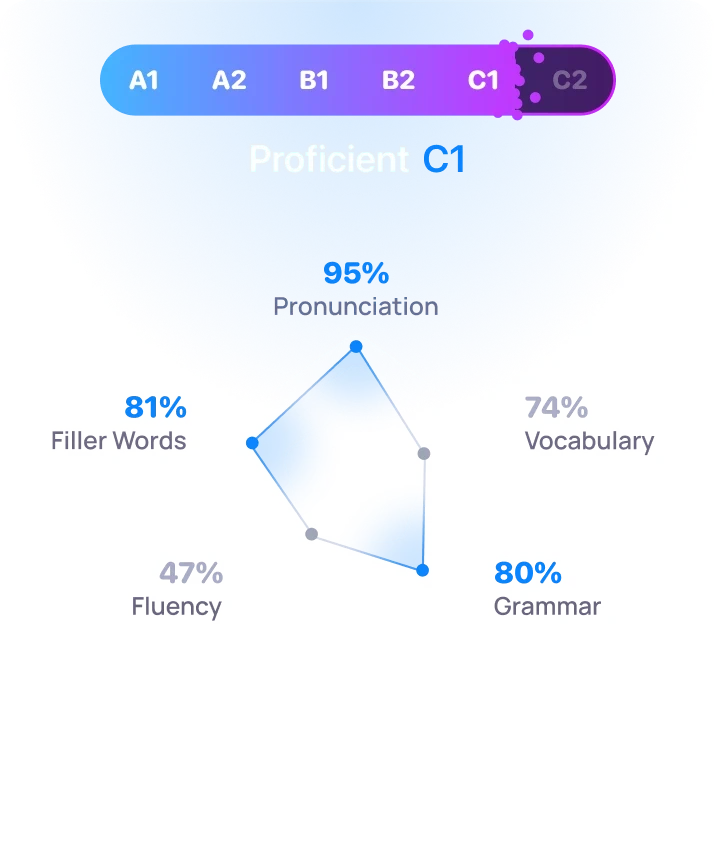
Fluently is an intelligent and user-friendly application for anyone who wants to improve their English proficiency in practical ways. It is convenient to assess your proficiency by verifying pronunciation, grammar, vocabulary, and fluency in a single location. It is then easier to understand your weaknesses and work on them one by one. AI tutors can design your own learning plans, depending on your level and objectives, so that you can practice what is useful and meaningful. Use English daily, develop healthy habits, and become competent in real conversations at work, at school, while traveling, and in daily life.


Key Features
Check your pronunciation, grammar, vocabulary, and fluency. To know your general English level, and therefore know where to train more.
Create personal learning plans according to error levels and objectives, and make daily practice more meaningful and focused.
To provide unlimited speaking exercises, you can speak more frequently, reduce hesitation, and be more relaxed in real conversations.
Use topics that match your interests to make learning simple and attractive, making it easier to continue every day.
Build confidence in daily communication by practicing useful English at work, at school, while traveling, and in everyday situations.
FAQs
1. Why is daily English vocabulary important?
General conversations, clear expression of thoughts, and responding confidently are all achieved with the help of daily English words. It also enhances the capacity to communicate through speaking, listening, reading, and writing; thus, day-to-day communication becomes easier and more natural.
2. How can I remember new English words faster?
By revising new words daily, applying them to brief sentences, and making groups of words on a topic, you can acquire new words more quickly. Moreover, the use of speech or rehearsal in the real scene may also help maintain memory longer.
3. How many words should I learn each day from this list?
You do not need to memorize many words at once. It is possible to simply remember and apply to practice learned words by beginning with 10-15 words a day, practicing in sentences, and regularly reviewing words you already know.
4. How can Fluently help me improve my English speaking?
Fluently allows you to practice English conversation every day, checking pronunciation, grammar, vocabulary, and fluency. Besides this, we will develop learning plans that individuals will follow, and they will practice the areas where they lack, enabling them to speak with confidence.
5. Is Fluently a good tool for beginners and daily English practice?
Yes, Fluently also helps beginners to understand their actual English level and provides them with the right practice for their needs. Speaking exercises and personal instruction make daily English learning easier, clearer, and more practical.
Conclusion
Knowing these 500 essential words gives you a strong base of communication in day-to-day English. These words will assist you in talking in general contexts, interpret words of the other person easily, and say what you can say without any hesitations. The most effective way to improve is to practice every day through simple writing, brief conversations, reading, and listening. There is no need to memorize everything at once. One step at a time will help you to learn, and whenever you learn new words, you will review what you have already learned. As the vocabulary grows, confidence also grows. Tools like Fluently support this progress by tracking your level, improving your speaking practice, and helping you develop useful English habits in real life.