For startup founders, communication decides many outcomes. A strong idea alone does not win funding. Investors support founders who clearly explain their vision, answer questions with confidence, and demonstrate leadership through words and actions. Customers also trust brands that communicate simply and directly. When you pitch to investors, lead your team, or present at events, you represent your company. Your voice, tone, body language, and word choice influence how people see you. In this guide, you will learn practical public speaking tips, storytelling methods, engagement strategies, and business English skills.
Public Speaking for Startup Founders
Public speaking plays a central role in startup growth. Founders speak at pitch meetings, investor meetings, conferences, webinars, and team building. Whenever you make a presentation, you define the perception that people have about your company. A good talk will build trust, demonstrate leadership and investor confidence. It will enable you to earn more money and create a better brand image since you will have better oratory skills.
Speak Clearly and Confidently
In explaining to investors, clarity is more important than complex wording. Many founders try to impress with jargon, but focus on being understood.
Use simple words
Avoid jargon unless necessary
Practice the elation and pace of voice
Let's talk at a stable speed. When it is early, much-needed information will be overlooked, and when it is too late, concentration will be lost. Breathing: take time to manage and put breathing between significant points. This is the time of confidence and will allow the investors to digest the message. Practice every day. Tape record and be a good listener. Should you observe the connecting words, like Uto, That, That, etc., then we may cut them down one at a time.
Craft a Captivating Opening
The initial 30 seconds are the most significant. Investors tend to make a choice on whether to continue listening early. Giving a good introduction is appealing and creates the tone.
Start with stories, questions and bold claims
Attract audience interest in the first 30 seconds
There are concise ways to present the real-world problems that customers face. Example: "Small retailers have lost 20% of their sales due to inadequate inventory management." This instantly communicates the problem and creates interest. The direct question is also valid: "What if you can increase your profits without increasing costs?" The question gives the audience a chance to think.
Storytelling Techniques to Engage Investors
There are many pitches that investors hear weekly. Statistical data cannot impress. The ideas become realistic and empathetic through stories. Storytelling aids the investors to think about problems, develop empathy around missions and remember the companies. A great story creates an order in the pitch and helps to focus attention till the end.
Build a Narrative that Resonates
All powerful pitches follow a clear story structure.
Configure the pitch like a story: Problems → Solutions → Effects
Emphasise teams, markets and achievements
Start with a problem. Explain who faces this challenge and why it is important. Use real cases and customer experiences. Next, I will introduce the solution. Demonstrate how your product can solve problems better than existing options. Then explain the influence. Share results, initial traction and user feedback. Demonstrate how solutions create value.
Use Case Studies and Examples
Case studies present evidence to investors, not promises.
Introduce successful entrepreneurs as benchmarks.
Show concrete results and milestones.
In such programs as Shark Tank, it is possible to state that the founders demonstrate clear figures and real-life examples of customers. Shareholders of the program are more concerned with profits, profitability and expansion. Share your startup examples. As an illustration, we shall elaborate on how a customer obtained quantifiable outcomes through the use of their products. If your revenue has increased by 30% in three months, let's be clear. It avoids ambiguous expressions such as "rapid growth" and instead specifies that "monthly revenue increases from $10,000 to $13,000 over 90 days." Specific numbers increase reliability.
Visual Aids and Concise Notes
The slide complements the message, not replaces it.
Leverage and avoid confusion of slides to deepen understanding
Leverage word-by-word memory cards and outlines for seamless deployment
Keep the slide simple. Use short phrases and clear diagrams to avoid long sentences. When detailed information is required, it is provided in a separate document. By using a memo card with keywords instead of full text, you can speak naturally instead of reading the screen. Practice migrating between slides and smooth the flow of presentations.
Interactive Engagement Strategies
Interaction will ensure that investors are attentive. You can get the audience involved and facilitate interactive communication rather than a monologue. Interaction also involves confidence and openness, as well as assistance with reading investor reactions and making adjustments.
Spark Audience Interaction
Active engagement increases attention and connection.
Ask questions and engage the audience
Take a pause strategically for emphasis
"Who has experience in investing in SaaS startups?" Encourage participation with simple questions such as. Put in between important remarks. For example, after conveying important numbers, there is a pause for a few seconds. Silence draws attention and shows control.
A Q&A session will be held during or after the pitch. Answer investors' questions clearly and directly. If you do not know the answer, "I will confirm the details and contact you." Honesty builds trust.
Build Confidence Through Practice
The trust is established through repetition.
Practice in low-stress conditions.
Have a recording and rehearse your words.
Training in the presence of friends, mentors, and startup communities. Seek frank feedback. Work on the issues of clarity and the wastefulness of words. Record a practice session. Note intonation, tempo and posture. Make changes, one a bit at a time. Regular speech groups and startup events are also an effective way of participating. The more you speak, the more natural you will speak.
Communication Hacks for Fundraising Success
A good pitch alone is not sufficient to raise money. It is necessary to build relationships and communicate constantly. Investors put their money in familiar faces and successful founders. Establishing rapport first, then seeking money, will upscale your chances of success. An enduring relationship will be based on effective and honest communication.
Build Relationships Before Pitching
Be ready to establish relationships at a young age.
Being proactive in the industry.
Make use of investors in various avenues.
Participate in startup events, webinars and conferences. Find investors on LinkedIn and other career sites. Post comments and exchange knowledge on their posts. Demonstrate that you are aware of their points of focus. Relationships cannot be established quickly. You should not go to investors when you need money. Remain in touch and keep on adding value.
Personalize and Segment Communication
The interests of not all investors are equal.
Modify the message to align with investors' interests.
Test data to narrow down on your strategy.
Research on all the investors before dispatching the pitch. When investing in fintech, focus on your fintech. When you are targeting startups in the early stage, you need to focus on the growth potential. Do not use standardised emails. Make the topic and the opening sentence personal. Follow up on the reaction and change tactics. If one message is better received, change your message to align better.
Transparency and Post-Fundraising Communication
Trust is developed over time with honesty.
Be open to sharing milestones and the chain of tribulation.
Ensure continuity of engagement once it is funded.
Be both prosperous and challenging. In case of a delay, justify and mention the preventive actions. Once the fund has been raised, the progress report is sent at regular intervals. Shareholders consider a transparent document on profits, costs, hiring, and product design. Open communication will enhance investor relations and enhance the chances of subsequent funding rounds.
Leverage Video and Digital Assets
Online resources assist in easy communication.
Send pitch videos and demos.
Use a professional email and messaging campaign.
Create pitch videos on records that summarise startups. Maintain eye contact and camera during 3 minutes. Create a pitch deck and send it as a PDF. Use email campaigns to update several investors simultaneously. Electronic communication is time-saving and helps maintain message uniformity.
Business English for Startup Founders
A large number of founders are in contact with foreign investors and clients. Confidence and clarity are enhanced by good business English. Clarity in spoken English minimises confusion and conveys professionalism. You do not have to use difficult words to enhance your English. There is a need for clarity, proper grammar and constant practice.
Speak Like a Pro in English
Professional English emphasizes clarity and structure.
Focus on clear and professional language.
Avoid connecting words and slang in interviews with investors.
Use short sentences. For example, he said, "We plan to expand to three new markets next year." Avoid unofficial slang and use formal greetings and structured responses. Instead of "growing quite rapidly," it is described as "increasing revenue by 25%."
Practice common business phrases such as:
"Let me clarify that point"
"Based on our data."
"Our main purpose is."
These expressions help convey confidence and systematisation.
Continuous Learning and Exposure
You must have frequent contact in order to work on your English.
Read business news and visit the source on a daily basis.
Follow the podcasts, video channels, or TV series related to the industry, like Shark Tank, Suit, and Mad Men.
Go to the events with English-speaking professionals.
Listen to the way you speak. Note their tone, building and diction.
Read business articles and summarise them using your own words. Develop vocabulary and confidence. Whether it is 10 minutes to 15 minutes a day, it does not matter; I train to talk. The continuity results in gradual improvement.
Remote-First Investor Communication Tips
Many investor meetings are now online. Remote communication requires preparation and attention to detail. Investors judge your professionalism based on setting, clarity and tidiness. Well-prepared virtual meetings give a good impression and focus the discussion.
Prepare Your Setup
Your surroundings affect how investors view you.
Choose a quiet place with a professional background.
Install the camera at eye height.
Adjust the lighting so the face outline is clearly visible, and avoid noisy environments. Please check your internet connection before meeting. The camera becomes a natural point of view when installed at eye level. Keep your background simple and clean, and wear professional clothes at online conferences. Appearance should reflect seriousness and respect.
Conducting Effective Calls
Online calls require a clear configuration.
Speak clearly and maintain involvement.
Make strategic use of visual materials and screen sharing.
Let's start with a short agenda. Outline of the contents. It indicates organizability. When presenting a slide, share the screen, but avoid reading it directly from the slide. Speak naturally and take eye contact with the camera. "Did you understand this?" Or "Do you need more details on this?" Let's ask and confirm understanding.
Managing Remote Interactions
A clear follow-up ensures progress.
Schedule follow-up
Communicate further actions and maintain the clarity of your tasks.
Agree with the conclusion of the call. Verify the schedule and the individual in charge. Send a follow-up email containing a meeting memo and requested materials. Ensure that communication is adequate and timely. Remote communication is effective when you are organizationally and proactively driven.
English Naturally with Fluently: Your Personalized AI-Powered Language Coach
Clear English helps founders explain ideas, pitch investors, and lead teams with confidence. Many professionals read and understand English well, but they hesitate when speaking. They fear making grammar mistakes or mispronouncing key words. This hesitation affects meetings, presentations, and fundraising conversations. To improve, you need regular and focused speaking practice. Fluently supports you with structured guidance and real-time feedback. It shows your current level, highlights weak areas, and helps you practice business situations step-by-step. With consistent use, you build confidence and speak English more naturally in professional settings.


Key Features of Fluently
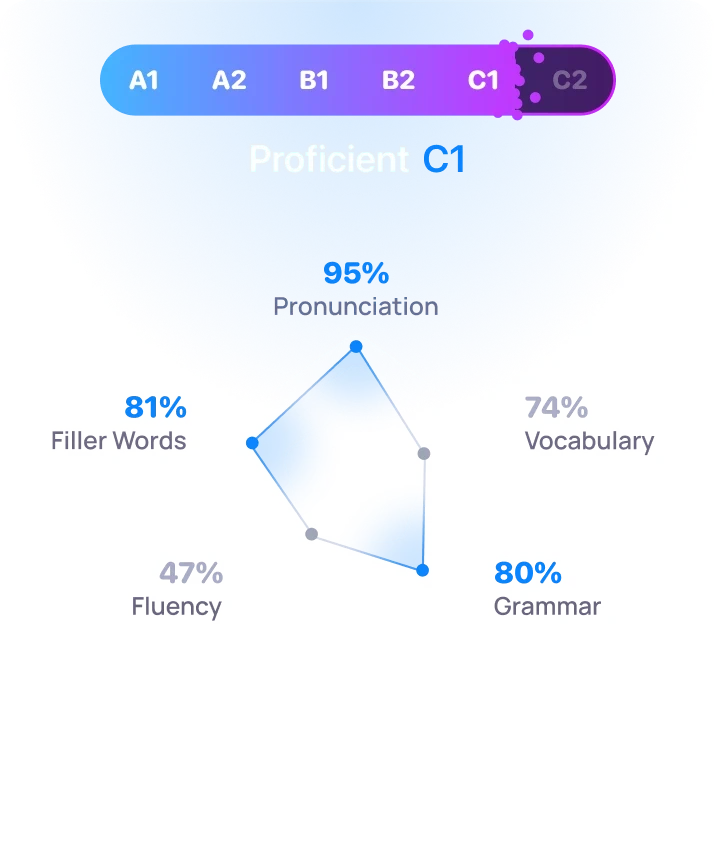
Accurate English Level Assessment: Fluently assesses your pronunciation, grammar, vocabulary, and fluency to help you clearly understand your present level of speaking.
Individualised learning plan: AI tutors develop lessons based on the goals (investor pitch, conference, interview, sales phone preparation, and so on).
Endless talking hours: You will be able to rehearse actual dialogues any time, get rid of stuttering, and even master a natural speaking routine.
Instant feedback and correction: Immediately detect mistakes and give step-by-step improvements with practical suggestions.
Business-specific topics: Presentations, talks and professional communication. Discuss, present and professional communication relevant to startup-related discussions to match your business requirements.
Frequently Asked Questions (FAQs)
1. Why is public speaking important for startup founders?
Presentation skills enable entrepreneurs to articulate ideas effectively, raise eyebrows and create trust among customers. With confident, clear words, investors have faith in your leadership and vision.
2. How can I improve my confidence before pitching to investors?
Develop confidence through practice, as well as constant data gathering and preparation to answer the commonly posed questions by the investors. Note down the pitch and test the tone, pace and articulation.
3. How can I improve my business English for investor meetings?
Listen to simple, easy phrases rather than complex words. Practice common business expressions and remove unnecessary words (fillers). Areas such as Fluently offer goal-oriented speech training, organised exercises, real-time feedback and continuous lessons.
4. What is the best way to communicate with investors after a pitch?
Deliver a concise message in less than 24 hours. Conclude the discussion with the key points and provide the requested materials. Keep frequent updates on milestones, increased revenues and products.
5. How can I practice English speaking regularly as a busy founder?
Busy founders need flexible learning options. A short daily speaking session is more effective than a weekly session. With AI-based tools like Fluently, you get feedback on unlimited speaking practices, individual plans, pronunciation and grammar.
Conclusion
Effective public speaking and investor communication directly affect the success of startups. The way to gain trust and interest is to speak clearly, tell engaging stories, and build an audience. Be able to use business English concisely and professionally to minimise misunderstanding and demonstrate leadership. Regular practice, preparation and follow-up. Dwelling on the clarity, honesty and persistent betterment. Use tools like Fluently to improve your English and build daily speaking practice. Effective communication creates good relationships. If an investor understands your vision and trusts your leadership, you will be more likely to support startups.